• Fri frakt över 249 kr
  • •
  • Snabba leveranser
  • •
  • Billiga böcker
Kundservice

Du är på sajten för privatpersoner.

Företag, bibliotek eller offentlig verksamhet?

Du handlar på classic.bokus.com, där alla dina funktioner finns intakta.
Till classic.bokus.com
Bokus logotyp. Gå till startsidan.
  • Erbjudanden
  • Nyheter
  • Student
  • Topplistor
  • Barn & ungdom
  • Bokus Play
  • E-böcker
  • Pocketböcker
  • Spel & pussel

10% rabatt på allt med kod: NYSTART10 →

Sidfot

Mina sidor

    Hjälp

    • Kundservice
    • Vanliga frågor och svar
    • Frakt och leverans
    • Retur vid ångerrätt
    • Reklamera vara
    • Betalning
    • Köpvillkor
    • Allmänna villkor
    • Information om webbplatsens tillgänglighet

    Om Bokus

    • Om oss
    • Pressrum
    • För studenter
    • För företag
    • För bibliotek och offentlig verksamhet
    • För leverantörer
    • Hållbarhet

    Populärt

    • Aktuella erbjudanden
    • Presentkort
    • Studentlitteratur
    • Nya böcker
    • Topplistor
    • Signerade böcker
    • Engelska böcker

    Inspiration

    • Boktips
    • BookTok
    • Populära bokserier
    • Barnbokskaraktärer
    • Populära författare
    Logotyp för Bokus
    Följ oss på Facebook (extern länk)Följ oss på Instagram (extern länk)Följ oss på YouTube (extern länk)Följ oss på TikTok (extern länk)
    bokus @ CookiesAnpassa cookiesIntegritetspolicyKöpvillkor
    Till Citymail hemsida (extern länk)Till Budbee hemsida (extern länk)Till Postnord hemsida (extern länk)Till Schenker hemsida (extern länk)Till Early Bird hemsida (extern länk)Till Walleys hemsida (extern länk)
    1. Ekonomi och Ledarskap
    2. Företagsekonomi
    3. Organisation och ägarskap

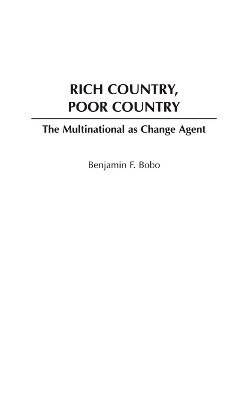
    Rich Country, Poor Country

    The Multinational as Change Agent

    AvBenjamin F. Bobo

    Inbunden, Engelska, 2005

    701 kr

    Beställningsvara. Skickas inom 10-15 vardagar. Fri frakt över 249 kr.

    Beskrivning

    In this series of essays that span over 20 years of research, Benjamin Bobo builds the case for multinational corporations to take an active role in combating poverty around the world. Citing sobering statistics (for example, three-fourths of the world's nations are classified as Third World and four-fifths of the world's people live in these nations), Bobo argues that huge corporate entities not only have the wherewithal but an obligation to alleviate the suffering that results from a lack of economic resources and opportunity. Through these provocative and forward-looking essays, he presents a theoretical and practical framework for multinationals to stimulate economic development in the Third World—providing access to capital, entrepreneurial expertise, and emerging technologies.In a bold challenge to conventional thinking about wealth creation and strategic decision-making, Bobo applies such concepts as profit satisficing and stakeholder givebacks, and proposes an agenda for change that begins in business schools (the intellectual training ground for multinational managers), with increased emphasis on sustainability and human development. The net result, he argues, will be a world in which both producers and consumers benefit.

    Produktinformation

    • Utgivningsdatum:2005-05-01
    • Mått:161 x 240 x 19 mm
    • Vikt:458 g
    • Format:Inbunden
    • Språk:Engelska
    • Antal sidor:256
    • Förlag:Bloomsbury Publishing Plc
    • ISBN:9780275979287

    Utforska kategorier

    • Organisation och ägarskap inom Ekonomi och Ledarskap
    • Politik och statsskick inom Samhälle och politik

    Mer om författaren

    Benjamin F. Bobo is Professor of Finance at Loyola Marymount University, Los Angeles. His research focuses on life-choice constraints of the economically disadvantaged in the United States and around the world. He is the author of many articles and books, including Locked in and Locked Out: The Impact of Urban Land Use Policy and Market Forces on African Americans (Praeger, 2001).

    Recensioner i media

    "Bobo (finance, Loyola Marymount U.) feels strongly that income inequality between rich and poor nations and the deep poverty of the Third World can be effectively addressed by the multinational corporation. He presents 14 previously published essays that address the matter from a variety of angles, discussing such matters as MNC-host country relationships in Africa, the possibilities of MNCS putting aside exploitative practices in recognition that poor countries may otherwise unite against them, the attitudes of policymakers in poor countries and in MNCs, the lessons from conflict and conflict resolution models, expanding the corporate model of wealth maximization to include Third World stakeholders, and the issue of a new pedagogy in support of such a model." - Reference & Research Book News

    Innehållsförteckning

    • Preface Acknowledgments Perspective Introduction The Historical Context in Brief Multinational Corporations in the Economic Development of Black Africa: Some Problems That Affect an Equitable Relationship Issues in North-South Relations and the New World Order MN-Third World Relations: A Comparative Study of Policymakers' Attitudes and Perceptions Multinationals in the Third World: Reciprocity, Conflict Resolution and Economic Policy Formulation Multinationals, the North, and the New World Order: Objectives and Opportunities Internationalization Decision Making and the Global Interdependency Sensitivity Thesis Multinationals and the Caribbean: A Postcolonial Perspective Third World Investment Strategy: The African Predicament Whose Wealth to Maximize: The Third World as Stakeholder GIST and Profit Satisficing: Toward More User-Friendly Shareholder Wealth Maximization User-Friendly Shareholder Wealth Maximization and B-School Pedagogy Epilogue Bibliography Index