• Fri frakt över 249 kr
  • •
  • Snabba leveranser
  • •
  • Billiga böcker
Kundservice

Du är på sajten för privatpersoner.

Företag, bibliotek eller offentlig verksamhet?

Du handlar på classic.bokus.com, där alla dina funktioner finns intakta.
Till classic.bokus.com
Bokus logotyp. Gå till startsidan.
  • Erbjudanden
  • Nyheter
  • Student
  • Topplistor
  • Barn & ungdom
  • Bokus Play
  • E-böcker
  • Pocketböcker
  • Spel & pussel

10% rabatt på allt med kod NYSTART10 →

Sidfot

Mina sidor

    Hjälp

    • Kundservice
    • Vanliga frågor och svar
    • Frakt och leverans
    • Retur vid ångerrätt
    • Reklamera vara
    • Betalning
    • Köpvillkor
    • Allmänna villkor
    • Information om webbplatsens tillgänglighet

    Om Bokus

    • Om oss
    • Pressrum
    • För studenter
    • För företag
    • För bibliotek och offentlig verksamhet
    • För leverantörer
    • Hållbarhet

    Populärt

    • Aktuella erbjudanden
    • Presentkort
    • Studentlitteratur
    • Nya böcker
    • Topplistor
    • Signerade böcker
    • Engelska böcker

    Inspiration

    • Boktips
    • BookTok
    • Populära bokserier
    • Barnbokskaraktärer
    • Populära författare
    Logotyp för Bokus
    Följ oss på Facebook (extern länk)Följ oss på Instagram (extern länk)Följ oss på YouTube (extern länk)Följ oss på TikTok (extern länk)
    bokus @ CookiesAnpassa cookiesIntegritetspolicyKöpvillkor
    Till Citymail hemsida (extern länk)Till Budbee hemsida (extern länk)Till Postnord hemsida (extern länk)Till Schenker hemsida (extern länk)Till Early Bird hemsida (extern länk)Till Walleys hemsida (extern länk)
    1. Psykologi och pedagogik
    2. Pedagogik
    3. Pedagogisk psykologi

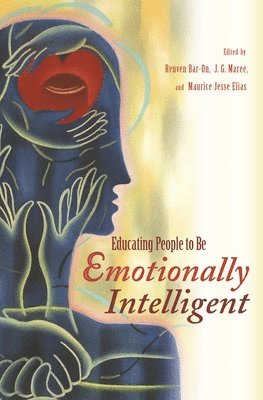
    Educating People to Be Emotionally Intelligent

    AvReuven Bar-On,J.G. Maree

    Inbunden, Engelska, 2007

    682 kr

    Beställningsvara. Skickas inom 10-15 vardagar. Fri frakt över 249 kr.

    Beskrivning

    Daniel Goleman, the literary catalyst for worldwide interest in emotional intelligence, sets the stage for this groundbreaking book in his foreword explaining its landmark importance. People can be educated to be more emotionally intelligent, and this particular type of education takes place through a specific type of parenting at home, formal education at school, and training and coaching at work. As a result of this education, extensively described in this comprehensive book, people's lives can be improved; they can become more effective, productive and content in what they do. Some of the best known researchers, professors and practitioners worldwide team up in this work to recognize and reflect the rapidly growing global interest in scientifically-based applications of emotional intelligence in education, to show readers the diverse applications of EI, and to guide them in applying what is known about this topic. The breadth of coverage, array of experts, international scope and clear, practical tone of this book will appeal to parents, educators, psychologists, counselors, trainers, and corporate coaches, mental health and human resource practitioners and healthcare providers.Parents and educators need to perform their caregiving roles and teach with emotional intelligence if children are to develop the skills and discernment needed to cope with the complexities of an increasingly globalized world. Workplaces that apply emotional intelligence are more pleasant places in which to work, provide a more fulfilling experience for employees and are, in the end, more productive organizations. Emotional intelligence can be developed by most individuals to increase performance in many areas of life. And a growing body of evidence indicates EI skills may improve physical health, as well as mental health. This book will become a benchmark for future researchers and practitioners.

    Produktinformation

    • Utgivningsdatum:2007-03-30
    • Mått:160 x 235 x 35 mm
    • Vikt:700 g
    • Format:Inbunden
    • Språk:Engelska
    • Antal sidor:344
    • Förlag:Bloomsbury Publishing Plc
    • ISBN:9780275993634

    Utforska kategorier

    • Pedagogisk psykologi inom Psykologi och pedagogik

    Mer om författaren

    Reuven Bar-On is Director of Emotional Intelligence Research in the Department of Psychiatry and Behavioral Sciences, University of Texas Medical Branch. He has been involved in studying and applying various aspects of emotional intelligence since 1980. Bar-On coined the term EQ (Emotional Quotient) in his doctoral dissertation submitted in 1985. This approach to describing emotional-social functioning and competence culminated in the creation of the Bar-On Emotional Quotient Inventory (EQ-i) in 1997, the first measure of its kind to be published by a psychological test publisher and peer-reviewed. Bar-On has authored or edited more than 20 publications on this topic, including The Handbook of Emotional Intelligence (2000).J.G. Maree is a Professor of Education at Pretoria University and Editor of Perspectives in Education. An author or co-author of more than 36 books and 80 articles, he is internationally known for his work in career counseling. His research focuses on optimizing the achievement of disadvantaged learners. He is also a highly rated Researcher with the National Research Foundation in South Africa. Maree was recently honored with Exceptional Achiever status.Maurice Jesse Elias is Director of the Rutgers University Social-Emotional Learning Lab, and a Professor in the Psychology Department at Rutgers. He is also Director of the university's Developing Safe and Civil Schools prevention initiative, as well as Acting Chairman of the Leadership Team at the Collaborative for Academic, Social and Emotional Learning. Among his many publications are Emotionally Intelligent Parenting (2000) and Raising Emotionally Intelligent Teenagers.

    Recensioner i media

    Bar-On, Maree, and Elias have put together a book that reflects the rapidly growing global interest in scientifically based applications of emotional intelligence (EI) in education. Although EI has been defined in a variety of ways, the editors focus on five competencies: (1) recognizing, understanding, and expressing feelings; (2) understanding the feelings of others and relating cooperatively; (3) managing and controlling emotions; (4) managing emotions generated by change and solving personal and interpersonal problems; (5) generating positive affect and being self-motivated. The thrust of EI work is to recognize that the IQ has limited value in predicting success and that, to a significant degree, EI can fill the gap….[t]his title will be useful those interested in educational, service, and organizational activities, including the general public. Includes chapter-end references. Recommended. All readers; all levels.