• Fri frakt över 249 kr
  • •
  • Snabba leveranser
  • •
  • Billiga böcker
Kundservice

Du är på sajten för privatpersoner.

Företag, bibliotek eller offentlig verksamhet?

Du handlar på classic.bokus.com, där alla dina funktioner finns intakta.
Till classic.bokus.com
Bokus logotyp. Gå till startsidan.
  • Erbjudanden
  • Student
  • Topplistor
  • Barn & ungdom
  • Bokus Play
  • E-böcker
  • Ljudböcker
  • Pocketböcker
  • Spel och pussel

Pocketfynda! Hundratals böcker för 49 kr/st →

Sidfot

Mina sidor

    Hjälp

    • Kundservice
    • Vanliga frågor och svar
    • Frakt och leverans
    • Retur vid ångerrätt
    • Reklamera vara
    • Betalning
    • Köpvillkor
    • Allmänna villkor
    • Information om webbplatsens tillgänglighet

    Om Bokus

    • Om oss
    • Pressrum
    • För studenter
    • För företag
    • För bibliotek och offentlig verksamhet
    • För leverantörer
    • Hållbarhet

    Populärt

    • Aktuella erbjudanden
    • Presentkort
    • Studentlitteratur
    • Nya böcker
    • Topplistor
    • Signerade böcker
    • Engelska böcker

    Inspiration

    • Boktips
    • BookTok
    • Barnbokskaraktärer
    • Populära författare
    Logotyp för Bokus
    Följ oss på Facebook (extern länk)Följ oss på Instagram (extern länk)Följ oss på YouTube (extern länk)Följ oss på TikTok (extern länk)
    bokus @ CookiesAnpassa cookiesIntegritetspolicyKöpvillkor
    Till Citymail hemsida (extern länk)Till Budbee hemsida (extern länk)Till Postnord hemsida (extern länk)Till Schenker hemsida (extern länk)Till Early Bird hemsida (extern länk)Till Walleys hemsida (extern länk)
    1. Ekonomi och Ledarskap
    2. Nationalekonomi
    3. Ekonomisk historia

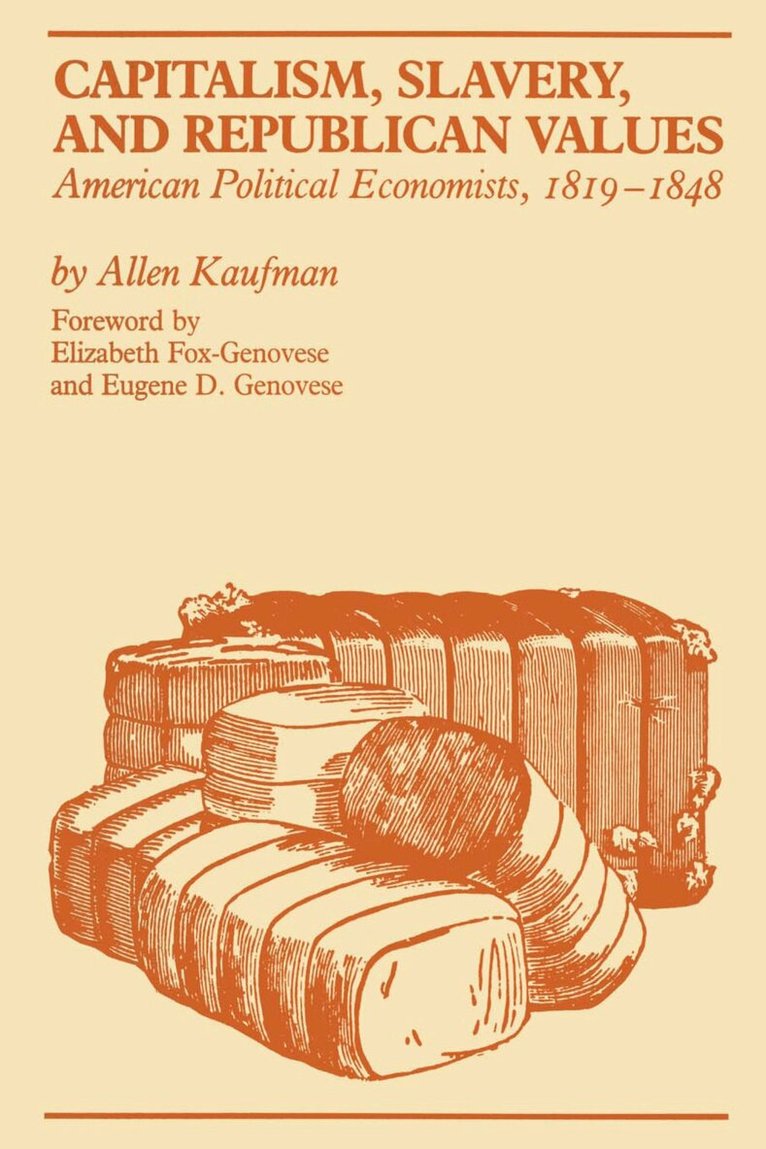
    Capitalism, Slavery, and Republican Values

    American Political Economists, 1819-1848

    AvAllen Kaufman

    Häftad, Engelska, 1983

    277 kr

    Beställningsvara. Skickas inom 10-15 vardagar. Fri frakt över 249 kr.

    Beskrivning

    In the troubled days before the American Civil War, both Northern protectionists and Southern free trade economists saw political economy as the key to understanding the natural laws on which every republican political order should be based. They believed that individual freedom was one such law of nature and that this freedom required a market economy in which citizens could freely pursue their particular economic interests and goals. But Northern and Southern thinkers alike feared that the pursuit of wealth in a market economy might lead to the replacement of the independent producer by the wage laborer. A worker without property is a potential rebel, and so the freedom and commerce that give birth to such a worker would seem to be incompatible with preserving the content citizenry necessary for a stable, republican political order. Around the resolution of this dilemma revolved the great debate on the desirability of slavery in this country. Northern protectionists argued that independent labor must be protected at the same time that capitalist development is encouraged. Southern free trade economists answered that the formation of a propertyless class is inevitable; to keep the nation from anarchy and rebellion, slavery-justified by racism-must be preserved at any cost. Battles of the economists such as these left little room for political compromise between North and South as the antebellum United States confronted the corrosive effects of capitalist development. And slavery's retardant effect on the Southern economy ultimately created a rift within the South between those who sought to make slavery more like capitalism and those who sought to make capitalism more like slavery.

    Produktinformation

    • Utgivningsdatum:1983-02-01
    • Mått:152 x 229 x 13 mm
    • Vikt:454 g
    • Format:Häftad
    • Språk:Engelska
    • Antal sidor:220
    • Förlag:University of Texas Press
    • ISBN:9780292741225

    Utforska kategorier

    • Ekonomisk historia inom Ekonomi och Ledarskap
    • Amerikas historia inom Historia och arkeologi

    Mer om författaren

    Allen Kaufman (1947–2007) held the Hubbard Chair of Strategic Management at the Whittemore School of Business and Economics, University of New Hampshire.

    Innehållsförteckning

    • Foreword by Elizabeth Fox-Genovese and Eugene D. Genovese Acknowledgments Introduction 1. Adam Smith on the Wealth of Nations and the Poverty of Labor 2. Ricardo and Malthus on Who Uses Labor Best, Capitalists or Landlords 3. Daniel Raymond on Wealth without a Working Class 4. Daniel Raymond on Protecting the Republic from Slave Capital 5. Thomas Roderick Dew on Accommodating the Republic to History 6. Thomas Roderick Dew on Black Slavery as the Republic’s Check on the Working Class 7. Jacob N. Cardozo on Making Slavery Work Afterword Notes Index