• Fri frakt över 249 kr
  • •
  • Snabba leveranser
  • •
  • Billiga böcker
Kundservice

Du är på sajten för privatpersoner.

Företag, bibliotek eller offentlig verksamhet?

Du handlar på classic.bokus.com, där alla dina funktioner finns intakta.
Till classic.bokus.com
Bokus logotyp. Gå till startsidan.
  • Erbjudanden
  • Nyheter
  • Student
  • Topplistor
  • Barn & ungdom
  • Bokus Play
  • E-böcker
  • Pocketböcker
  • Spel & pussel

10% studentrabatt med kod TERM26

Sidfot

Mina sidor

    Hjälp

    • Kundservice
    • Vanliga frågor och svar
    • Frakt och leverans
    • Retur vid ångerrätt
    • Reklamera vara
    • Betalning
    • Köpvillkor
    • Allmänna villkor
    • Information om webbplatsens tillgänglighet

    Om Bokus

    • Om oss
    • Pressrum
    • För studenter
    • För företag
    • För bibliotek och offentlig verksamhet
    • För leverantörer
    • Hållbarhet

    Populärt

    • Aktuella erbjudanden
    • Presentkort
    • Studentlitteratur
    • Nya böcker
    • Topplistor
    • Signerade böcker
    • Engelska böcker

    Inspiration

    • Boktips
    • BookTok
    • Populära bokserier
    • Barnbokskaraktärer
    • Populära författare
    Logotyp för Bokus
    Följ oss på Facebook (extern länk)Följ oss på Instagram (extern länk)Följ oss på YouTube (extern länk)Följ oss på TikTok (extern länk)
    bokus @ CookiesAnpassa cookiesIntegritetspolicyKöpvillkor
    Till Citymail hemsida (extern länk)Till Budbee hemsida (extern länk)Till Postnord hemsida (extern länk)Till Schenker hemsida (extern länk)Till Early Bird hemsida (extern länk)Till Walleys hemsida (extern länk)
    1. Skönlitteratur
    2. Litteraturvetenskap

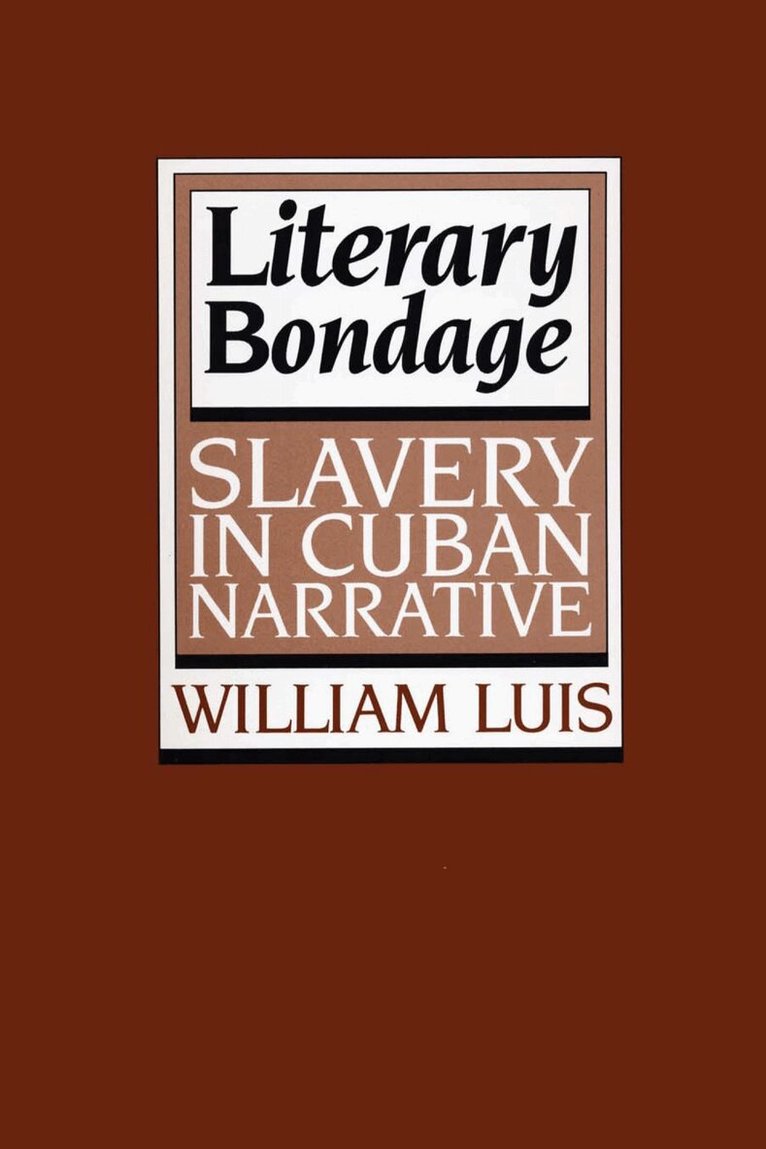
    Literary Bondage

    Slavery in Cuban Narrative

    AvWilliam Luis

    Häftad, Engelska, 1990

    Del i serien Texas Pan American Series

    407 kr

    Beställningsvara. Skickas inom 10-15 vardagar. Fri frakt över 249 kr.

    Beskrivning

    In the nineteenth century, the Cuban economy rested on the twin pillars of sugar and slaves. Slavery was abolished in 1886, but, one hundred years later, Cuban authors were still writing antislavery narratives. William Luis explores this seeming paradox in his groundbreaking study Literary Bondage, asking why this literary genre has remained a viable means of expression. Applying Foucault's theory of counter-discourse to a vast body of antislavery literature, Luis shows how these narratives have always served to undermine the foundations of slavery, to protest the marginalized status of blacks in Cuban society, and to rewrite the canon of "acceptable" history and literature. He finds that emancipation did not end the need for such counter-discourse and reveals how the antislavery narrative continues to provide a forum for voices that have been silenced by the dominant culture. In addition to such well-known works as Cecilia ValdÉs, The Kingdom of This World, and The Autobiography of a Runaway Slave, Luis draws on many literary works outside the familiar canon, including Romualdo, uno de tantos, Aponte, SofÍaLa familia UnzÚazu, El negrero, and Los guerrilleros negros. This comprehensive coverage raises important questions about the process of canon-formation and brings to light Cuba's rich heritage of Afro-Latin literature and culture.

    Produktinformation

    • Utgivningsdatum:1990-03-01
    • Mått:152 x 229 x 19 mm
    • Vikt:454 g
    • Format:Häftad
    • Språk:Engelska
    • Serie:Texas Pan American Series
    • Antal sidor:326
    • Förlag:University of Texas Press
    • ISBN:9780292741324

    Utforska kategorier

    • Litteraturvetenskap inom Skönlitteratur
    • Litteraturvetenskap inom Skönlitteratur

    Mer om författaren

    William Luis is Chancellor's Professor of Spanish at Vanderbilt University.

    Recensioner i media

    ... a distinct contribution to the study of black culture in Caribbean literature. Luis's research and his analysis of textual formation and of the texts themselves are all painstakingly executed. (World Literature Today)

    Innehållsförteckning

    • Preface Introduction. Fiction and Fact: The Antislavery Narrative and Blacks as Counter-Discourse in Cuban History 1. The Antislavery Narrative: Writing and the European Aesthetic 2. Textual Multiplications: Juan Francisco Manzano’s AutobiografÍa and Cirilo Villaverde’s Cecilia ValdÉs3. Time in Fiction: Francisco Calcagno’s Romualdo, uno de tantos and Aponte and MartÍn MorÚa Delgado’s SofÍa and La familia UnzÚazu4. Historical Fictions: Displacement and Change-Lino NovÁs Calvo’s El negrero and Alejo Carpentier’s The Kingdom of This World5. The Politics of Memory: Miguel Barnet’s The Autobiography of a Runaway Slave and CÉsar Leante’s Los guerrilleros negros6. Present and Future Antislavery Narratives: Reinaldo Arenas’s Graveyard of the AngelsNotes Bibliography Index