• Fri frakt över 249 kr
  • •
  • Snabba leveranser
  • •
  • Billiga böcker
Kundservice

Du är på sajten för privatpersoner.

Företag, bibliotek eller offentlig verksamhet?

Du handlar på classic.bokus.com, där alla dina funktioner finns intakta.
Till classic.bokus.com
Bokus logotyp. Gå till startsidan.
  • Erbjudanden
  • Nyheter
  • Student
  • Topplistor
  • Barn & ungdom
  • Bokus Play
  • E-böcker
  • Pocketböcker
  • Spel & pussel

10% rabatt på allt med kod NYSTART10 →

Sidfot

Mina sidor

    Hjälp

    • Kundservice
    • Vanliga frågor och svar
    • Frakt och leverans
    • Retur vid ångerrätt
    • Reklamera vara
    • Betalning
    • Köpvillkor
    • Allmänna villkor
    • Information om webbplatsens tillgänglighet

    Om Bokus

    • Om oss
    • Pressrum
    • För studenter
    • För företag
    • För bibliotek och offentlig verksamhet
    • För leverantörer
    • Hållbarhet

    Populärt

    • Aktuella erbjudanden
    • Presentkort
    • Studentlitteratur
    • Nya böcker
    • Topplistor
    • Signerade böcker
    • Engelska böcker

    Inspiration

    • Boktips
    • BookTok
    • Populära bokserier
    • Barnbokskaraktärer
    • Populära författare
    Logotyp för Bokus
    Följ oss på Facebook (extern länk)Följ oss på Instagram (extern länk)Följ oss på YouTube (extern länk)Följ oss på TikTok (extern länk)
    bokus @ CookiesAnpassa cookiesIntegritetspolicyKöpvillkor
    Till Citymail hemsida (extern länk)Till Budbee hemsida (extern länk)Till Postnord hemsida (extern länk)Till Schenker hemsida (extern länk)Till Early Bird hemsida (extern länk)Till Walleys hemsida (extern länk)
    1. Historia och arkeologi
    2. Historia
    3. Amerikas historia

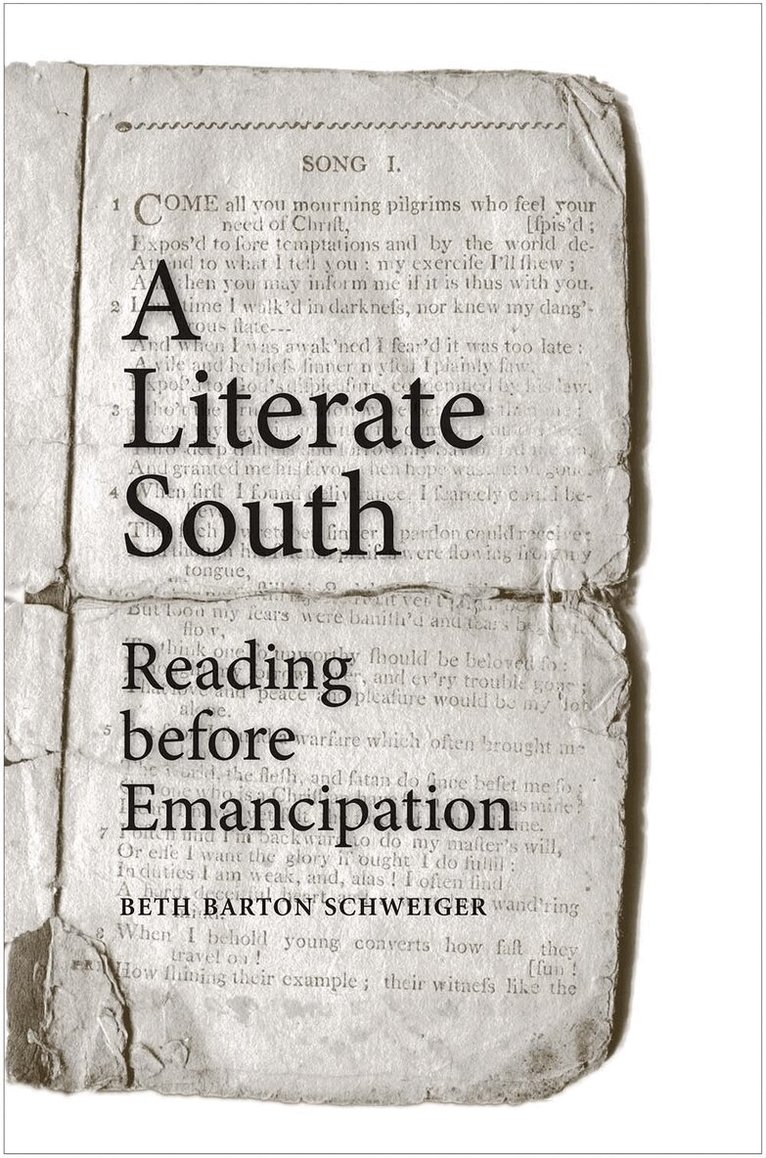
    Literate South

    Reading before Emancipation

    AvBeth Barton Schweiger

    Inbunden, Engelska, 2019

    406 kr

    Beställningsvara. Skickas inom 5-8 vardagar. Fri frakt över 249 kr.

    Beskrivning

    A provocative examination of literacy in the American South before emancipation, countering the long-standing stereotype of the South’s oral traditionSchweiger complicates our understanding of literacy in the American South in the decades just prior to the Civil War by showing that rural people had access to a remarkable variety of things to read. Drawing on the writings of four young women who lived in the Blue Ridge Mountains, Schweiger shows how free and enslaved people learned to read, and that they wrote and spoke poems, songs, stories, and religious doctrines that were circulated by speech and in print. The assumption that slavery and reading are incompatible—which has its origins in the eighteenth century—has obscured the rich literate tradition at the heart of Southern and American culture.

    Produktinformation

    • Utgivningsdatum:2019-08-13
    • Mått:156 x 235 x 25 mm
    • Vikt:558 g
    • Format:Inbunden
    • Språk:Engelska
    • Antal sidor:288
    • Förlag:Yale University Press
    • ISBN:9780300112535

    Utforska kategorier

    • Amerikas historia inom Historia och arkeologi
    • Litteraturvetenskap inom Skönlitteratur
    • Lokalhistoria och kulturhistoria inom Historia och arkeologi

    Mer om författaren

    Beth Barton Schweiger taught for fifteen years at the University of Arkansas. She is the author of The Gospel Working Up and editor of Religion in the American South.

    Recensioner i media

    "A striking new interpretation of the antebellum American South. This book is a major contribution to the literary and cultural history of the American South, the history of the book and print culture, women’s history, nineteenth-century American history, and African American history."—Lloyd Pratt, University of Oxford"Beth Barton Schweiger's highly imaginative survey of antebellum print culture in the Virginia and North Carolina backcountry uncovers a rich world of avid readers who helped define themselves and their own version of modernity at a time when literacy served as a potent weapon in the slavery/antislavery debate."—Susan V. Donaldson, College of William and Mary"Schweiger makes a persuasive case for the circulation and consumption of print in the rural antebellum South. In doing so, she offers an innovative take on what people do with print.”—Sarah Gardner, Mercer University