• Fri frakt över 249 kr
  • •
  • Snabba leveranser
  • •
  • Billiga böcker
Kundservice

Du är på sajten för privatpersoner.

Företag, bibliotek eller offentlig verksamhet?

Du handlar på classic.bokus.com, där alla dina funktioner finns intakta.
Till classic.bokus.com
Bokus logotyp. Gå till startsidan.
  • Erbjudanden
  • Student
  • Topplistor
  • Barn & ungdom
  • Bokus Play
  • E-böcker
  • Ljudböcker
  • Pocketböcker
  • Spel & pussel

Upp till 25% på utvalda nyheter →

Sidfot

Mina sidor

    Hjälp

    • Kundservice
    • Vanliga frågor och svar
    • Frakt och leverans
    • Retur vid ångerrätt
    • Reklamera vara
    • Betalning
    • Köpvillkor
    • Allmänna villkor
    • Information om webbplatsens tillgänglighet

    Om Bokus

    • Om oss
    • Pressrum
    • För studenter
    • För företag
    • För bibliotek och offentlig verksamhet
    • För leverantörer
    • Hållbarhet

    Populärt

    • Aktuella erbjudanden
    • Presentkort
    • Studentlitteratur
    • Nya böcker
    • Topplistor
    • Signerade böcker
    • Engelska böcker

    Inspiration

    • Boktips
    • BookTok
    • Populära bokserier
    • Barnbokskaraktärer
    • Populära författare
    Logotyp för Bokus
    Följ oss på Facebook (extern länk)Följ oss på Instagram (extern länk)Följ oss på YouTube (extern länk)Följ oss på TikTok (extern länk)
    bokus @ CookiesAnpassa cookiesIntegritetspolicyKöpvillkor
    Till Citymail hemsida (extern länk)Till Budbee hemsida (extern länk)Till Postnord hemsida (extern länk)Till Schenker hemsida (extern länk)Till Early Bird hemsida (extern länk)Till Walleys hemsida (extern länk)
    1. Psykologi och pedagogik
    2. Psykologi
    3. Psykologiska teorier och skolor
    4. Beteendeteori

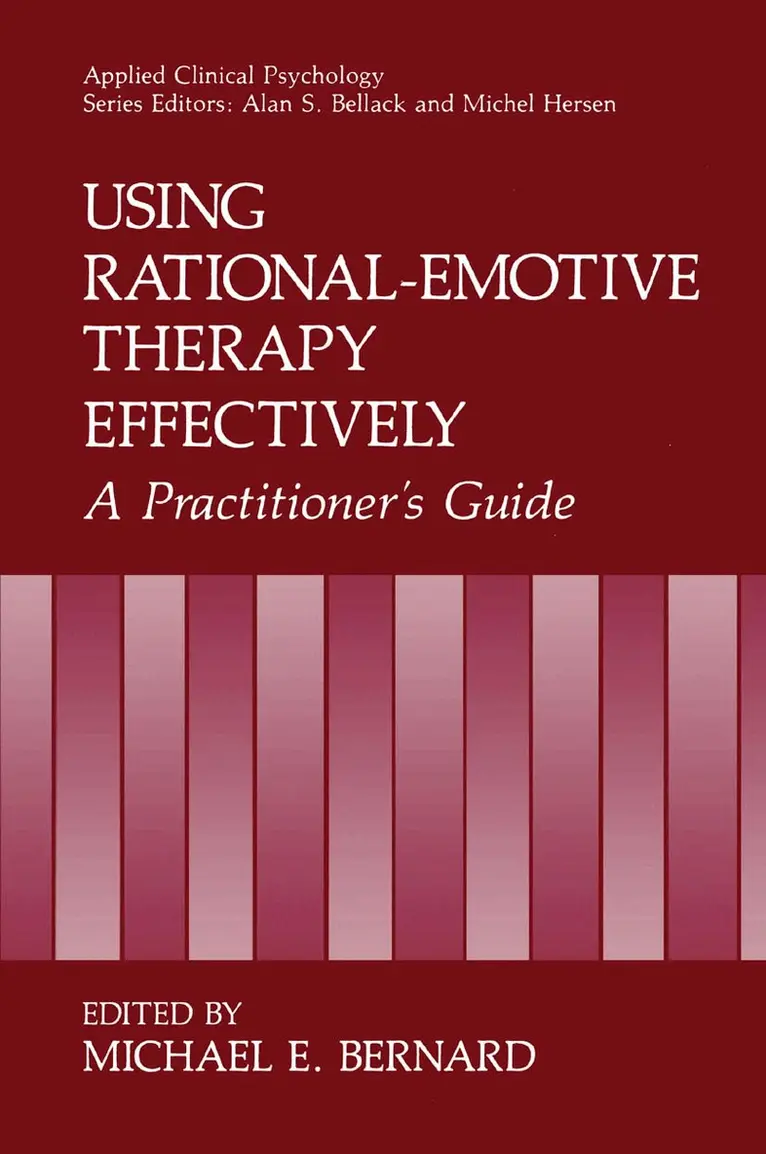
    Using Rational-Emotive Therapy Effectively

    A Practitioner's Guide

    AvMichael E. Bernard

    Inbunden, Engelska, 1991

    Del i serien NATO Science Series B:

    1 580 kr

    Beställningsvara. Skickas inom 10-15 vardagar. Fri frakt över 249 kr.

    Beskrivning

    The initial conceptualization of this book was much more narrow than the final product that has emerged. I started out believing that it would be enlightening to have a group of acknowledged rational-emotive therapy (RET) expert practitioners with well-established literary credentials write about how they approach the problem of modifying dient irrationality. Many RET practitioners of all levels of experience are, on the one hand, enamored of the economy, the precision, and the accuracy of psychological insight that RET theory offers, but they are, on the other hand, equally frustrated by their own inability to "persuade" or otherwise change some of the dients they work with more quickly or even at all. Indeed, dients themselves frequently express the view that RET is illuminating, yet they find themselves at the same time puzzled and perplexed by their inability to make the substantial changes that RET invites. It became dearer as I discussed the project with many of the contrib­ utors that to practice RET effectively requires more than just innovative and persistent assessment and intervention techniques. For example, Rus­ sell Grieger expressed the view that more prerequisite work needs to be done on the value and philosophical systems of dients-induding person­ al responsibility and the philosophy of happiness-before many dients can show significant shifts in their thinking. Susan Walen raised the gener­ al issues of how effective RET can be in the treatment of biologically driven affective disorders.

    Produktinformation

    • Utgivningsdatum:1991-07-31
    • Mått:152 x 229 x 25 mm
    • Vikt:691 g
    • Format:Inbunden
    • Språk:Engelska
    • Serie:NATO Science Series B:
    • Antal sidor:350
    • Upplaga:1991
    • Förlag:Springer Science+Business Media
    • ISBN:9780306437540

    Utforska kategorier

    • Beteendeteori inom Psykologi och pedagogik

    Innehållsförteckning

    • 1. Using RET Effectively: Reflections and Interview.- 2. Keys to Effective RET.- 3. Orthodox RET Taught Effectively with Graphics, Feedback on Irrational Beliefs, a Structured Homework Series, and Models of Disputation.- 4. REGIME: A Counseling and Educational Model for Using RET Effectively.- 5. Flexibility in RET: Forming Alliances and Making Compromises.- 6. A Rational-Emotive Model of Assessment.- 7. Comprehensive Cognitive Disputing in RET.- 8. RET and the Assertive Process.- 9. Depression and RET: Perspectives from Wounded Healers.- 10. Psychological Messages and Social Context: Strategies for Increasing RET’s Effectiveness with Women.- 11. Using RET Effectively in the Workplace.- 12. RET with Children and Adolescents.