Inbunden, Engelska, 2001
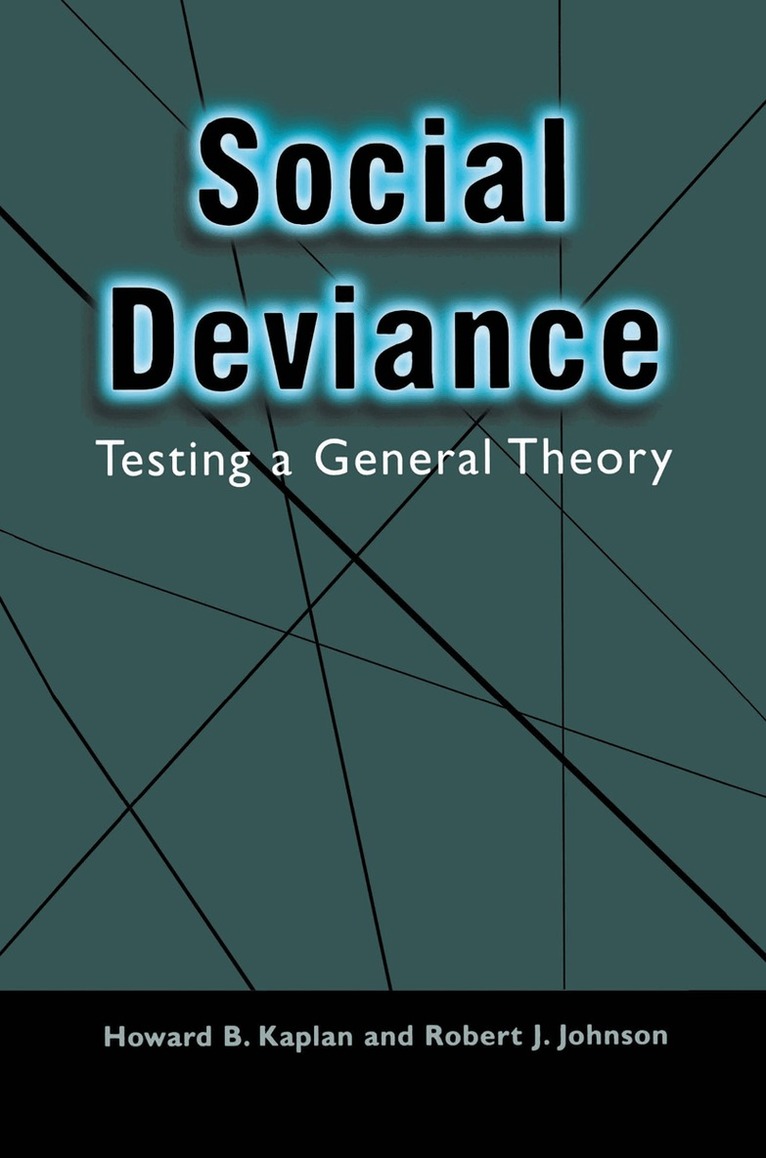
Social Deviance
Av Howard B. Kaplan, Robert J. Johnson
535 kr
Beställningsvara. Skickas inom 10-15 vardagar. Fri frakt över 249 kr.
Beskrivning
Inthisvolumewereportaseriesofanalysesofpaneldatadesignedtotestaspects ofacomprehensivetheoreticalstatementaboutthesocialandsocial-psychological processesthatplayapartintheonsetandcourse(includingcessationandcontinu- ationatincreased,decreased,orconstantlevels)ofdeviantbehavior. InPartIwe outlineourtheoreticalandmethodologicalapproachtothestudyofdeviantbehav- ior. ChapterIpresentsacomprehensivetheoreticalstatementthathasevolvedover aperiodofmorethantwodecades(Kaplan,1972,1975b,1980,1982,1983,1984, 1986,1995,1996)outofaconsiderationofthetheoreticalandempiricalreports ofothersandinresponsetoourownearliertestsofthegeneraltheory(Kaplan & Damphousse,1997;Kaplan&Fukurai,1992;Kaplan&Johnson,1991;Kaplan, Johnson, &Bailey,1986,1987,1988;Kaplan,Martin, &Johnson,1986;Kaplan & Peck,1992).Thestatementisorganizedasaresponsetofourinterrelatedquestions: Whatsocialandsocial-psychologicalfactors(1)influencethesocialdefinitionof deviantbehavior;(2)motivateindividualstoperformdeviantbehaviors;(3)facili- tatetheperformanceofdeviantbehaviorindependentlyoforininteractionwithfac- torsthatinfluencemotivationtoengageindeviantbehavior;and(4)influencethe stabilityofdeviantbehavior,independentlyoforininteractionwithfactorsthat influencetheinitiationofdeviantbehavior?Thisstatementprovidesaframework andrationaleforthemultivariatemodelsweestimateandreportinlaterpartsofthe volume. Chapter2providesdetailsofthepaneldesignandmultivariateanalytic techniques. Thesample,arandomhalfofthe1971cohortofseventhgradersina largeurbanschooldistrict,wastesteduptofourtimesbetweenearlyadolescence andyoungadulthood. Thetheoreticallyinformedmultivariatemodelsaretested usingtheLISRELVIprogram(Joreskog &Sorbom,1986)toestimatethestruc- turalrelationshipsamonglatentvariables. InPartIIweestimateseveralmodelsthataccountforvariationindeviant behaviormeasuredintheninthgradeintermsofconstructsmeasuredinthesev- enthandeighthgrades.InChapter3weestimate,forallsubjectswhoprovideddata duringtheseventh,eighth,andninthgradetestings,aseriesoffourincreasingly elaboratedmodelsinwhichanewvariableisaddedtotheimmediatelypreceding modelasplayingcommonantecedentand/orinterveningexplanatoryroles. The vii viii Preface mostinclusivemodelhasbeenpublishedpreviouslyinitspresentform(Kaplan & Johnson,1991);thethreelessinclusivemodelshaveappearedinsomewhatdiffer- entform(Johnson &Kaplan,1987;Kaplan,Johnson, &Bailey,1986,1987;Kaplan, Martin, &Johnson,1986). Thepresentversionsdifferfromtheearlierversionsin termsofexogenousvariables,measurementvariables,samplesize,andinclusionof correlateddisturbancesinthemodels. Therepetitionofthemostinclusivemodel andthereestimationoftheotherthreemodelspermitustodescribeandeasilycom- municatetheeffectsofeachsuccessivetheoreticalelaborationandtodiscussthe resultsingreaterdetailthanpublicationintheperiodicalliteraturegenerallyper- mits. Thereproductionofthemostinclusivemodelalsoprovidesabaseagainst whichwecancomparethemodelsestimatedinthenexttwochapters.InChapters 4and5,respectively,weestimatethismodelforsubgroupsinordertotestassump- tionsabouttheequivalenceofmeasurementmodelsandstructuralinvariance betweenthedifferentsocialgroupings. InChapter4weestimatethemodelfor malesandfemales. InChapter5weestimatethemostinclusiveexplanatorymodel forsubgroupsdifferentiatedaccordingtorace/ethnicity. InPartIIIwereportanalysesthataddressthevalidityofthemodelasan explanationofdeviantbehaviorthatismeasuredandexpressedinyoungadult- hood. InChapter6theelaboratedmodelasanexplanationofdeviantbehaviorin youngadulthoodisestimatedforthemostinclusivegroupingavailable,white malesandfemalesconsideredtogether. Whenwewereattemptingtoconductsub- groupanalysisforgroupsdifferentiatedaccordingtorace/ethnicity,itbecame apparentthat-unlikethesituationinpredictingdeviantbehaviorinearlyadoles- cence-themeasuresofdeviantbehaviorusedfortheyoungadultanalyses formedavalidconstructonlyforthewhitesubjects. Themeasuresoftheconstruct werenotsufficientlyvalidorreliabletopermitestimationinasampleofyoung blackadults. Further,forHispanicsubjectsthesamplesizesimplywastoosmall toprovidestableestimatesrelativetothenumberofparametersinthemostcom- prehensivemodel.Hence,inordertoconsiderthedifferentialexplanatorypower oftheelaboratedmodelinaccountingfordeviantbehaviorinyoungadulthood andearlyadolescence,respectively,weusedthemodelsforwhitesubjectsas pointsofreference. InChapter7weapplytheelaboratedmodeltotheexplana- tionofdevianceinyoungadulthoodformalesandfemalesconsideredseparately. InPartIVwesummarizetheanalysesandofferconclusionsaboutthe significanceofthiswork. Chapter8considerstheusefulnessofthecomprehen- sivetheoryinexplainingsomeofthevarianceindeviantbehavioratdifferent pointsinthelifecycleandspecifyingthenatureoftherelationshipsamong explanatoryvariables. Inclosing,weofferillustrativesubsequentstudiesthat buildontheearliertheoryandanalyticstrategies. Acknowledgments ThisworkwassupportedinpartbyresearchgrantsROIDA02497andROI DA04310andbyaResearchScientistAward(K05DAOOI36)tothefIrst-named author,allfromtheNationalInstituteonDrugAbuse. Wearepleasedtorecognizetheunwaveringdedicationof"Sam"McLean, HollyGroves,andJeffersonRogerstothetechnicalproductionofthemanuscript. Wherewerecognizetheoriginsofourideas,weacknowledgethesesources byappropriatetextualcitations.However,manyofourideas-particularlyas thesearesynthesizedinourcomprehensivetheoryofdeviantbehavior-arethe productsoflifetimesofscholarlyactivityandtheprecisesourcesororiginalityof theseideascannolongerbedetermined. Thus,oftenwemustleaveittoothersto makejudgmentsaboutthehistoricalroots,originality,orindependentcreationof thetheoreticalstatementsinthisvolume. ix Contents PART I. THEORETICAL AND METHODOLOGICAL APPROACHES TO THE STUDY OF DEVIANT BEHAVIOR 1. Toward a General Theory of Deviant Behavior 3 TheNatureofDeviance...3 MotivationtoCommitDeviantActsthatViolateMembership GroupNorms...6 MotivationtoCommitDeviantActsthatConformtoMembershipGroup Norms...9 ActingOutDeviantDispositions 10 ContinuityofDeviantBehavior...17 2. Method...25 SampleandDataCollection...25 Analysis...26 MeasurementModel 26 StructuralModel 30 SubgroupComparisons 36 PART II. DEVIANT BEHAVIOR IN ADOLESCENCE 3. An Elaboration Strategy for the Study of Deviant Behavior 41 ModelI:Self-Rejection intheExplanationofDeviance...43 ModelII:ContinuityofEarlyDeviance...47 Methods...53 xi xii Contents Results...58 DiscussionofModelsIandII 63 ModelIII:DeviantPeerAssociationsandDeviantBehavior 66 Theory...67 Methods...73 Results...75 DiscussionofModelIII...79 Conclusion...86 ModelIV:NegativeSocialSanctionsfromtheLabelingPerspective 87 EmpiricalSupport 88 TheoreticalIssues 89 ElaboratingaModelofDeviantBehavior 96 Method 100 Results...103 DiscussionofModelIV...108 Appendix...119 4. GenderasaModeratorinExplanationsofAdolescentDeviance*.
Produktinformation
- Utgivningsdatum: 2001-11-30
- Mått: 155 x 235 x 19 mm
- Vikt: 495 g
- Format: Inbunden
- Språk: Engelska
- Antal sidor: 232
- Upplaga: 2001
- Förlag: Springer Science+Business Media
- ISBN: 9780306466106
Utforska kategorier
Betyg & recensioner
0 recensioner
Inga recensioner tillgängliga.