E-bok, Engelska, 2000
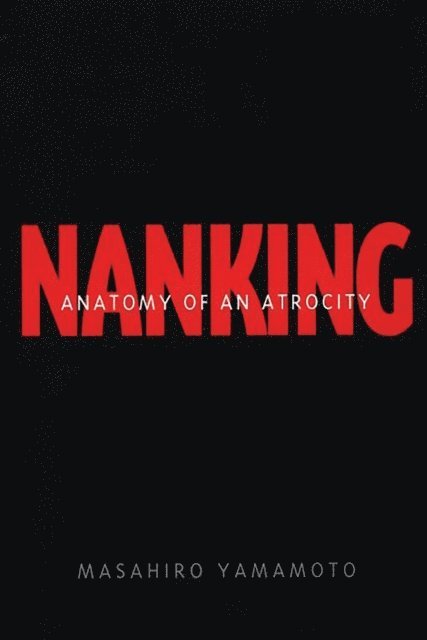
Nanking
1325 kr
Skickas tisdag 13/10
Beskrivning
The December 1937 incident that has come to be known as the Rape of Nanking is, without doubt, a tragedy that will not soon be forgotten. While acknowledging that a tremendous loss of life occurred, this study challenges the current prevailing notion that the incident was a deliberate, planned effort on the part of the Japanese military and analyzes events to produce an accurate estimate of the scale of the atrocities. Drawing on Chinese, Japanese, and English sources, Yamamoto determines that what happened at Nanking were unfortunate atrocities of conventional war with precedents in both Eastern and Western military history. He concludes that post-war events such as the war crimes trials and the impact of the Holocaust in Europe affected public opinion regarding Nanking and led to a dramatic reinterpretation of events.
The Rape of Nanking consisted of two distinct phases: the mass execution of prisoners of war (as well as conscription age men who appeared to be combatants) and the delinquent acts of individual soldiers. The first phase, which occurred immediately after Nanking's fall and which claimed most of the atrocity victims, was the result of the Japanese military's attempt to clear the city of Chinese soldiers thought to be in plain clothes. The second phase, which lasted approximately six weeks, was horrible, but resulted in a much smaller number of fatalities. It was characterized by numerous criminal acts, ranging from rape and murder to arson and theft, committed by unrestrained Japanese soldiers. The root cause for both phases was the Japanese military's bureaucratic inefficiency and command irresponsibility. While both Chinese and American contemporary sources initially attributed the incident to these causes, subsequent Japanese atrocities against both military and civilian Allied personnel during World War II and evidence presented at war crimes trials would come to reshape perceptions of the Nanking events as an Asian counterpart to the Nazi Holocaust.
The Rape of Nanking consisted of two distinct phases: the mass execution of prisoners of war (as well as conscription age men who appeared to be combatants) and the delinquent acts of individual soldiers. The first phase, which occurred immediately after Nanking's fall and which claimed most of the atrocity victims, was the result of the Japanese military's attempt to clear the city of Chinese soldiers thought to be in plain clothes. The second phase, which lasted approximately six weeks, was horrible, but resulted in a much smaller number of fatalities. It was characterized by numerous criminal acts, ranging from rape and murder to arson and theft, committed by unrestrained Japanese soldiers. The root cause for both phases was the Japanese military's bureaucratic inefficiency and command irresponsibility. While both Chinese and American contemporary sources initially attributed the incident to these causes, subsequent Japanese atrocities against both military and civilian Allied personnel during World War II and evidence presented at war crimes trials would come to reshape perceptions of the Nanking events as an Asian counterpart to the Nazi Holocaust.
Produktinformation
- Utgivningsdatum: 2000-08-30
- Format: E-bok
- Språk: Engelska
- Antal sidor: 368
- Förlag: Bloomsbury Publishing Plc
- ISBN: 9780313000966
Utforska kategorier
Betyg & recensioner
0 recensioner
Inga recensioner tillgängliga.