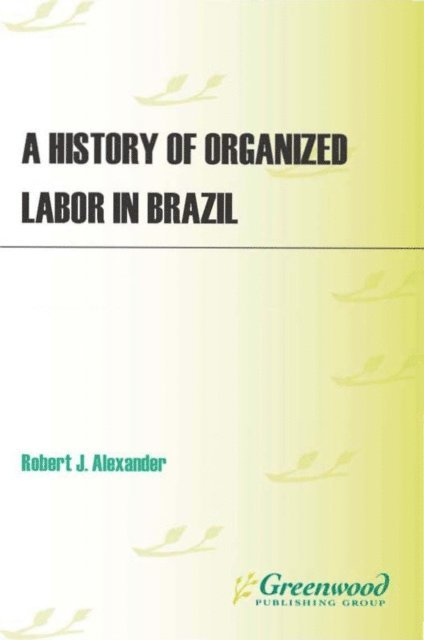
E-bok, Engelska, 2003
History of Organized Labor in Brazil
803 kr
Läs direkt i Bokus Reader – eller ladda ned till din enhet (PDF kräver ofta zoom och scroll på små skärmar).
Beskrivning
Alexander examines the history of the labor movement in Brazil during its two key phases. First, he looks at the origins and early development of the movement from the last decades of the 19th century until the Revolution of 1930. Then he analyzes the impact of the corporate state structure that President Getulio Vargas imposed on labor during his first tenure in power, and the continuation of that structure during most of the remainder of the century.
Until 1930, the trajectory of the labor movement in Brazil was quite similar to what was happening in most of the rest of Latin America. Most of the early labor organizations were mutual-benefit societies rather than trade unions. This began to change in the early 1900s. From the onset, organized labor in Brazil was involved with politics, and organized labor had to deal not only with the opposition of employers, but also with that of successive conservative governments. All this changed with the ascent of Vargas to power in 1930. He sought to win the support of the urban working class, and with the coming of the New State in 1937, the government was deeply involved in the direction of union activities. After 1945, Brazilian labor was once more influenced by a variety of different political currents, and by the 1960s the labor movement began to extend into the rural sector of the economy. The Constitution of 1988 allowed workers to organize without government control and they won the right to strike. By 1990 the Brazilian labor movement had attained the structure and characteristics it would retain into the new century. A major resource for scholars, students, and other researchers involved with Brazilian labor, economic, and political affairs.
Until 1930, the trajectory of the labor movement in Brazil was quite similar to what was happening in most of the rest of Latin America. Most of the early labor organizations were mutual-benefit societies rather than trade unions. This began to change in the early 1900s. From the onset, organized labor in Brazil was involved with politics, and organized labor had to deal not only with the opposition of employers, but also with that of successive conservative governments. All this changed with the ascent of Vargas to power in 1930. He sought to win the support of the urban working class, and with the coming of the New State in 1937, the government was deeply involved in the direction of union activities. After 1945, Brazilian labor was once more influenced by a variety of different political currents, and by the 1960s the labor movement began to extend into the rural sector of the economy. The Constitution of 1988 allowed workers to organize without government control and they won the right to strike. By 1990 the Brazilian labor movement had attained the structure and characteristics it would retain into the new century. A major resource for scholars, students, and other researchers involved with Brazilian labor, economic, and political affairs.
Produktinformation
- Utgivningsdatum: 2003-05-30
- Språk: Engelska
- Antal sidor: 248
- Filformat: PDF
- Kopieringsskydd: LCP
- ISBN: 9780313071928
- Förlag: Bloomsbury Publishing Plc
Utforska kategorier
Betyg & recensioner
0 recensioner
Inga recensioner tillgängliga.