Inbunden, Engelska, 2008
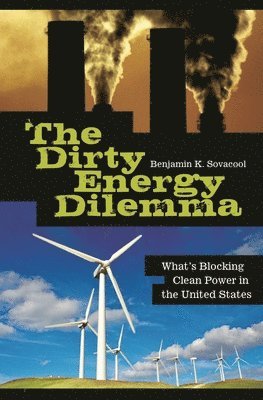
Dirty Energy Dilemma
What's Blocking Clean Power in the United States
639 kr
Beställningsvara. Skickas inom 10-15 vardagar. Fri frakt över 249 kr.
Beskrivning
Produktinformation
- Utgivningsdatum: 2008-10-30
- Mått: 156 x 235 x 22 mm
- Vikt: 652 g
- Format: Inbunden
- Språk: Engelska
- Antal sidor: 320
- Förlag: Bloomsbury Publishing Plc
- ISBN: 9780313355400
- Utmärkelser: Winner of 2009 Nautilus Silver Award-Ecology/Environment/Sustainability 2009
Utforska kategorier
Mer om författaren
Benjamin K. Sovacool is Research Fellow in the Energy Governance Program at the Centre on Asia and Globalization in the Lee Kuan Yew School of Public Policy at the National University of Singapore. He is Adjunct Assistant Professor in the Government and International Affairs Program at Virginia Polytechnic Institute. He investigated the social impediments to renewable energy systems for the NSF Electric Power Networks Efficiency and Security Program. He has worked in advisory and research capacities at Oak Ridge National Laboratory, the New York State Energy Research and Development Authority, the Virginia Center for Coal and Energy Research, and the U.S. Department of Energy's Climate Change Technology Program. He is the co-editor with Marilyn A. Brown of Energy and American Society: Thirteen Myths (2007) and a frequent contributor to such journals as Electricity Journal, Energy Policy, Stanford Environmental Law Journal, and Daedalus.
Recensioner i media
Conventional energy sources are low-cost but dirty, finite, and prone to price volatility, while clean energy is sustainable and reduces air pollution and emissions of greenhouse gases. However, clean energy is more expensive, demands difficult changes from both consumers and suppliers, and results in environmental disruption, so how do we embark on a cleaner, more sustainable energy path? Sovacool (Energy Governance Program, National Univ. of Singapore) solves this 'energy dilemma' by dismissing it. He argues that the negative aspects of clean energy are best ignored, even if doing so requires a federal mandate compelling utilities to purchase more expensive clean energy and forces energy consumers to pay a 'benefit charge' to finance their own reeducation by funding programs that promise to reduce consumers' aesthetic and environmental objections to clean power.
Betyg & recensioner
0 recensioner
Inga recensioner tillgängliga.