• Fri frakt över 249 kr
  • •
  • Snabba leveranser
  • •
  • Billiga böcker
Kundservice

Du är på sajten för privatpersoner.

Företag, bibliotek eller offentlig verksamhet?

Du handlar på classic.bokus.com, där alla dina funktioner finns intakta.
Till classic.bokus.com
Bokus logotyp. Gå till startsidan.
  • Erbjudanden
  • Nyheter
  • Student
  • Topplistor
  • Barn & ungdom
  • Bokus Play
  • E-böcker
  • Pocketböcker
  • Spel & pussel

10% rabatt på allt med kod NYSTART10 →

Sidfot

Mina sidor

    Hjälp

    • Kundservice
    • Vanliga frågor och svar
    • Frakt och leverans
    • Retur vid ångerrätt
    • Reklamera vara
    • Betalning
    • Köpvillkor
    • Allmänna villkor
    • Information om webbplatsens tillgänglighet

    Om Bokus

    • Om oss
    • Pressrum
    • För studenter
    • För företag
    • För bibliotek och offentlig verksamhet
    • För leverantörer
    • Hållbarhet

    Populärt

    • Aktuella erbjudanden
    • Presentkort
    • Studentlitteratur
    • Nya böcker
    • Topplistor
    • Signerade böcker
    • Engelska böcker

    Inspiration

    • Boktips
    • BookTok
    • Populära bokserier
    • Barnbokskaraktärer
    • Populära författare
    Logotyp för Bokus
    Följ oss på Facebook (extern länk)Följ oss på Instagram (extern länk)Följ oss på YouTube (extern länk)Följ oss på TikTok (extern länk)
    bokus @ CookiesAnpassa cookiesIntegritetspolicyKöpvillkor
    Till Citymail hemsida (extern länk)Till Budbee hemsida (extern länk)Till Postnord hemsida (extern länk)Till Schenker hemsida (extern länk)Till Early Bird hemsida (extern länk)Till Walleys hemsida (extern länk)
    1. Medicin
    2. Medicin: icke kliniska discipliner
    3. Anatomi

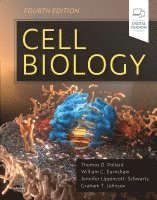
    Cell Biology

    AvThomas D. Pollard,William C. Earnshaw

    Inbunden, Engelska, 2023

    1 300 kr

    Beställningsvara. Skickas inom 5-8 vardagar. Fri frakt över 249 kr.

    Beskrivning

    **Selected for 2026 Doody's Core Titles as an Essential Purchase in Cell Biology/Histology**

    Reader-friendly Cell Biology, 4th Edition, provides a concise but comprehensive foundation for students entering research or health care career paths. Award winning illustrations help readers quickly grasp general principles. The authors have thoroughly updated this popular text to provide readers with the current understanding of the principles of normal cellular function along with examples of how molecular defects predispose to human disease. Major new themes in the 4th edition include the roles of intrinsically disordered polypeptides and phase separation in cellular functions, the influence of new molecular structures on understanding mechanisms, and the impact of exciting new methods-from single cell RNA sequencing to second generation super resolution fluorescence microscopy-on advancing our understanding.

    Produktinformation

    • Utgivningsdatum:2023-02-28
    • Mått:216 x 276 x 34 mm
    • Vikt:2 270 g
    • Format:Inbunden
    • Språk:Engelska
    • Antal sidor:944
    • Upplaga:4
    • Förlag:Elsevier Health Sciences
    • ISBN:9780323758000

    Utforska kategorier

    • Anatomi inom Medicin

    Mer om författaren

    Thomas Dean Pollard is a prominent educator, cell biologist and biophysicist whose research focuses on understanding cell motility through the study of actin filaments and myosin motors. He is Sterling Professor of Molecular, Cellular & Developmental Biology and a Professor of Cell Biology and Molecular Biophysics & Biochemistry at Yale University. He was Dean of Yale's Graduate School of Arts and Sciences from 2010 to 2014, and President of the Salk Institute for Biological Studies from 1996 to 2001. Pollard is very active in promoting scientific education and research primarily through two major societies, both of which he is a past President: the American Society for Cell Biology and the Biophysical Society William Charles Earnshaw is Professor of Chromosome Dynamics at the University of Edinburgh where he has been a Wellcome Trust Principal Research Fellow since 1996. Earnshaw is an elected Fellow of the Royal Society since 2013 for his studies of mitotic chromosome structure and segregation. Before Edinburgh, he was Professor of Cell Biology and Anatomy at Johns Hopkins School of Medicine. Jennifer Lippincott-Swartz is Group Leader at the Howard Hughes Medical Institute Janelia Research Campus. Her lab uses live cell imaging approaches to analyze the spatio-temporal behaviour and dynamic interactions of molecules in cells with a special focus on neurobiology. Before Janelia, Lippincott-Swartz was a primary investigator and chief of the Section on Organelle Biology in the Cell Biology and Metabolism Branch. Her work there included a collaboration with physicists Eric Betzig and Harald Hess (now group leaders at Janelia), who proposed a new function for the photoactivatable protein. The scientists used the protein to generate photoactivatable fluorophores, or dyes, which enabled them to illuminate different sets of molecules sequentially, creating a microscope image far more detailed than previously possible. The method, called super-resolution microscopy, garnered Betzig the 2014 Nobel Prize in Chemistry. Graham Johnson is a computational biologist and Certified Medical Illustrator (CMI) with approx. 20 years of professional experience. He is Director of the Animated Cell at the Allen Institute. Before the Allen Institute, Johnson's lab in the California Institute for Quantitative Biosciences at the University of California, San Francisco worked to generate, simulate and visualize molecular models of cells. His lab's Mesoscope project and his team at Allen Institute continue this mission by uniting biologists, programmers and artists to interoperate the computational tools of science and art.

    Innehållsförteckning

    • SECTION I Introduction to Cell Biology1. Cells as the Basis of Life on Earth2. Evolution of Life on EarthSECTION II Chemical and Physical Background3. Molecules: Structures and Dynamics4. Biophysical Principles5. Macromolecular Assembly6. Research StrategiesSECTION III Chromatin, Chromosomes, and the Cell Nucleus7. Chromosome Organization8. DNA Packaging in Chromatin and Chromosomes9. Nuclear Structure and DynamicsSECTION IV Central Dogma: From Gene to Protein10. Gene Expression11. Eukaryotic RNA Processing12. Protein Synthesis and FoldingSECTION V Membrane Structure and Function13. Membrane Structure and Dynamics14. Membrane Pumps15. Membrane Carriers16. Membrane Channels17. Membrane PhysiologySECTION VI Cellular Organelles and Membrane Trafficking18. Posttranslational Targeting of Proteins19. Mitochondria, Chloroplasts, Peroxisomes20. Endoplasmic Reticulum21. Mechanisms of Vesicular Transport22. Secretory Membrane System and Golgi Apparatus23. Endocytosis and the Endosomal Membrane System24. Processing and Degradation of Cellular ComponentsSECTION VII Signaling Mechanisms25. Plasma Membrane Receptors26. Protein Hardware for Signaling27. Second Messengers28. Integration of SignalsSECTION VIII Cellular Adhesion and the Extracellular Matrix29. Cells of the Extracellular Matrix and Immune Systems of Animals30. Extracellular Matrix Molecules31. Cellular Adhesion32. Intercellular Junctions33. Connective TissuesSECTION IX Cytoskeleton and Cellular Motility34. Actin and Actin-Binding Proteins35. Microtubules and Centrosomes36. Intermediate Filaments37. Motor Proteins38. Intracellular Motility39. Cellular Motility40. MusclesSECTION X Cell Cycle41. Introduction to the Cell Cycle42. G1 Phase and Regulation of Cell Proliferation,43. S Phase and DNA Replication44. G2 Phase: Responses to DNA Damage and Control of Entry Into Mitosis45. Mitosis46. Cytokinesis47. Meiosis48. Cell Death