• Fri frakt över 249 kr
  • •
  • Snabba leveranser
  • •
  • Billiga böcker
Kundservice

Du är på sajten för privatpersoner.

Företag, bibliotek eller offentlig verksamhet?

Du handlar på classic.bokus.com, där alla dina funktioner finns intakta.
Till classic.bokus.com
Bokus logotyp. Gå till startsidan.
  • Erbjudanden
  • Nyheter
  • Student
  • Topplistor
  • Barn & ungdom
  • Bokus Play
  • E-böcker
  • Pocketböcker
  • Spel & pussel

10% rabatt på allt med kod: NYSTART10 →

Sidfot

Mina sidor

    Hjälp

    • Kundservice
    • Vanliga frågor och svar
    • Frakt och leverans
    • Retur vid ångerrätt
    • Reklamera vara
    • Betalning
    • Köpvillkor
    • Allmänna villkor
    • Information om webbplatsens tillgänglighet

    Om Bokus

    • Om oss
    • Pressrum
    • För studenter
    • För företag
    • För bibliotek och offentlig verksamhet
    • För leverantörer
    • Hållbarhet

    Populärt

    • Aktuella erbjudanden
    • Presentkort
    • Studentlitteratur
    • Nya böcker
    • Topplistor
    • Signerade böcker
    • Engelska böcker

    Inspiration

    • Boktips
    • BookTok
    • Populära bokserier
    • Barnbokskaraktärer
    • Populära författare
    Logotyp för Bokus
    Följ oss på Facebook (extern länk)Följ oss på Instagram (extern länk)Följ oss på YouTube (extern länk)Följ oss på TikTok (extern länk)
    bokus @ CookiesAnpassa cookiesIntegritetspolicyKöpvillkor
    Till Citymail hemsida (extern länk)Till Budbee hemsida (extern länk)Till Postnord hemsida (extern länk)Till Schenker hemsida (extern länk)Till Early Bird hemsida (extern länk)Till Walleys hemsida (extern länk)
    1. Naturvetenskap och teknik
    2. Teknik och industri
    3. Maskinteknik och material

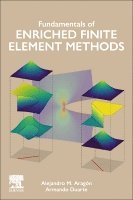
    Fundamentals of Enriched Finite Element Methods

    AvAlejandro M. Arag�n,C. Armando Duarte

    Häftad, Engelska, 2023

    1 938 kr

    Beställningsvara. Skickas inom 10-15 vardagar. Fri frakt över 249 kr.

    Beskrivning

    Fundamentals of Enriched Finite Element Methods provides an overview of the different enriched finite element methods, detailed instruction on their use, and their real-world applications, recommending in what situations they are best implemented. It starts with a concise background on the theory required to understand the underlying principles behind the methods before outlining detailed instruction on implementation of the techniques in standard displacement-based finite element codes. The strengths and weaknesses of each are discussed, as are computer implementation details, including a standalone generalized finite element package, written in Python. The applications of the methods to a range of scenarios, including multiphase, fracture, multiscale, and immersed boundary (fictitious domain) problems are covered, and readers can find ready-to-use code, simulation videos, and other useful resources on the companion website of the book.

    • Reviews various enriched finite element methods, providing pros, cons, and scenarios forbest use
    • Provides step-by-step instruction on implementing these methods
    • Covers the theory of general and enriched finite element methods

    Produktinformation

    • Utgivningsdatum:2023-11-13
    • Mått:152 x 229 x 19 mm
    • Vikt:500 g
    • Format:Häftad
    • Språk:Engelska
    • Antal sidor:310
    • Förlag:Elsevier Science
    • ISBN:9780323855150

    Utforska kategorier

    • Maskinteknik och material inom Naturvetenskap och teknik

    Mer om författaren

    Alejandro M. Aragón is an Associate Professor in the Department of Precision and Microsystems Engineering at Delft University of Technology in the Netherlands. His research stands at the intersection of engineering and computer science, with a primary focus on pioneering novel enriched finite element methods. This cutting-edge technology, seamlessly integrated in widely applicable software, is leveraged to address complex engineering challenges. Specifically, Dr. Aragón’s innovations have been employed in the analysis and design of a diverse spectrum of (meta)materials and structures, including biomimetic and composite materials, as well as acoustic/elastic metamaterials, photonic/phononic crystals, and even edible fracture metamaterials. Since 2015 he has also been teaching advanced courses on finite element analysis at TU Delft. Dr. Aragón boasts a strong industrial network and holds two patents for the inventive use of acoustic/elastic metamaterials and phononic crystals for noise attenuation. C. Armando Duarte is a Professor in the Department of Civil and Environmental Engineering at the University of Illinois at Urbana-Champaign. Prior to joining the UIUC, he was an assistant professor in the Department of Mechanical Engineering at the University of Alberta, Canada, and a visiting professor in the Department of Structural Engineering at the University of Sao Paulo, Brazil. He has five years of industrial experience and has made fundamental and sustained contributions to the fields of computational mechanics and methods, in particular to development of Meshfree, Partition of Unity, and Generalized/eXtended Finite Element Methods. He proposed the first partition of unity method to solve fracture problems and pioneered the use of asymptotic solutions of elasticity equations of cracks as enrichment functions for this class of methods. His group has developed a 3D GFEM for the simulation of hydraulic fracture propagation, interaction, and coalescence, and he has published more than 95 scientific articles and book chapters, and also coedited 2 books on computational methods. He has papers featured on the ScienceDirect top 25 Hottest Articles of Computer Methods in Applied Mechanics and Engineering and Engineering Fracture Mechanics.

    Innehållsförteckning

    • 1. Introduction2. The Finite Element Method.3. The p-version of the Finite Element Method4. The Generalized Finite Element Method5. Discontinuity-enriched Finite Element Formulations6. GFEM approximations for fractures7. Approximations for Weak Discontinuities8. Immerse boundary (fictitious domain) problems9. Nonconforming mesh coupling and contact10. Interface-enriched topology optimization11. Stability of approximations12. Computational aspects13. Approximation theory for partition of unity methodsAppendix. Recollections of the origins of the GFEM