• Fri frakt över 249 kr
  • •
  • Snabba leveranser
  • •
  • Billiga böcker
Kundservice

Du är på sajten för privatpersoner.

Företag, bibliotek eller offentlig verksamhet?

Du handlar på classic.bokus.com, där alla dina funktioner finns intakta.
Till classic.bokus.com
Bokus logotyp. Gå till startsidan.
  • Erbjudanden
  • Nyheter
  • Student
  • Topplistor
  • Barn & ungdom
  • Bokus Play
  • E-böcker
  • Pocketböcker
  • Spel & pussel

10% rabatt på allt med kod NYSTART10 →

Sidfot

Mina sidor

    Hjälp

    • Kundservice
    • Vanliga frågor och svar
    • Frakt och leverans
    • Retur vid ångerrätt
    • Reklamera vara
    • Betalning
    • Köpvillkor
    • Allmänna villkor
    • Information om webbplatsens tillgänglighet

    Om Bokus

    • Om oss
    • Pressrum
    • För studenter
    • För företag
    • För bibliotek och offentlig verksamhet
    • För leverantörer
    • Hållbarhet

    Populärt

    • Aktuella erbjudanden
    • Presentkort
    • Studentlitteratur
    • Nya böcker
    • Topplistor
    • Signerade böcker
    • Engelska böcker

    Inspiration

    • Boktips
    • BookTok
    • Populära bokserier
    • Barnbokskaraktärer
    • Populära författare
    Logotyp för Bokus
    Följ oss på Facebook (extern länk)Följ oss på Instagram (extern länk)Följ oss på YouTube (extern länk)Följ oss på TikTok (extern länk)
    bokus @ CookiesAnpassa cookiesIntegritetspolicyKöpvillkor
    Till Citymail hemsida (extern länk)Till Budbee hemsida (extern länk)Till Postnord hemsida (extern länk)Till Schenker hemsida (extern länk)Till Early Bird hemsida (extern länk)Till Walleys hemsida (extern länk)
    1. Naturvetenskap och teknik
    2. Teknik och industri
    3. Elektronik och kommunikationer

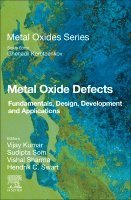
    Metal Oxide Defects

    Fundamentals, Design, Development and Applications

    AvVijay Kumar,Sudipta Som

    Häftad, Engelska, 2022

    Del i serien Metal Oxides

    2 492 kr

    Beställningsvara. Skickas inom 10-15 vardagar. Fri frakt över 249 kr.

    Beskrivning

    Metal Oxide Defects: Fundamentals, Design, Development and Applications provides a broad perspective on the development of advanced experimental techniques to study defects and their chemical activity and catalytic reactivity in various metal oxides. This book highlights advances in characterization and analytical techniques to achieve better understanding of a wide range of defects, most importantly, state-of-the-art methodologies for controlling defects. The book provides readers with pathways to apply basic principles and interpret the behavior of metal oxides.

    After reviewing characterization and analytical techniques, the book focuses on the relationship of defects to the properties and performance of metal oxides. Finally, there is a review of the methods to control defects and the applications of defect engineering for the design of metal oxides for applications in optoelectronics, energy, sensing, and more. This book is a key reference for materials scientists and engineers, chemists, and physicists.


    • Reviews advances in characterization and analytical techniques to understand the behavior of defects in metal oxide materials
    • Introduces defect engineering applied to the design of metal oxide materials with desirable properties
    • Discusses applications of defect engineering to enhance the performance of materials for a wide range of applications, with an emphasis on optoelectronics

    Produktinformation

    • Utgivningsdatum:2022-11-21
    • Mått:152 x 229 x 38 mm
    • Vikt:1 190 g
    • Format:Häftad
    • Språk:Engelska
    • Serie:Metal Oxides
    • Antal sidor:756
    • Förlag:Elsevier Science
    • ISBN:9780323855884

    Utforska kategorier

    • Elektronik och kommunikationer inom Naturvetenskap och teknik
    • Maskinteknik och material inom Naturvetenskap och teknik

    Mer om författaren

    Vijay Kumar is an Assistant Professor at the National Institute of Technology Srinagar, Jammu and Kashmir, India. His current research endeavors include the synthesis, processing, and characterization of functional materials, solid-state luminescent materials, soft and ceramic materials, biopolymers, drug delivery devices, and wastewater treatment. During the last ten years of his research career, he has published more than 90 research papers in various reputed international journals. He has published one book and several book chapters in several excellent books. He is an expert in chemical lab work and characterization techniques for defects in metal oxides. He has admirable skill in the synthesis of materials in 0D, 1D, 2D and 3D forms with various shapes and sizes via different physical and chemical synthesis routes. He has in-depth knowledge in materials physics. His specialty is photoluminescence spectroscopy and its applicability towards display device application, LED fabrication, fingerprint detection, barcode detection, and security ink applications. Recently he is involved with the fabrication of flexible white light emitting diodes based on inorganic materials and development of Mini/ Micro- LEDs with the help of perovskite quantum dots. Dr. Vishal Sharma is presently working as an Assistant Professor at the Institute of Forensic Science & Criminology, Faculty of Science, Panjab University, Chandigarh, India. He currently heads the Institute at Panjab University. He has obtained his Ph.D. degree in Physics from Kurukshetra University, Kurukshetra, India and Inter University Accelerator Centre, New Delhi, India. He is the recipient of DAE Young Scientist Research Award in 2011. Recently he has been conferred the best researcher award by Panjab University under Promotion of University Research and Scientific Excellence (PURSE), DST Govt. of India grant and Dr. P.D. Sethi National Award in 2018. He is the author of more than 90 peer-reviewed scientific papers, six book chapters and three books as editor. His current research focus is in the field of Material Science and includes the synthesis of smart materials for different applications, nanophosphors, hydrogels, sensors (drug sensing, fingermark sensing). Hendrik C. Swart is a senior professor in the Department of Physics at the University of the Free State, South Africa. His research investigates the degradation of phosphors for field emission displays, as well as developing materials for nano solid-state lighting. He has been key in the development of processes to synthesize and deposit thin films of several types of semiconductor nanoparticles to enhance the color, luminescent intensity, and lifetime of such displays.

    Innehållsförteckning

    • 1. Transition metal ions in solid electrolytes. Ceramics and glasses2. The emergence of analytical techniques for defects in metal oxide3. Vacancy and defect structures in metal oxides4. Defects disorder of lanthanum cerium oxide5. Oxidation of metals and formation of defects by theoretical modelling6. Role of defects in multiferroic nanoparticles7. Oxygen defects, morphology, and surface chemistry of metal oxides: a deep insight through a joint experimental and theoretical perspective8. Point defects and their diffusion in nonstoichiometric metal oxides for modern microelectronics9. Influence of defects upon mechanical properties of oxide materials10. Defect evolution in ZnO nanocrystal films at doping by group IIIA elements12. The role of dopant on the defect chemistry of metal oxides13. Viable defect engineering with templates into metal oxides14. Role of defects on the transparent conducting properties of binary metal oxide thin film electrodes15. Intrinsic defect engineering of metal oxides for lighting applications16. Oxygen defects in metal oxides and their effect on the electrochemical oxidation of short-chain alcohols17. Defects engineering in metal oxides for gas sensing and electromagnetic wave absorption18. Ordered vacancy compounds: the case of the Mangéli phases of TiO219. Ion beam-induced defects in ZnO: a radiation hard metal oxide20. Role of point defects in gas sensing effects of metal oxides21. Role of grain boundary defects in nanostructured manganites22. Defects chemistry and catalysis of indium oxide23. Effect of swift heavy ion irradiation on the electrical characteristics of oxide-based heterojunction