• Fri frakt över 249 kr
  • •
  • Snabba leveranser
  • •
  • Billiga böcker
Kundservice

Du är på sajten för privatpersoner.

Företag, bibliotek eller offentlig verksamhet?

Du handlar på classic.bokus.com, där alla dina funktioner finns intakta.
Till classic.bokus.com
Bokus logotyp. Gå till startsidan.
  • Erbjudanden
  • Nyheter
  • Student
  • Topplistor
  • Barn & ungdom
  • Bokus Play
  • E-böcker
  • Pocketböcker
  • Spel & pussel

10% studentrabatt med kod TERM26

Sidfot

Mina sidor

    Hjälp

    • Kundservice
    • Vanliga frågor och svar
    • Frakt och leverans
    • Retur vid ångerrätt
    • Reklamera vara
    • Betalning
    • Köpvillkor
    • Allmänna villkor
    • Information om webbplatsens tillgänglighet

    Om Bokus

    • Om oss
    • Pressrum
    • För studenter
    • För företag
    • För bibliotek och offentlig verksamhet
    • För leverantörer
    • Hållbarhet

    Populärt

    • Aktuella erbjudanden
    • Presentkort
    • Studentlitteratur
    • Nya böcker
    • Topplistor
    • Signerade böcker
    • Engelska böcker

    Inspiration

    • Boktips
    • BookTok
    • Populära bokserier
    • Barnbokskaraktärer
    • Populära författare
    Logotyp för Bokus
    Följ oss på Facebook (extern länk)Följ oss på Instagram (extern länk)Följ oss på YouTube (extern länk)Följ oss på TikTok (extern länk)
    bokus @ CookiesAnpassa cookiesIntegritetspolicyKöpvillkor
    Till Citymail hemsida (extern länk)Till Budbee hemsida (extern länk)Till Postnord hemsida (extern länk)Till Schenker hemsida (extern länk)Till Early Bird hemsida (extern länk)Till Walleys hemsida (extern länk)
    1. Naturvetenskap och teknik
    2. Teknik och industri
    3. Elektronik och kommunikationer

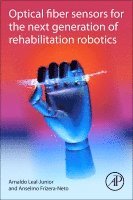
    Optical Fiber Sensors for the Next Generation of Rehabilitation Robotics

    AvArnaldo Leal-Junior,Anselmo Frizera-Neto

    Häftad, Engelska, 2021

    1 440 kr

    Beställningsvara. Skickas inom 10-15 vardagar. Fri frakt över 249 kr.

    Beskrivning

    Optical Fiber Sensors for the Next Generation of Rehabilitation Robotics presents development concepts and applications of optical fiber sensors made of compliant materials in rehabilitation robotics. The book provides methods for the instrumentation of novel compliant devices. It presents the development, characterization and application of optical fiber sensors in robotics, ranging from conventional robots with rigid structures to novel wearable systems with soft structures, including smart textiles and intelligent structures for healthcare. Readers can look to this book for help in designing robotic structures for different applications, including problem-solving tactics in soft robotics.

    This book will be a great resource for mechanical, electrical and electronics engineers and photonics and optical sensing engineers.


    • Addresses optical fiber sensing solutions in wearable systems and soft robotics
    • Presents developments-from foundational, to novel and future applications-of optical fiber sensors in the next generation of robotic devices
    • Provides methods for the instrumentation of novel compliant devices

    Produktinformation

    • Utgivningsdatum:2021-11-02
    • Mått:152 x 229 x 34 mm
    • Vikt:200 g
    • Format:Häftad
    • Språk:Engelska
    • Antal sidor:316
    • Förlag:Elsevier Science
    • ISBN:9780323859523

    Utforska kategorier

    • Elektronik och kommunikationer inom Naturvetenskap och teknik

    Mer om författaren

    Arnaldo G. Leal-Junior was born in Uberlandia, Brazil, in 1991. He received the B.S. degree in mechanical engineering and the Ph.D. degree in electrical engineering from the Universidade Federal do Espírito Santo (UFES), Brazil, in 2015 and 2018, respectively. He is currently a professor in the mechanical engineering Department, UFES. His research interests include optical fiber sensors with emphasis on polymer optical fiber sensors, robotic systems, instrumentation and actuators. Anselmo Frizera-Neto received his B.S. degree in Electrical Engineering from the Federal University of Espírito Santo (2006) and the PhD degree in Electronics from the Universidad de Alcalá (Spain, 2010). Between 2006 and 2010, he worked as a researcher at the Bioengineering Group at the Consejo Superior de Investigaciones Científicas (CSIC, Spain). Since 2010 he is a Professor in the Department of Electrical Engineering at the Federal University of Espírito Santo (UFES). He served as a member of the Board of Directors of the Asociación Iberoamericana de Tecnologías de Apoyo a la Discapacidad (AITADIS) from 2014 to 2018, contributing to support the dissemination of knowledge in the area of ​​assistive technologies to countries in Latin America and the Iberian Peninsula. His research interests and areas of expertise are rehabilitation robotics, development of optical and electronic sensors for human-machine interfaces, biomedical signal processing, technologies to support disabilities and assist mobility.

    Innehållsförteckning

    • Preface ixPart IIntroduction to soft robotics and rehabilitation systems1. Introduction and overview of wearable technologies1.1 Motivation 31.2 Wearable robotics and assistive devices 101.3 Wearable sensors and monitoring devices 141.4 Outline of the book 18References 212. Soft wearable robots2.1 Soft robots: definitions and (bio)medical applications 272.2 Soft robots for rehabilitation and functional compensation 302.3 Human-in-the-loop design of soft structures and healthcare systems 342.3.1 Human-in-the-loop systems 342.3.2 Human-in-the-loop applications and current trends 372.3.3 Human-in-the-loop design in soft wearable robots 392.4 Current trends and future approaches in wearable soft robots 43References 463. Gait analysis: overview, trends, and challenges3.1 Human gait 533.2 Gait cycle: definitions and phases 563.2.1 Kinematics and dynamics of human gait 573.3 Gait analysis systems: fixed systems and wearable sensors 58References 61Part IIIntroduction to optical fiber sensing4. Optical fiber fundaments and overview4.1 Historical perspective 674.2 Light propagation in optical waveguides 694.3 Optical fiber properties and types 724.4 Passive and active components in optical fiber systems 764.4.1 Light sources 774.4.2 Photodetectors 774.4.3 Optical couplers 794.4.4 Optical circulators 804.4.5 Spectrometers and optical spectrum analyzers 814.5 Optical fiber fabrication and connection methods 834.5.1 Fabrication methods 844.5.2 Optical fiber connectorization approaches 87References 895. Optical fiber materials5.1 Optically transparent materials 935.2 Viscoelasticity overview 965.3 Dynamic mechanical analysis in polymer optical fibers 1015.3.1 DMA on PMMA solid core POF 1035.3.2 Dynamic characterization of CYTOP fibers 1075.4 Influence of optical fiber treatments on polymer properties 111References 1156. Optical fiber sensing technologies6.1 Intensity variation sensors 1196.1.1 Macrobending sensors 1206.1.2 Light coupling-based sensors 1256.1.3 Multiplexed intensity variation sensors 1276.2 Interferometers 1296.3 Gratings-based sensors 1336.4 Compensation techniques and cross-sensitivity mitigation in optical fiber sensors 138References 143Part IIIOptical fiber sensors in rehabilitation systems7. Wearable robots instrumentation7.1 Optical fiber sensors on exoskeleton’s instrumentation 1517.2 Exoskeleton’s angle assessment applications with intensity variation sensors 1527.2.1 Case study: active lower limb orthosis for rehabilitation(ALLOR) 1567.2.2 Case study: modular exoskeleton 1577.3 Human-robot interaction forces assessment with Fiber BraggGratings 1607.4 Interaction forces and microclimate assessment with intensity variation sensors 166References 1728. Smart structures and textiles for gait analysis8.1 Optical fiber sensors for kinematic parameters assessment 1758.1.1 Intensity variation-based sensors for joint angleassessment 1758.1.2 Fiber Bragg gratings sensors with tunable filterinterrogation for joint angle assessment 1788.2 Instrumented insole for plantar pressure distribution and ground reaction forces evaluation 1838.2.1 Fiber Bragg grating insoles 1838.2.2 Multiplexed intensity variation-based sensors for smartinsoles 1888.3 Spatiotemporal parameters estimation using integrated optical fiber sensors 198References 1999. Soft robotics and compliant actuators instrumentation9.1 Series elastic actuators instrumentation 2019.1.1 Torque measurement with intensity variation sensors 2029.1.2 Torque measurement with intensity variation sensors 2069.2 Tendon-driven actuators instrumentation 2129.2.1 Artificial tendon instrumentation with highly flexibleoptical fibers 213References 217Part IVCase studies and additional applications10. Wearable multifunctional smart textiles10.1 Optical fiber embedded-textiles for physiological parameters monitoring 22310.1.1 Breath and heart rates monitoring 22410.1.2 Body temperature assessment 23210.2 Smart textile for multiparameter sensing and activities monitoring 23410.3 Optical fiber-embedded smart clothing for mechanical perturbation and physical interaction detection 239References 24111. Smart walker’s instrumentation and development with compliant optical fiber sensors11.1 Smart walkers’ technology overview 24511.2 Smart walker embedded sensors for physiological parameters assessment 24711.2.1 System description 24711.2.2 Preliminary validation 25011.2.3 Experimental validation 25211.3 Multiparameter quasidistributed sensing in a smart walker structure 25211.3.1 Experimental validation 25211.3.2 Experimental validation 256References 26012. Optical fiber sensors applications for human health12.1 Robotic surgery 26312.2 Biosensors 26912.2.1 Introduction to biosensing 26912.2.2 Background on optical fiber biosensing workingprinciples 27112.2.3 Biofunctionalization strategies for fiber immunosensors 27612.2.4 Immunosensing applications in medical biomarkersdetection 279References 28213. Conclusions and outlook13.1 Summary 28713.2 Final remarks and outlook 290Index 293