Inbunden, Engelska, 1998
Bacchus in Romantic England
Av A. Taylor
1258 kr
Beställningsvara. Skickas inom 10-15 vardagar. Fri frakt över 249 kr.
Beskrivning
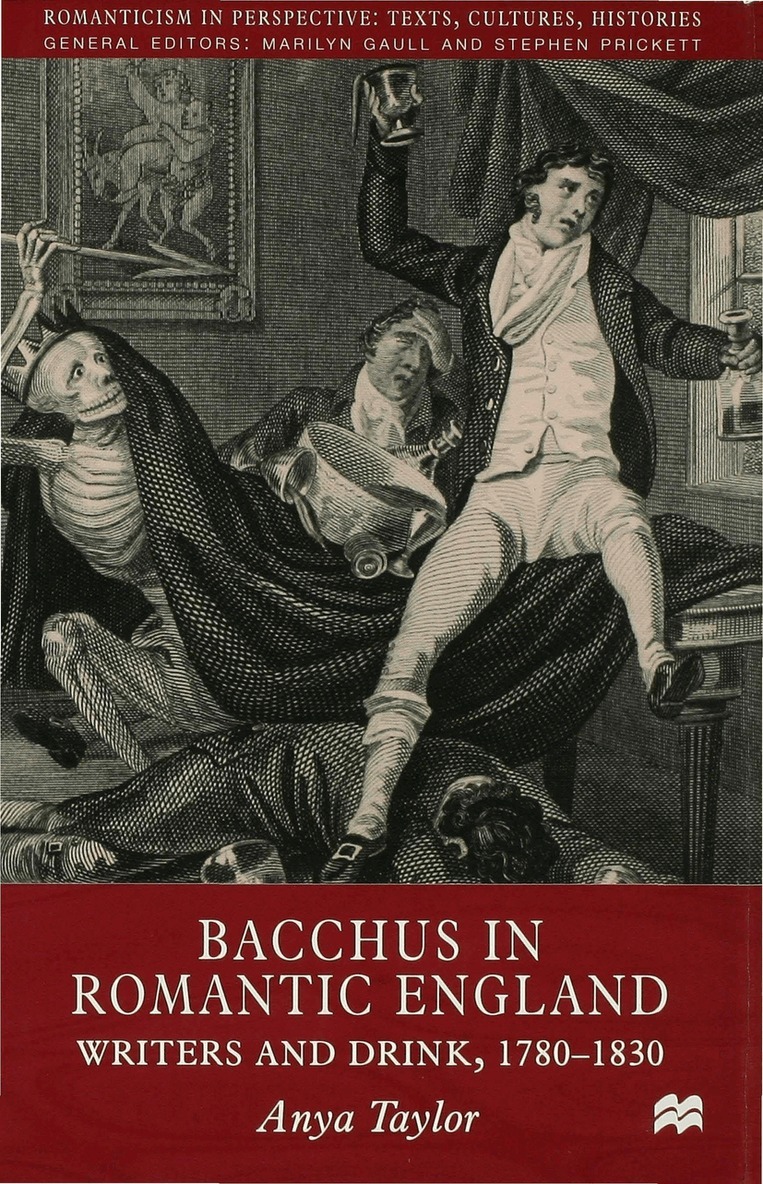
Bacchus in Romantic England describes real drunkenness among writers and ordinary people in the Romantic age. It grounds this 'reality' in writings by doctors and philanthropists from 1780 onwards, who describe an epidemic of drunkenness. These commentators provide a context for the different ways that poets and novelists of the age represent drunkards. Wordsworth writes poems and essays evaluating the drunken career of his model Robert Burns. Charles Lamb's essays and letters reveal a real and metaphorical preoccupation with his own drinking as a way of disguising his personal suffering; his companion Coleridge writes drinking songs, essays about drunkenness, and meditations about his own weakness of will that show both festive inebriety and consciousness of an inward abyss; Coleridge's son Hartley, whose fate his father had prophesied, experiences drunkenness as the life-long humiliation described in his poems and letters. Keats's complex dionysianism runs through 'Endymion' and the late odes, setting him at odds with his temperate hero Milton. Men in the Romantic age, such as Sheridan, Byron, Moor, and Clare, celebrate rowdy friendship with tales and songs of drinking; Romantic women novelists such as Smith, Edgeworth and Wollstonecraft depict these men stumbling home to abuse their wives. Although excessive drinking is real in the period, observers and participants can still maintain ambivalence about its power to release or to debase the human being.
Produktinformation
- Utgivningsdatum: 1998-11-11
- Mått: 140 x 216 x 18 mm
- Vikt: 476 g
- Format: Inbunden
- Språk: Engelska
- Serie: Romanticism in Perspective:Texts, Cultures, Histories
- Antal sidor: 264
- Upplaga: 1999
- Förlag: Palgrave Macmillan
- ISBN: 9780333725214
Utforska kategorier
Betyg & recensioner
0 recensioner
Inga recensioner tillgängliga.