• Fri frakt över 249 kr
  • •
  • Snabba leveranser
  • •
  • Billiga böcker
Kundservice

Du är på sajten för privatpersoner.

Företag, bibliotek eller offentlig verksamhet?

Du handlar på classic.bokus.com, där alla dina funktioner finns intakta.
Till classic.bokus.com
Bokus logotyp. Gå till startsidan.
  • Erbjudanden
  • Nyheter
  • Student
  • Topplistor
  • Barn & ungdom
  • Bokus Play
  • E-böcker
  • Pocketböcker
  • Spel & pussel

10% rabatt på allt med kod: NYSTART10 →

Sidfot

Mina sidor

    Hjälp

    • Kundservice
    • Vanliga frågor och svar
    • Frakt och leverans
    • Retur vid ångerrätt
    • Reklamera vara
    • Betalning
    • Köpvillkor
    • Allmänna villkor
    • Information om webbplatsens tillgänglighet

    Om Bokus

    • Om oss
    • Pressrum
    • För studenter
    • För företag
    • För bibliotek och offentlig verksamhet
    • För leverantörer
    • Hållbarhet

    Populärt

    • Aktuella erbjudanden
    • Presentkort
    • Studentlitteratur
    • Nya böcker
    • Topplistor
    • Signerade böcker
    • Engelska böcker

    Inspiration

    • Boktips
    • BookTok
    • Populära bokserier
    • Barnbokskaraktärer
    • Populära författare
    Logotyp för Bokus
    Följ oss på Facebook (extern länk)Följ oss på Instagram (extern länk)Följ oss på YouTube (extern länk)Följ oss på TikTok (extern länk)
    bokus @ CookiesAnpassa cookiesIntegritetspolicyKöpvillkor
    Till Citymail hemsida (extern länk)Till Budbee hemsida (extern länk)Till Postnord hemsida (extern länk)Till Schenker hemsida (extern länk)Till Early Bird hemsida (extern länk)Till Walleys hemsida (extern länk)
    1. Psykologi och pedagogik
    2. Psykologi
    3. Psykologiska teorier och skolor

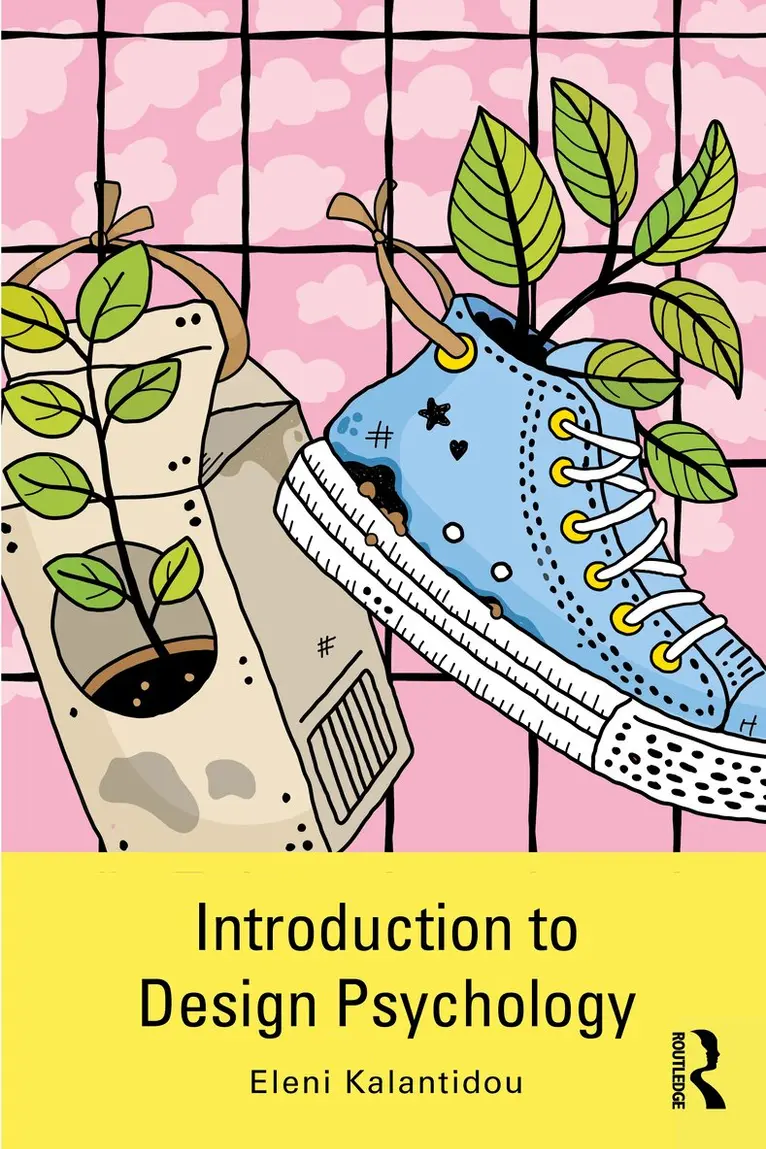
    Introduction to Design Psychology

    AvEleni Kalantidou

    Inbunden, Engelska, 2025

    2 495 kr

    Beställningsvara. Skickas inom 10-15 vardagar. Fri frakt över 249 kr.

    Fler format och utgåvor

    Häftad

    644 kr

    E-bok

    760 kr

    E-bok

    760 kr

    Beskrivning

    In the age of climate change, psychology and design have been employed through impromptu collaborations to validate solutions and future scenarios.Introduction to Design Psychology contests this approach by proposing an ideological framework for an intentional, joint endeavour between psychology and design. Intentional design psychology is presented as a critical proposal grounded in unpredictability, nominating ways to activate new production, consumption, and habitation patterns. It unfolds through chapters exploring urban environments, technology, and consumer culture, making evident the need for new definitions of social resilience and adaptation. As part of this process, adaptive designs that enable resilient psychologies are revealed. By challenging the disciplinary status quo of psychology and design, this book aims to activate a new field of knowledge.Introduction to Design Psychology is essential for psychologists, designers, and urban planners, as well as professionals from affiliated fields, willing to reconfigure their own thinking and practice.

    Produktinformation

    • Utgivningsdatum:2025-01-09
    • Mått:152 x 229 x 17 mm
    • Vikt:580 g
    • Format:Inbunden
    • Språk:Engelska
    • Antal sidor:212
    • Förlag:Taylor & Francis Ltd
    • ISBN:9780367258160

    Utforska kategorier

    • Psykologiska teorier och skolor inom Psykologi och pedagogik
    • Byggnadsteknik inom Naturvetenskap och teknik
    • Regional planering inom Naturvetenskap och teknik

    Mer om författaren

    Eleni Kalantidou is a design psychologist, strategist, researcher, and senior lecturer at Griffith University, Australia. Her research activities are focused on environmental and social resilience, design strategy, social impact, and social innovation. Kalantidou’s research on repair, community-led behavioural change, resilience, and adaptation has been published in books and journals and funded by grants and consultancies. As a researcher and consultant, she has collaborated with various international, national, and local non-governmental organisations, as well as the public sector.

    Recensioner i media

    “This subversive book challenges commonly accepted notions of stability and attachment to make a radical proposition that calls for care-fully embracing the axiologies of “Di/De”: Positive destruction, disassembling, detaching and discomforting are advocated as new epistemological and ontological orientations in the face of unsettlement, unhoming, and precarity. Bringing dominant approaches to design and psychology under scrutiny, and criticizing the pitfalls of their mutual trajectories of universalism, cartesian dualism, and scientification, Eleni Kalantidou reads the two fields in conjunction with each other urging us to overcome their misconceptions and malpractices while restoring their potency of transformation.”Jilly Traganou, Professor of Architecture and Urbanism, Parsons School of Design, The New School“For years, critical academics have argued that the discipline of psychology must learn about mental life by including the psychological humanities. Eleni Kalantidou thoughtfully expands the boundaries of psychology and demonstrates that psychology and design studies mutually invigorate their theories and practices. This relevant book is thoughtfully articulated and convincingly affirms that design psychology is a program that deserves significant intellectual and applied attention.” Thomas Teo, Professor of Psychology, York University“Psychology is intrinsic to design practice, is elemental in acquiring a design habitus, and is mobilised in numerous environmental contexts. Yet for all this, design psychology mostly resides in the domain of the unthought. So, what exactly is it? How should it be understood? And, how can it be moved directly into the consciousness of designers, and with what consequence? Eleni Kalantidou’s informative and challenging book provides the means for designers to answer these questions.”Tony Fry, Adjunct Professor of Architecture and Design, University of Tasmania

    Innehållsförteckning

    • IntroductionChapter One: Setting the Scene for Design Psychology - Where From and Where To?Design Psychology: Where From?Ontologically Situated Psychology and DesignEpistemologically Situated Psychology and DesignThe ‘Scientification’ of Psychology and DesignPsychology as a ScienceCritiquing the Natural-Scientific Model and Modern PsychologyDesign as a ScienceCritiquing the Natural-Scientific Model and Design as a SciencePsychology and DesignPsychologies and DesignsNotesReferencesChapter Two: Psychology and Design - An Opportunity for Change Impromptu Design PsychologyDefining Impromptu Design PsychologyCognitive Psychology and DesignBehavioural Psychology and DesignDesign and EmotionImpromptu Design Psychology as a Response to Social and Environmental ChallengesImpromptu Design Psychology and User-Centred DesignIntentional Design PsychologyPlural Psychologies and DesignsPlace-Based and Lived Experience ApproachesDesign Psychology: Where To?NotesReferencesChapter Three: The Design Psychology of Urban Environments The Evolving Relationship Between Cities and PsychologiesUrban SchizophreniaThe Urban Psychologies of Housing PrecarityPsychologies of DisplacementDesigning Psychologies of AdaptationThe Technocratic ApproachThe Degrowth/Commoning ApproachThe Just Transitions/Green New Deal ApproachThe Intentional Design Psychology of AdaptationNotesReferencesChapter Four: The Design Psychology of Technological Dependence The Design Psychology of TechnocracyFrom Technê to TechnologyFrom Homo Faber to PosthumanThe Design Psychology of Informational RevolutionThe Role of DesignThe Role of PsychologyThe Role of Design PsychologyThe Intentional Design Psychology of Critically Living with TechnologyNotesReferencesChapter Five: The Design Psychology of Waste The Condition of WasteThe Making of Consumer CultureThe Sociology and Psychology of Consumer CultureThe Design of Consumer CultureThe Design Psychology of (Un)HappinessSteps Toward Redemption: Design, Psychology and (Impromptu) Design PsychologyDesignPsychologyImpromptu Design PsychologyThe VerdictRepair As Intentional Design PsychologyLearnings From Lived Experience for Intentional Design PsychologyNotesReferencesChapter Six: Intentional Design Psychology - An Introduction Intentional Versus Impromptu Design PsychologyDi/De- with CareDetachingDestroyingDisassemblingDiscomfortingIntentional Design Psychology: A Loose Ideological FrameworkBringing Psychology and Design TogetherDisrupting NormalityCommunity-Led Behavioural ChangeHandling Fr/Agility with CareEpilogueNext StepsNotesReferencesIndex