• Fri frakt över 249 kr
  • •
  • Snabba leveranser
  • •
  • Billiga böcker
Kundservice

Du är på sajten för privatpersoner.

Företag, bibliotek eller offentlig verksamhet?

Du handlar på classic.bokus.com, där alla dina funktioner finns intakta.
Till classic.bokus.com
Bokus logotyp. Gå till startsidan.
  • Erbjudanden
  • Nyheter
  • Student
  • Topplistor
  • Barn & ungdom
  • Bokus Play
  • E-böcker
  • Pocketböcker
  • Spel & pussel

10% rabatt på allt med kod: NYSTART10 →

Sidfot

Mina sidor

    Hjälp

    • Kundservice
    • Vanliga frågor och svar
    • Frakt och leverans
    • Retur vid ångerrätt
    • Reklamera vara
    • Betalning
    • Köpvillkor
    • Allmänna villkor
    • Information om webbplatsens tillgänglighet

    Om Bokus

    • Om oss
    • Pressrum
    • För studenter
    • För företag
    • För bibliotek och offentlig verksamhet
    • För leverantörer
    • Hållbarhet

    Populärt

    • Aktuella erbjudanden
    • Presentkort
    • Studentlitteratur
    • Nya böcker
    • Topplistor
    • Signerade böcker
    • Engelska böcker

    Inspiration

    • Boktips
    • BookTok
    • Populära bokserier
    • Barnbokskaraktärer
    • Populära författare
    Logotyp för Bokus
    Följ oss på Facebook (extern länk)Följ oss på Instagram (extern länk)Följ oss på YouTube (extern länk)Följ oss på TikTok (extern länk)
    bokus @ CookiesAnpassa cookiesIntegritetspolicyKöpvillkor
    Till Citymail hemsida (extern länk)Till Budbee hemsida (extern länk)Till Postnord hemsida (extern länk)Till Schenker hemsida (extern länk)Till Early Bird hemsida (extern länk)Till Walleys hemsida (extern länk)
    1. Kultur
    2. Arkitektur

    Cognition and the Built Environment

    AvOle Möystad

    Häftad, Engelska, 2019

    Del i serien Routledge Research in Planning and Urban Design

    715 kr

    Beställningsvara. Skickas inom 10-15 vardagar. Fri frakt över 249 kr.

    Fler format och utgåvor

    Inbunden

    2 493 kr

    Beskrivning

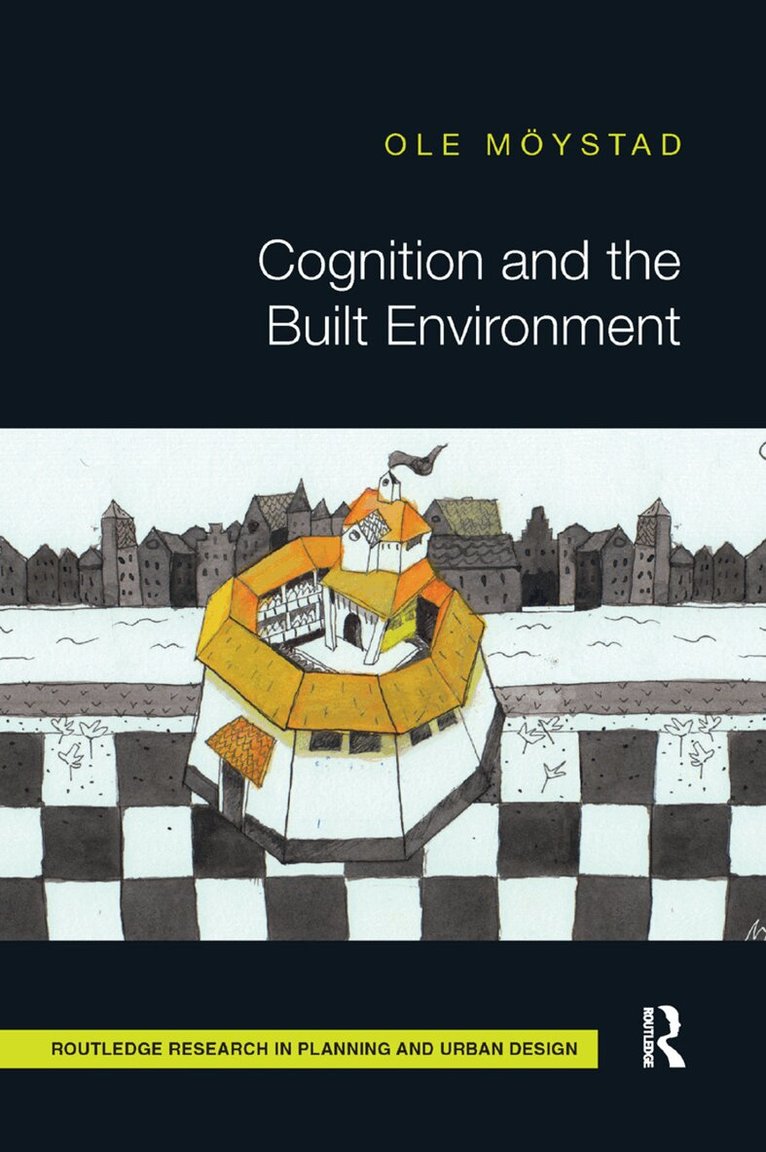
    Cognition and the Built Environment argues that interacting with our built environment, as users and as architects, is a cognitive process. It claims that architecture, in its form and meaning, is a basic, embodied level of human cognition. The assumption is that we and our built environment together form an intelligent system, a cognitive feedback loop between us and the world of which we are part. With this as a vantage point, the book discusses the meaning and intelligence of concrete architectural environments as well as the agency of the architect, of his client and of the user.The inquiry oscillates between abstract thought, topological models and cognitive semiotics, between pragmatist philosophy and the professional practice of planning cities, developing projects and using objects. Architecture serves more complex purposes than our caves, paths and landmarks did.Written for students and academics of urban design, urban planning and architectural theory, Cognition and the Built Environment argues that human cognition feeds on the interaction between thought, agency and built environment, and that architecture is the spatial form of this interaction.

    Produktinformation

    • Utgivningsdatum:2019-05-14
    • Mått:156 x 234 x 18 mm
    • Vikt:380 g
    • Format:Häftad
    • Språk:Engelska
    • Serie:Routledge Research in Planning and Urban Design
    • Antal sidor:190
    • Förlag:Taylor & Francis Ltd
    • ISBN:9780367331917

    Utforska kategorier

    • Arkitektur inom Kultur
    • Regional planering inom Naturvetenskap och teknik

    Mer om författaren

    Ole Möystad defended his PhD on architecture and cognitive semiotics in 1994. He has pursued this topic through academic as well as professional work in Beirut, Oslo, Trondheim, Lisbon, Barcelona, Asmara, Xi’an, Delft and Brussels. He is Professor in the Faculty of Architecture and Fine Art, Norwegian University of Science and Technology (NTNU), Norway, and head of The Urban Trigger Group.

    Innehållsförteckning

    • Acknowledgements, Prologue Part I. Making Sense Chapter 1. Some Steps Towards Meaning Chapter 2. Umwelt Chapter 3. Place and Interpretant Chapter 4. Postscript to Making Sense Part II. The Field Chapter 5. 'City' as a Measure of Density Chapter 6. An Architecture of the Field Part III. The Object Chapter 7. The TAO of Architecture Chapter 8. Physics of Meaning and Form Chapter 9. An Architecture of the Object Part IV. The Work Chapter 10. Change Between Develoment and Catastrophe Chapter 11. Speed and Urban Development Chapter 12. A Topology of the Work of Architecture Epilogue, Index