• Fri frakt över 249 kr
  • •
  • Snabba leveranser
  • •
  • Billiga böcker
Kundservice

Du är på sajten för privatpersoner.

Företag, bibliotek eller offentlig verksamhet?

Du handlar på classic.bokus.com, där alla dina funktioner finns intakta.
Till classic.bokus.com
Bokus logotyp. Gå till startsidan.
  • Erbjudanden
  • Nyheter
  • Student
  • Topplistor
  • Barn & ungdom
  • Bokus Play
  • E-böcker
  • Pocketböcker
  • Spel & pussel

10% rabatt på allt med kod: NYSTART10 →

Sidfot

Mina sidor

    Hjälp

    • Kundservice
    • Vanliga frågor och svar
    • Frakt och leverans
    • Retur vid ångerrätt
    • Reklamera vara
    • Betalning
    • Köpvillkor
    • Allmänna villkor
    • Information om webbplatsens tillgänglighet

    Om Bokus

    • Om oss
    • Pressrum
    • För studenter
    • För företag
    • För bibliotek och offentlig verksamhet
    • För leverantörer
    • Hållbarhet

    Populärt

    • Aktuella erbjudanden
    • Presentkort
    • Studentlitteratur
    • Nya böcker
    • Topplistor
    • Signerade böcker
    • Engelska böcker

    Inspiration

    • Boktips
    • BookTok
    • Populära bokserier
    • Barnbokskaraktärer
    • Populära författare
    Logotyp för Bokus
    Följ oss på Facebook (extern länk)Följ oss på Instagram (extern länk)Följ oss på YouTube (extern länk)Följ oss på TikTok (extern länk)
    bokus @ CookiesAnpassa cookiesIntegritetspolicyKöpvillkor
    Till Citymail hemsida (extern länk)Till Budbee hemsida (extern länk)Till Postnord hemsida (extern länk)Till Schenker hemsida (extern länk)Till Early Bird hemsida (extern länk)Till Walleys hemsida (extern länk)
    1. Medicin
    2. Andra medicinska specialiteter
    3. Psykiatri

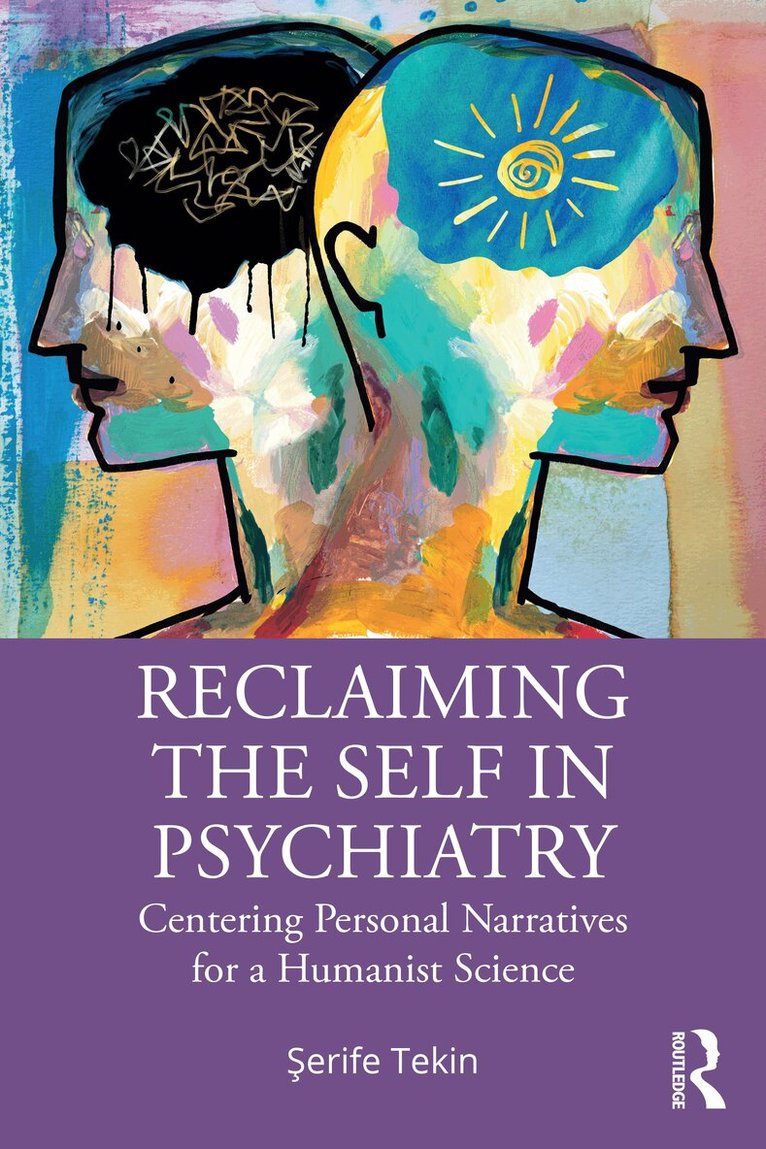
    Reclaiming the Self in Psychiatry

    Centering Personal Narratives for a Humanist Science

    AvŞerife Tekin

    Häftad, Engelska, 2025

    497 kr

    Beställningsvara. Skickas inom 10-15 vardagar. Fri frakt över 249 kr.

    Fler format och utgåvor

    Inbunden

    2 227 kr

    E-bok

    520 kr

    E-bok

    520 kr

    Beskrivning

    Reclaiming the Self in Psychiatry: Centering Personal Narratives for Humanist Science diagnoses the fundamental problem in contemporary scientific psychiatry to be a lack of a sophisticated and nuanced engagement with the self and proposes a solution—the Multitudinous Self Model (MuSe).MuSe fulfils psychiatry’s twin commitments to patients’ flourishing and scientific objectivity. Marshalling the conceptual and empirical resources from testimonies from individuals diagnosed with mental disorders, substantive research in cognitive science, and empirically informed philosophy, MuSe provides clinicians, scientists, and patients pathways to respond to mental distresses and disorders. This framework boosts psychiatry’s relationship to science by facilitating expansive notions of expertise and objectivity in which some patients are recognized as “experience-based experts” whose contributions to psychiatric knowledge are indispensable. Şerife Tekin draws the contours of a future for psychiatry that is grounded in philosophy, medical humanities, and social sciences as much as physiology and neuroscience.This book is an ideal read for professional psychiatrists and philosophers of psychiatry who are interested in the philosophy of mental health.

    Produktinformation

    • Utgivningsdatum:2025-04-29
    • Mått:152 x 229 x 17 mm
    • Vikt:410 g
    • Format:Häftad
    • Språk:Engelska
    • Antal sidor:208
    • Förlag:Taylor & Francis Ltd
    • ISBN:9780367518110

    Utforska kategorier

    • Psykiatri inom Medicin
    • Hälso- och sjukvårdsrätt inom Juridik
    • Psykoterapi som behandlingsmetod inom Medicin

    Mer om författaren

    Şerife Tekin, PhD, is an associate professor at the Center for Bioethics and Humanities at SUNY Upstate Medical University in Syracuse, NY. She coedited The Handbook of Psychiatric Ethics (Oxford University Press, 2021), The Bloomsbury Companion to Philosophy and Psychiatry (Bloomsbury, 2019), and Extraordinary Science and Psychiatry: Responses to the Crisis in Mental Health Research (MIT Press, 2017). Her articles appeared in Philosophy of Science; Synthese; American Journal of Bioethics, and elsewhere.

    Recensioner i media

    “Tekin integrates brilliantly the medical humanities, ethics, and the philosophies of science and mind in presenting her compelling vision of what person-centered mental health treatment will look like. A landmark work.”Owen Flanagan Jr, distinguished professor emeritus of philosophy, Duke University“This book is an achievement and a breath of fresh air. Tekin develops a wonderfully readable, deeply informed, and altogether convincing rebuttal of the reductionism that shapes contemporary approaches to the mind. Her project re-humanizes psychiatry by putting the self back where it belongs, at the center of theory and practice.”Dan Kelly, professor of philosophy, Purdue University“Tekin’s analysis of the lack of attention to the self and the importance of lived experiences in psychiatry is spot-on. Tekin’s MuSe model points the way forward to a scientifically sound, helpful, and ethical psychiatric practice. Must read for practitioners, bioethicists, and philosophers of science alike!”Kristien Hens, professor of philosophy, University of Antwerp“Tekin combines fascinating case studies of mental illness with deep understanding of psychiatry, psychology, and philosophy. She develops a rich model of the self that contributes greatly to the theory and practice of helping people overcome psychiatric problems. It is a landmark in the philosophy of psychiatry.”Paul Thagard, distinguished professor emeritus of philosophy, University of Waterloo“Tekin’s new book restores the practical and clinical importance of the ‘self’ to mental health research and practice. In these pages, clinicians, investigators, and psychiatric service users will find new pathways to personal and empirical-scientific understandings, while enriching themselves in the process.”John Sadler, professor of psychiatry, University of Texas Southwestern"How patients experience their own condition would seem central to psychiatry, but the self has long been overlooked by a discipline obsessed with establishing its scientific standing. In this beautifully written book, Tekin challenges this neglect and promises to revolutionize psychiatry by foregrounding patients’ selves and their testimonies. With this groundbreaking book, psychiatry can at last reclaim subjectivity."Edouard Machery, distinguished professor and the director of the Center for Philosophy of Science, University of Pittsburgh“A wonderful book! Reclaiming the Self in Psychiatry delivers on the promise of the medical humanities not simply to honour the lived experience of psychiatry’s patients, but to show how experience-based expertise can drive much-needed reform of psychiatric diagnostic systems and practices. With philosophical acuity, compassion and pragmatism, Şerife Tekin gives us the tools to recentre the self – rather concepts of disorder – in addressing mental distress."Angela Woods, professor and director of the Institute for Medical Humanities, Durham University“Reclaiming the Self in Psychiatry is an extremely well written and empowering book that can appeal to an interdisciplinary audience due to its ease of accessibility and readability. It can be of interest to researchers and clinicians, someone struggling with a mental health issue, or anyone simply interested in the field of psychiatry. One of the key strengths of this model lies in its ability to bring lived experience back into the heart of psychiatry, in a way that also aligns with ongoing research efforts to center patient voices and perspectives.”Seiara Imanova, University of Birmingham, writing in Philosophical Psychology, 1–4, 2025, https://doi.org/10.1080/09515089.2025.2608213

    Innehållsförteckning

    • Part IChapter 1: Mental Disorder and the Self Chapter 2: Psychiatry and Science ­­Chapter 3: Epistemic and Ethical Costs of Neglecting the Self in Psychiatry Part IIChapter 4: The Multitudinous Self Chapter 5: The Multitudinous Self Model, Mental Disorders Chapter 6: The Multitudinous Self Model, Flourishing, and Science Chapter 7: The Multitudinous Self Model and Substance Use Disorders