• Fri frakt över 249 kr
  • •
  • Snabba leveranser
  • •
  • Billiga böcker
Kundservice

Du är på sajten för privatpersoner.

Företag, bibliotek eller offentlig verksamhet?

Du handlar på classic.bokus.com, där alla dina funktioner finns intakta.
Till classic.bokus.com
Bokus logotyp. Gå till startsidan.
  • Erbjudanden
  • Nyheter
  • Student
  • Topplistor
  • Barn & ungdom
  • Bokus Play
  • E-böcker
  • Pocketböcker
  • Spel & pussel

10% rabatt på allt med kod NYSTART10 →

Sidfot

Mina sidor

    Hjälp

    • Kundservice
    • Vanliga frågor och svar
    • Frakt och leverans
    • Retur vid ångerrätt
    • Reklamera vara
    • Betalning
    • Köpvillkor
    • Allmänna villkor
    • Information om webbplatsens tillgänglighet

    Om Bokus

    • Om oss
    • Pressrum
    • För studenter
    • För företag
    • För bibliotek och offentlig verksamhet
    • För leverantörer
    • Hållbarhet

    Populärt

    • Aktuella erbjudanden
    • Presentkort
    • Studentlitteratur
    • Nya böcker
    • Topplistor
    • Signerade böcker
    • Engelska böcker

    Inspiration

    • Boktips
    • BookTok
    • Populära bokserier
    • Barnbokskaraktärer
    • Populära författare
    Logotyp för Bokus
    Följ oss på Facebook (extern länk)Följ oss på Instagram (extern länk)Följ oss på YouTube (extern länk)Följ oss på TikTok (extern länk)
    bokus @ CookiesAnpassa cookiesIntegritetspolicyKöpvillkor
    Till Citymail hemsida (extern länk)Till Budbee hemsida (extern länk)Till Postnord hemsida (extern länk)Till Schenker hemsida (extern länk)Till Early Bird hemsida (extern länk)Till Walleys hemsida (extern länk)
    1. Samhälle och politik
    2. Samhälle och kultur
    3. Sociala och etiska frågor

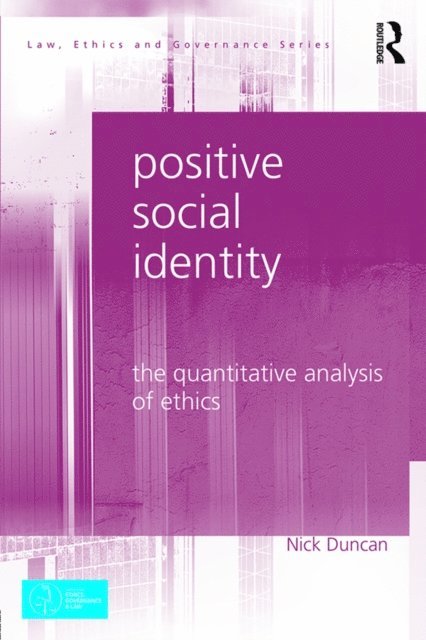
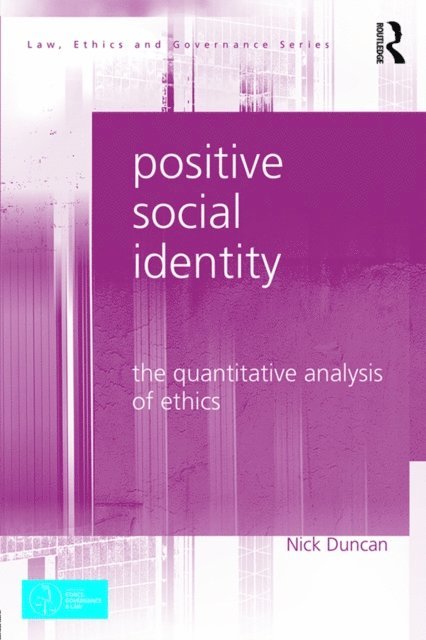
    Positive Social Identity

    The Quantitative Analysis of Ethics

    AvNick Duncan

    Häftad, Engelska, 2020

    Del i serien Law, Ethics and Governance

    433 kr

    Beställningsvara. Skickas inom 10-15 vardagar. Fri frakt över 249 kr.

    Fler format och utgåvor

    E-bok

    538 kr

    E-bok

    538 kr

    Inbunden

    1 468 kr

    Beskrivning

    Despite considerable work the answer to basic questions such as ‘what are our ethics and our moral norms now?’ ‘Have they changed since last year?’, ‘If so why?’ remain surprisingly illusive. This book argues that progress towards answering these questions is possible through a grounded analytical account of the cultivation of ethics and moral norms in social groups, in particular places and times.Departing from the evolutionary theory of why we gain value from pro-social behaviour, we argue that a coherent thread exists for how we do so through evolved social capacities that are united in the pursuit of a Positive Social Identity.Drawing on a unique quantitative dataset from Sierra Leone this book offers a theoretical framework and a preliminary guide to the systematic quantitative analysis of ethics and moral norms and how these may relate to the long term success of organisations. The results directly challenge a ‘one-size-fits-all’, universal understanding of both ethics and moral norms both within and between organisations. The costs and challenges influencing the development of ethics and moral norms and their ultimate conception of pro-sociality vary dramatically according to situation. Nowhere is this more starkly illustrated than between economically developed and developing countries.In analysing the relationship between agency and situation, the role of diversity, conflict, inefficiency and failure to cooperate prove to be essential components of the solution of social dilemmas on which Positive Social Identity depends.

    Produktinformation

    • Utgivningsdatum:2020-06-30
    • Mått:156 x 234 x 14 mm
    • Vikt:500 g
    • Format:Häftad
    • Språk:Engelska
    • Serie:Law, Ethics and Governance
    • Antal sidor:252
    • Förlag:Taylor & Francis Ltd
    • ISBN:9780367595104

    Utforska kategorier

    • Sociala och etiska frågor inom Samhälle och politik
    • Rättsvetenskap inom Juridik
    • Projektledning inom Ekonomi och Ledarskap

    Mer om författaren

    Dr Nick Duncan has directed both commercial and NGO organisations with activities in over 20 countries. Nick has specialised over the last 15 years in corruption, anti-corruption and organisational ethics. During this period, he has specifically focussed on issues of measurement, both as a practitioner and researcher. He has published, and lectured internationally on these subjects.Nick is currently lead consultant at Strategic Organisational Ethics in Cambridge UK.

    Recensioner i media

    'Blending insights from psychology, organisational theory and economics, Nick Duncan provides a powerful account of the ethical basis of organisational change. This book will be an important reference for scholars interested in understanding why and how organisations change.' Kunal Sen, Professor of Development Economics, Global Development Institute, University of Manchester, UK'Like some before him, Nick Duncan is not reluctant to ask the difficult questions regarding how and why we, humans, often but often not act in altruistic, positive and empathetic ways. Unlike many before him, however, he eschews simple reductionist answers. Instead, he develops a complex theory of ethical behaviour that builds on insights from evolutionary biology, identity theory, descriptive ethics and organizational theory emphasising the importance of social and organizational contexts and situations that we encounter in our lives. In this way, he is able to account for how humans can be both social and anti-social, moral and amoral. This is a probing and profound book that deserves to be read very widely by everyone who is concerned about the big moral issues of our age.'Yiannis Gabriel, Professor of Organizational Theory, University of Bath, UK and University of Lund, Sweden

    Innehållsförteckning

    • IntroductionChapter 1: Evolutionary Motivations Towards Pro-Social Moral NormsChapter 2 The Social Brain and Moral Self-IdentityChapter 3 Situation and Transformation in the Resolution of Social DilemmasChapter 4 Intrapersonal Identity PositivityChapter 5 Positive Social IdentityChapter 6: A Situational Model of Positive Social IdentityChapter 7: A Situational Analysis of Positive Social IdentityChapter 8: Conclusion: The Distinct Importance of Positive Social IdentityBibliographyAppendix 1: Data CollectedAppendix 2: Correlation between Indicators of PSID Pro-social Behviour and Social ResourcesAppendix 3: Equations Used for Graph Level IndicatorsIndex