• Fri frakt över 249 kr
  • •
  • Snabba leveranser
  • •
  • Billiga böcker
Kundservice

Du är på sajten för privatpersoner.

Företag, bibliotek eller offentlig verksamhet?

Du handlar på classic.bokus.com, där alla dina funktioner finns intakta.
Till classic.bokus.com
Bokus logotyp. Gå till startsidan.
  • Erbjudanden
  • Nyheter
  • Student
  • Topplistor
  • Barn & ungdom
  • Bokus Play
  • E-böcker
  • Pocketböcker
  • Spel & pussel

10% studentrabatt med kod TERM26

Sidfot

Mina sidor

    Hjälp

    • Kundservice
    • Vanliga frågor och svar
    • Frakt och leverans
    • Retur vid ångerrätt
    • Reklamera vara
    • Betalning
    • Köpvillkor
    • Allmänna villkor
    • Information om webbplatsens tillgänglighet

    Om Bokus

    • Om oss
    • Pressrum
    • För studenter
    • För företag
    • För bibliotek och offentlig verksamhet
    • För leverantörer
    • Hållbarhet

    Populärt

    • Aktuella erbjudanden
    • Presentkort
    • Studentlitteratur
    • Nya böcker
    • Topplistor
    • Signerade böcker
    • Engelska böcker

    Inspiration

    • Boktips
    • BookTok
    • Populära bokserier
    • Barnbokskaraktärer
    • Populära författare
    Logotyp för Bokus
    Följ oss på Facebook (extern länk)Följ oss på Instagram (extern länk)Följ oss på YouTube (extern länk)Följ oss på TikTok (extern länk)
    bokus @ CookiesAnpassa cookiesIntegritetspolicyKöpvillkor
    Till Citymail hemsida (extern länk)Till Budbee hemsida (extern länk)Till Postnord hemsida (extern länk)Till Schenker hemsida (extern länk)Till Early Bird hemsida (extern länk)Till Walleys hemsida (extern länk)
    1. Naturvetenskap och teknik
    2. Geovetenskap
    3. Geografi

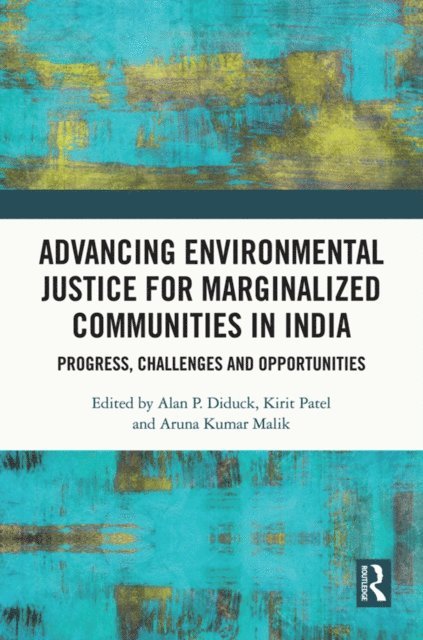
    Advancing Environmental Justice for Marginalized Communities in India

    Progress, Challenges and Opportunities

    AvAlan Diduck,Kirit Patel

    Inbunden, Engelska, 2021

    2 434 kr

    Beställningsvara. Skickas inom 10-15 vardagar. Fri frakt över 249 kr.

    Beskrivning

    This interdisciplinary collection examines social equity and environmental justice in India. It assesses the effectiveness of environmental policies and institutions in rendering justice for marginalized communities while ensuring protection of the environment. It also analyses the influence of the neoliberal state and its political economies on the development and outcomes of these policies and institutions.The book provides a unique perspective on environmental justice because of its consistent emphasis on social justice, rather than the prevailing predominant analyses from legal or environmental perspectives. It explores the themes of effectiveness and equity as they pertain to public policy instruments, such as environmental impact assessment, environmental licensing and enforcement, public hearings, and environmental activism strategies. The four interlinked dimensions of environmental justice, namely recognitional justice, procedural justice, distributive justice, and restorative justice, provide the core of the book’s conceptual framework. The contributions draw on ideas and methods from development studies, environmental geography, environmental law and policy, natural resource management, public administration, and political economy The book concludes by considering planning, policy and institutional reforms and community-based initiatives that are needed to promote and protect environmental justice in India.Offering an important reference for researchers and scholars, this book will appeal to those in law, geography, environmental studies, natural resource management, development studies, sociology, and political science. It will also be of interest to community-based researchers, environmentalists and other civil society activists, natural resource managers, and policy makers.

    Produktinformation

    • Utgivningsdatum:2021-09-17
    • Mått:156 x 234 x 19 mm
    • Vikt:453 g
    • Format:Inbunden
    • Språk:Engelska
    • Antal sidor:244
    • Förlag:Taylor & Francis Ltd
    • ISBN:9780367692810

    Utforska kategorier

    • Geografi inom Naturvetenskap och teknik
    • Miljöteknik inom Naturvetenskap och teknik

    Mer om författaren

    Alan P. Diduck is a Professor and the Department Chair of Environmental Studies and Sciences at the University of Winnipeg. Before joining the university, he was a lawyer and executive director of a social profit organization providing public legal education and information services. His research deals with community engagement in environmental governance, the learning implications of involvement and the consequences for social aspects of sustainability, such as adaptive capacity and environmental justice. Kirit Patel is an Associate Professor and the Program Chair of International Development Studies at Menno Simons College, affiliated with the University of Winnipeg and Canadian Mennonite University. As an academic, policy analyst and development professional, Dr Patel's teaching and research focus on environmental and social justice, sustainable food systems and nutrition security, agrarian change and rural-urban migration, agrobiodiversity conservation, Indigenous knowledge systems and the governance of common property resources in South Asia. Aruna Kumar Malik was an Assistant Professor of Political Science at Gujarat National Law University. He was a recipient of the Queen Elizabeth II Diamond Jubilee International Scholarship and was a visiting scholar at the University of Winnipeg, Canada, in 2018-2019.

    Innehållsförteckning

    • Part 1 Introduction 1. Environmental justice in India: Context, issues and framework Part 2 Economic, policy and institutional context 2. Injustice and justice: The double movement of small hydro development in Himachal Pradesh 3. The visible fault line of development: The right of consent of Adivasi communities and the political economy of mining 4. Realizing sustainable development and water justice through procedural justice 5. The National Green Tribunal’s response to the cause of tribals and fisherfolk 6. Being appraised by experts: A review of the role of Expert Appraisal Committees in the environmental clearance process and judicial intervention Part 3 Cases studies of justice and injustice 7. Small hydro and environmental justice: Lessons from the Kullu District of Himachal Pradesh 8. A case study of impact assessment, litigation and a social movement against a limestone mine in Gujarat 9. Values matter: Gender-based exclusion from environmental impact assessments in Mahuva, Gujarat 10. Holding international finance institutions accountable for environmental injustice: A case study of the Tata Mundra Power Plant in Gujarat 11. Environmental justice and participation for communities in southern India: Sand mining in Udupi District, Karnataka 12. Karwar fisherfolk’s quest for environmental justice: Examining the roles of impact assessment, environmental regulatory agencies and legal institutions 13. Advancing environmental justice: Lessons from the Thoothukudi Sterlite Copper case 14. Judicial environmentalism: The thorny case of Prosopis juliflora Part 4 Conclusion 15. Lessons for policy and institutional reform