• Fri frakt över 249 kr
  • •
  • Snabba leveranser
  • •
  • Billiga böcker
Kundservice

Du är på sajten för privatpersoner.

Företag, bibliotek eller offentlig verksamhet?

Du handlar på classic.bokus.com, där alla dina funktioner finns intakta.
Till classic.bokus.com
Bokus logotyp. Gå till startsidan.
  • Erbjudanden
  • Nyheter
  • Student
  • Topplistor
  • Barn & ungdom
  • Bokus Play
  • E-böcker
  • Pocketböcker
  • Spel & pussel

10% studentrabatt med kod TERM26

Sidfot

Mina sidor

    Hjälp

    • Kundservice
    • Vanliga frågor och svar
    • Frakt och leverans
    • Retur vid ångerrätt
    • Reklamera vara
    • Betalning
    • Köpvillkor
    • Allmänna villkor
    • Information om webbplatsens tillgänglighet

    Om Bokus

    • Om oss
    • Pressrum
    • För studenter
    • För företag
    • För bibliotek och offentlig verksamhet
    • För leverantörer
    • Hållbarhet

    Populärt

    • Aktuella erbjudanden
    • Presentkort
    • Studentlitteratur
    • Nya böcker
    • Topplistor
    • Signerade böcker
    • Engelska böcker

    Inspiration

    • Boktips
    • BookTok
    • Populära bokserier
    • Barnbokskaraktärer
    • Populära författare
    Logotyp för Bokus
    Följ oss på Facebook (extern länk)Följ oss på Instagram (extern länk)Följ oss på YouTube (extern länk)Följ oss på TikTok (extern länk)
    bokus @ CookiesAnpassa cookiesIntegritetspolicyKöpvillkor
    Till Citymail hemsida (extern länk)Till Budbee hemsida (extern länk)Till Postnord hemsida (extern länk)Till Schenker hemsida (extern länk)Till Early Bird hemsida (extern länk)Till Walleys hemsida (extern länk)
    1. Skönlitteratur
    2. Litteraturvetenskap

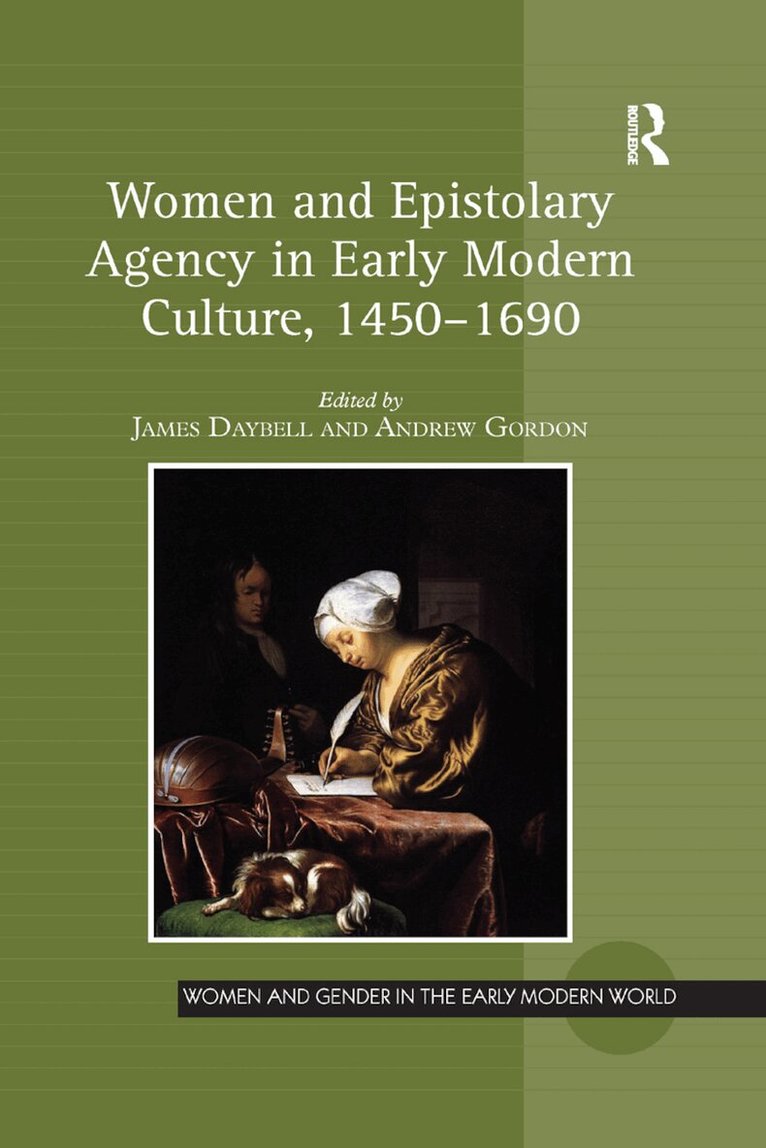
    Women and Epistolary Agency in Early Modern Culture, 1450–1690

    AvJames Daybell,Andrew Gordon

    Häftad, Engelska, 2019

    Del i serien Women and Gender in the Early Modern World

    787 kr

    Beställningsvara. Skickas inom 10-15 vardagar. Fri frakt över 249 kr.

    Beskrivning

    Women and Epistolary Agency in Early Modern Culture, 1450–1690 is the first collection to examine the gendered nature of women’s letter-writing in England and Ireland from the late-fifteenth century through to the Restoration. The essays collected here represent an important body of new work by a group of international scholars who together look to reorient the study of women’s letters in the contexts of early modern culture. The volume builds upon recent approaches to the letter, both rhetorical and material, that have the power to transform the ways in which we understand, study and situate early modern women’s letter-writing, challenging misconceptions of women’s letters as intrinsically private, domestic and apolitical. The essays in the volume embrace a range of interdisciplinary approaches: historical, literary, palaeographic, linguistic, material and gender-based. Contributors deal with a variety of issues related to early modern women’s correspondence in England and Ireland. These include women’s rhetorical and persuasive skills and the importance of gendered epistolary strategies; gender and the materiality of the letter as a physical form; female agency, education, knowledge and power; epistolary networks and communication technologies. In this volume, the study of women’s letters is not confined to writings by women; contributors here examine not only the collaborative nature of some letter-writing but also explore how men addressed women in their correspondence as well as some rich examples of how women were constructed in and through the letters of men. As a whole, the book stands as a valuable reassessment of the complex gendered nature of early modern women’s correspondence.

    Produktinformation

    • Utgivningsdatum:2019-12-12
    • Mått:156 x 234 x 17 mm
    • Vikt:510 g
    • Format:Häftad
    • Språk:Engelska
    • Serie:Women and Gender in the Early Modern World
    • Antal sidor:258
    • Förlag:Taylor & Francis Ltd
    • ISBN:9780367881849

    Utforska kategorier

    • Litteraturvetenskap inom Skönlitteratur
    • Litteraturvetenskap inom Skönlitteratur
    • Historia inom Historia och arkeologi

    Mer om författaren

    James Daybell is Professor of early modern British history at Plymouth University, UK.Andrew Gordon is Senior Lecturer in English at the University of Aberdeen, UK.

    Recensioner i media

    "Women and Epistolary Agency is a welcome contribution to the flourishing literature on early modern letter-writing. It sheds new light on the genderd dimensions of correspondence, and presents some novel paths for further exploration. The collection will be valuable reading for any scholar working on early modern women or letter-writing: scholars who will, no doubt, observe the continuing development of WEMLO project with keen interest." - Stephanie Thomson, University of Adelaide"Overall, this edited collection offers an excellent range of articles from different disciplines that focus on women from a variety of geographical, social, religious and professional backgrounds."- Helen Newsome, University of Sheffield, Journal of Historical Pragmatics

    Innehållsförteckning

    • Contents: Living letters: the subject and object of women’s correspondence, James Daybell and Andrew Gordon. Objects of Study: Constructing Women’s Letters: What they wrote: early Tudor aristocratic women, 1450-1550, Barbara J. Harris; By the queen: collaborative authorship in scribal correspondence of Queen Elizabeth I, Melanie Evans; The materiality of early modern women’s letters, James Daybell. Voices of Authority: Letters of Counsel and Advice: Women as counsellors in 16th-century England: the letters of Lady Anne Bacon and Lady Elizabeth Russell, Gemma Allen; The rhetoric of medical authority in Lady Katherine Ranelagh’s Letters, Michelle DiMeo; John Evelyn, Elizabeth Carey, and the trials of pious friendship, Cedric Brown; ‘Be plyeabell to all good Counsell’: Lady Brilliana Harley’s advice letter to her son, Johanna Harris Tyler. Networks and Negotiations: The Social Relations of Correspondence: Making friends with Elizabeth in the letters of Roger Ascham, Rachel McGregor; Irish women’s letters, 1641-1653, Marie-Louise Coolahan; Recovering agency in the epistolary traffic of Frances, Countess of Essex and Jane Daniell, Andrew Gordon; Quaker correspondence: religious identity and communication networks in the interregnum Atlantic world’, Marjon Ames. Postscript: New directions in early modern women’s letters: WEMLO’s challenges and possibilities, Kim McLean-Fiander and James Daybell; Notes; Bibliography; Index.