Inbunden, Engelska, 2006
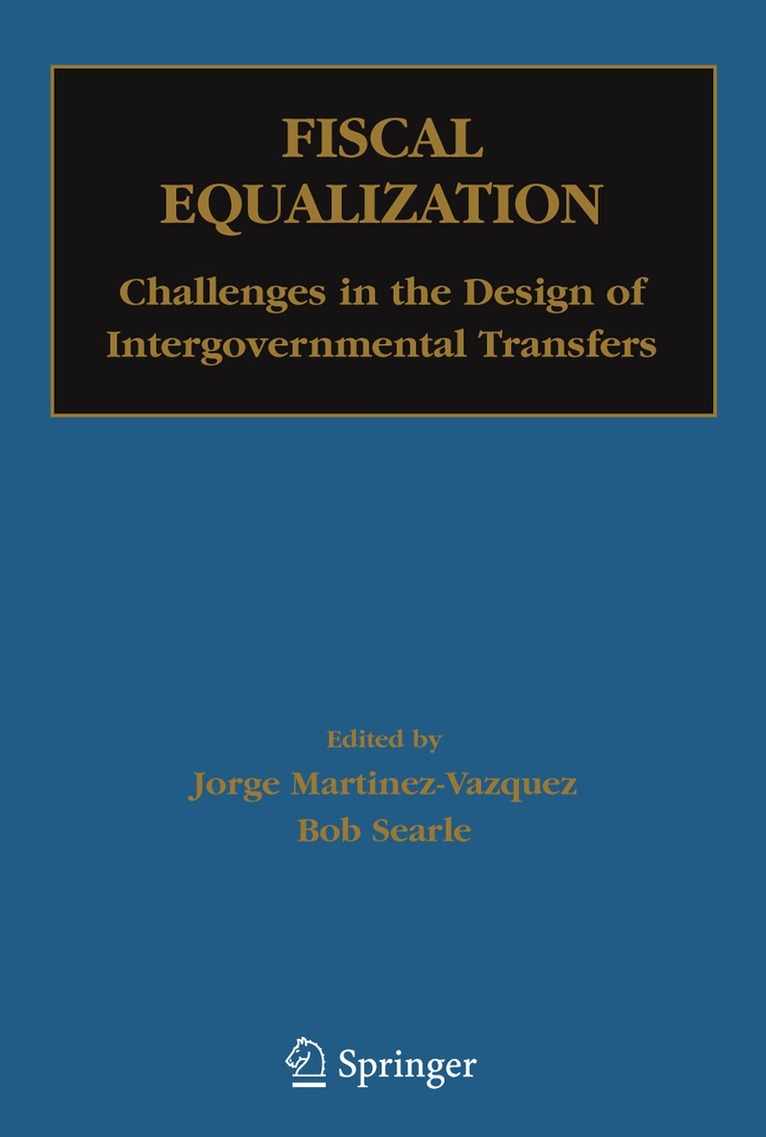
Fiscal Equalization
Av Jorge Martinez-Vazquez, Bob Searle
2244 kr
Beställningsvara. Skickas inom 10-15 vardagar. Fri frakt över 249 kr.
Beskrivning
Each endogenous variable in the model is a function of the exogenous For later discussion, it is useful to explore this in variables and parameters. more detail for one of the endogenous variables, for example the grant to State i. In this regard, one can define from (6) the per capita grant to a State as where F = [s N] is a vector of variables determined by the federal government, P = [p, p,] is a vector of the local public good prices, CGC = [I, pi c] is a vector of variables determined by the CGC and S = lq, q,] is the strategy set of the two States. Within F, the variable s is determined by the federal government. The total federal population N is determined by things such as the birth and death rate, but also by international migration and hence, to some extent, the population policy of the federal government. Within the vector CGC, the variables yi , pi, c are all determined by the CGC, while the public good provision levels within S are determined by the States. As discussed below, we assume that each State perceives s, N, public good prices and the CGC variables (except the adjustment term c) to be exogenously given. This is reasonable since in practice the States have no impact on s and only a marginal impact on the CGC variables.
Produktinformation
- Utgivningsdatum: 2006-12-04
- Mått: 156 x 235 x 32 mm
- Vikt: 876 g
- Format: Inbunden
- Språk: Engelska
- Antal sidor: 502
- Upplaga: 2007
- Förlag: Springer-Verlag New York Inc.
- ISBN: 9780387489872
Utforska kategorier
Betyg & recensioner
0 recensioner
Inga recensioner tillgängliga.