• Fri frakt över 249 kr
  • •
  • Snabba leveranser
  • •
  • Billiga böcker
Kundservice

Du är på sajten för privatpersoner.

Företag, bibliotek eller offentlig verksamhet?

Du handlar på classic.bokus.com, där alla dina funktioner finns intakta.
Till classic.bokus.com
Bokus logotyp. Gå till startsidan.
  • Erbjudanden
  • Nyheter
  • Student
  • Topplistor
  • Barn & ungdom
  • Bokus Play
  • E-böcker
  • Pocketböcker
  • Spel & pussel

10% rabatt på allt med kod NYSTART10 →

Sidfot

Mina sidor

    Hjälp

    • Kundservice
    • Vanliga frågor och svar
    • Frakt och leverans
    • Retur vid ångerrätt
    • Reklamera vara
    • Betalning
    • Köpvillkor
    • Allmänna villkor
    • Information om webbplatsens tillgänglighet

    Om Bokus

    • Om oss
    • Pressrum
    • För studenter
    • För företag
    • För bibliotek och offentlig verksamhet
    • För leverantörer
    • Hållbarhet

    Populärt

    • Aktuella erbjudanden
    • Presentkort
    • Studentlitteratur
    • Nya böcker
    • Topplistor
    • Signerade böcker
    • Engelska böcker

    Inspiration

    • Boktips
    • BookTok
    • Populära bokserier
    • Barnbokskaraktärer
    • Populära författare
    Logotyp för Bokus
    Följ oss på Facebook (extern länk)Följ oss på Instagram (extern länk)Följ oss på YouTube (extern länk)Följ oss på TikTok (extern länk)
    bokus @ CookiesAnpassa cookiesIntegritetspolicyKöpvillkor
    Till Citymail hemsida (extern länk)Till Budbee hemsida (extern länk)Till Postnord hemsida (extern länk)Till Schenker hemsida (extern länk)Till Early Bird hemsida (extern länk)Till Walleys hemsida (extern länk)
    1. Naturvetenskap och teknik
    2. Matematik och naturvetenskap
    3. Fysik
    4. Klassisk mekanik

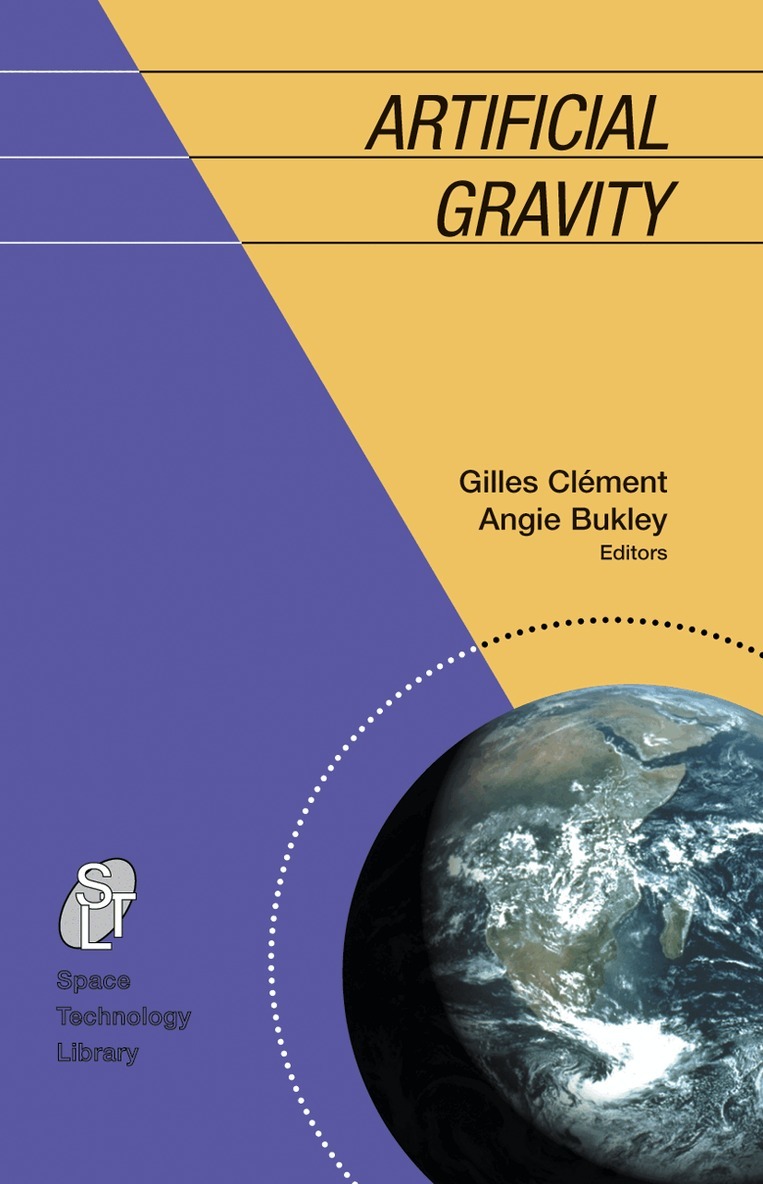
    Artificial Gravity

    AvGilles Clément,Angeli Bukley

    Inbunden, Engelska, 2007

    Del 20 i serien Space Technology Library

    2 378 kr

    Beställningsvara. Skickas inom 10-15 vardagar. Fri frakt över 249 kr.

    Beskrivning

    William H. Paloski, Ph. D. Human Adaptation and Countermeasures Office NASA Johnson Space Center Artificial gravity is an old concept, having gotten its start in the late in the 19th century when Konstantin Tsiolkovsky, considered by many to be the father of the Russian space program, realized that the human body might not respond well to the free fall of orbital space flight. To solve this problem, he proposed that space stations be rotated to create centripetal accelerations that might provide inertial loading similar to terrestrial gravitational loading. Einstein later showed in his equivalence principle that acceleration is indeed indistinguishable from gravity. Subsequently, other individuals of note, including scientists like Werner von Braun as well as artists like Arthur C. Clarke and Stanley Kubrick, devised elaborate solutions for spinning vehicles to provide “artificial gravity” that would offset the untoward physiological consequences of spaceflight. By 1959, concerns about the then-unknown human responses to spaceflight drove NASA to consider the necessity of incorporating artificial gravity in its earliest human space vehicles. Of course, owing in part to the relatively short durations of the planned missions, artificial gravity was not used in the early NASA programs.

    Produktinformation

    • Utgivningsdatum:2007-07-06
    • Mått:160 x 240 x 26 mm
    • Vikt:752 g
    • Format:Inbunden
    • Språk:Engelska
    • Serie:Space Technology Library
    • Antal sidor:364
    • Upplaga:2007
    • Förlag:Springer-Verlag New York Inc.
    • ISBN:9780387707129

    Utforska kategorier

    • Klassisk mekanik inom Naturvetenskap och teknik

    Mer om författaren

    Gilles Clement is a neurophysiologist who has been involved in space research on astronauts since 25 years. He wrote "Fundamentals of Space Medicine" and "Fundamentals of Space Biology". He is coordinating the vision of a group of international scientists, doctors and engineers for validating the implementation of artificial gravity for long-duration, exploratory missions. Angie Bukley is an aerospace control systems engineer who has over 20 years experience in the aerospace business working with NASA, the US Department of Defense, and the Aerospace Corporation. She is currently the Dean for Research and Graduate Studies at the Russ College of Engineering & Technology, Ohio University.

    Recensioner i media

    From the reviews: "The book has grown out of the work of the ESA Topical Team on Artificial Gravity, which issued its Final Report in 2006. ... provide a useful summary of artificial-gravity research. The extent to which microgravity affects different physiological systems differently, and the complex-manner in which they all interact, was a real eye-opener to me. ... This would greatly increase its value as a resource for those engaged in the planning of future human space exploration." (Ian Crawford, The Observatory, Vol. 128 (1203), 2008)

    Innehållsförteckning

    • The Gravity Of The Situation.- Physics of Artificial Gravity.- History of Artificial Gravity.- Physiological Targets of Artificial Gravity: The Sensory-Motor System.- Physiological Targets of Artificial Gravity: The Cardiovascular System.- Physiological Targets of Artificial Gravity: The Neuromuscular System.- Phyysiological Targets of Artificial Gravity: Adaptive Processes in Bone.- Interactions Among the Vestibular, Autonomic, and Skeletal Systems in Artificial Gravity.- Interactions Among Artificial Gravity, The Affected Physiological Systems, and Nutrition.- Artificial Gravity And The Immune System Function.- Medical, Psychological, and Environmental Issues of Artificial Gravity.- Safety Issues in Artificial Gravity Studies.- Recommended Research.