• Fri frakt över 249 kr
  • •
  • Snabba leveranser
  • •
  • Billiga böcker
Kundservice

Du är på sajten för privatpersoner.

Företag, bibliotek eller offentlig verksamhet?

Du handlar på classic.bokus.com, där alla dina funktioner finns intakta.
Till classic.bokus.com
Bokus logotyp. Gå till startsidan.
  • Erbjudanden
  • Nyheter
  • Student
  • Topplistor
  • Barn & ungdom
  • Bokus Play
  • E-böcker
  • Pocketböcker
  • Spel & pussel

10% rabatt på allt med kod NYSTART10 →

Sidfot

Mina sidor

    Hjälp

    • Kundservice
    • Vanliga frågor och svar
    • Frakt och leverans
    • Retur vid ångerrätt
    • Reklamera vara
    • Betalning
    • Köpvillkor
    • Allmänna villkor
    • Information om webbplatsens tillgänglighet

    Om Bokus

    • Om oss
    • Pressrum
    • För studenter
    • För företag
    • För bibliotek och offentlig verksamhet
    • För leverantörer
    • Hållbarhet

    Populärt

    • Aktuella erbjudanden
    • Presentkort
    • Studentlitteratur
    • Nya böcker
    • Topplistor
    • Signerade böcker
    • Engelska böcker

    Inspiration

    • Boktips
    • BookTok
    • Populära bokserier
    • Barnbokskaraktärer
    • Populära författare
    Logotyp för Bokus
    Följ oss på Facebook (extern länk)Följ oss på Instagram (extern länk)Följ oss på YouTube (extern länk)Följ oss på TikTok (extern länk)
    bokus @ CookiesAnpassa cookiesIntegritetspolicyKöpvillkor
    Till Citymail hemsida (extern länk)Till Budbee hemsida (extern länk)Till Postnord hemsida (extern länk)Till Schenker hemsida (extern länk)Till Early Bird hemsida (extern länk)Till Walleys hemsida (extern länk)
    1. Djur och Natur
    2. Djurböcker
    3. Vilda djur
    4. Fjärilar, insekter, spindlar

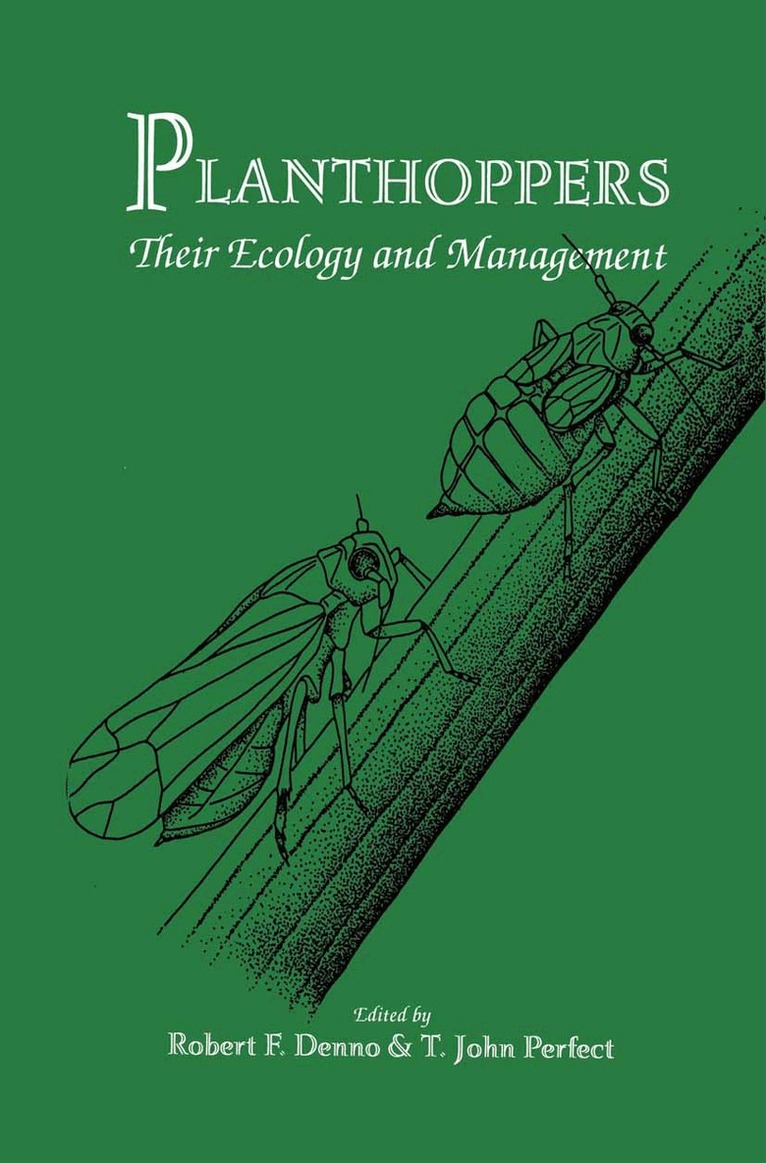
    Planthoppers

    Their Ecology and Management

    AvT. John Perfect,R. F. Denno

    Inbunden, Engelska, 1993

    3 240 kr

    Beställningsvara. Skickas inom 10-15 vardagar. Fri frakt över 249 kr.

    Beskrivning

    Planthoppers include some of the most devastating pests of major agricultural crops throughout the world. One species, the rice brown planthopper, is among the most economically important pests in Asia. In past decades, government policies encouraged the control of rice planthoppers with synthetic pesticides, a tactic which promoted insecticide resistance and often led to the pesticide-induced resurgence of pest populations. To deter planthopper outbreaks, a more ecologically sound management strategy is being implemented, one based on a thorough investigation of population dynamics, natural enemies, and the genetics of host plant and insecticide adaptation. In the natural habitats of North America and Europe, scientists have also used planthoppers as model organisms to test ecological and evolutionary theory. The consequence of these diverse studies is an extremely scattered literature on planthoppers that has never been synthesized from an ecological perspective. This volume summarizes what is known about planthopper ecology and biological control. It takes a theoretical approach yet is deeply concerned with the application of theory to the practical problems of pest management.

    Produktinformation

    • Utgivningsdatum:1993-09-30
    • Mått:155 x 235 x 48 mm
    • Vikt:1 370 g
    • Format:Inbunden
    • Språk:Engelska
    • Antal sidor:799
    • Upplaga:1994
    • Förlag:Chapman and Hall
    • ISBN:9780412023415

    Utforska kategorier

    • Fjärilar, insekter, spindlar inom Djur och Natur
    • Insekter inom Naturvetenskap och teknik

    Recensioner i media

    The text is clearly organized. The chapter summaries are particularly useful...The last chapter is the most interesting as it details the problems and solutions of implementing an effective IPM educational program in rural Asia...It is a useful compilation of scattered data...Over 1700 references are listed, of which 83% represent papers published in the last quarter century... - Entomological Society of America; The text is clearly organized. The chapter summaries are particularly useful...The last chapter is the most interesting as it details the problems and solutions of implementing an effective IPM educational program in rural Asia...It is a useful compilation of scattered data...Over 1700 references are listed, of which 83% represent papers published in the last quarter century... - Entomological Society of America; The text is clearly organized. The chapter summaries are particularly useful...The last chapter is the most interesting as it details the problems and solutions of implementing an effective IPM educational program in rural Asia...It is a useful compilation of scattered data...Over 1700 references are listed, of which 83% represent papers published in the last quarter century... - Entomological Society of America

    Innehållsförteckning

    • Introduction: Planthoppers as Models for Ecological Study and Effective Pest Management.- Introduction: Planthoppers as Models for Ecological Study and Effective Pest Management.- One: Host Plant Relationships.- 1. Evolutionary Patterns of Host Plant Use by Delphacid Planthoppers and Their Relatives.- 2. Planthopper/Plant Interactions: Feeding Behavior, Plant Nutrition, Plant Defense, and Host Plant Specialization.- 3. Influence of Habitat Structure on the Abundance and Diversity of Planthoppers.- Two: Life History Patterns, Reproductive Biology, and Speciation.- 4. Life History Variation in Planthoppers.- 5. Reproductive Behavior: The Role of Acoustic Signals in Species Recognition and Speciation.- 6. An Ecological Framework for the Study of Planthopper Mating Systems.- Three: Population Ecology.- 7. Density-related Effects on the Components of Fitness and Population Dynamics of Planthoppers.- 8. Rice Planthopper Population Dynamics: A Comparison between Temperate and Tropical Regions.- 9. Long-Distance Migration in Delphacid Planthoppers.- Four: Species Interactions and Community Structure.- 10. Predator—Planthopper Interactions.- 11. Parasitoid Interactions and Their Contribution to the Stabilization of Auchenorrhyncha Populations.- 12. Transmission Biology, Vector Specificity, and Evolution of Planthopper-Transmitted Viruses.- 13. Interspecific Interactions and Community Structure in Planthoppers and Leaflioppers.- Five: Ecological Approaches to Planthopper Management.- 14. Biological Control in the Management of Planthopper Populations.- 15. Genetics of Host Plant Adaptation in Delphacid Planthoppers.- 16. Impact of Insecticides on the Resistance and Resurgence of Rice Planthoppers.- 17. Judicial Use of Insecticides Deter Planthopper Outbreaks and Extend the Lifeof Resistant Varieties in Southeast Asian Rice.- 18. Status and Prospects for an Integrated Approach to the Control of Rice Planthoppers.- Six: Definition and Implementation of Management Options.- 19. A Systems Approach to Planthopper Population Dynamics and Its Contribution to the Definition of Pest Management Options.- 20. Extension of Integrated Pest Management for Planthoppers in Asian Irrigated Rice: Empowering the User.- References.- Taxonomic Index.