• Fri frakt över 249 kr
  • •
  • Snabba leveranser
  • •
  • Billiga böcker
Kundservice

Du är på sajten för privatpersoner.

Företag, bibliotek eller offentlig verksamhet?

Du handlar på classic.bokus.com, där alla dina funktioner finns intakta.
Till classic.bokus.com
Bokus logotyp. Gå till startsidan.
  • Erbjudanden
  • Nyheter
  • Student
  • Topplistor
  • Barn & ungdom
  • Bokus Play
  • E-böcker
  • Pocketböcker
  • Spel & pussel

10% rabatt på allt med kod: NYSTART10 →

Sidfot

Mina sidor

    Hjälp

    • Kundservice
    • Vanliga frågor och svar
    • Frakt och leverans
    • Retur vid ångerrätt
    • Reklamera vara
    • Betalning
    • Köpvillkor
    • Allmänna villkor
    • Information om webbplatsens tillgänglighet

    Om Bokus

    • Om oss
    • Pressrum
    • För studenter
    • För företag
    • För bibliotek och offentlig verksamhet
    • För leverantörer
    • Hållbarhet

    Populärt

    • Aktuella erbjudanden
    • Presentkort
    • Studentlitteratur
    • Nya böcker
    • Topplistor
    • Signerade böcker
    • Engelska böcker

    Inspiration

    • Boktips
    • BookTok
    • Populära bokserier
    • Barnbokskaraktärer
    • Populära författare
    Logotyp för Bokus
    Följ oss på Facebook (extern länk)Följ oss på Instagram (extern länk)Följ oss på YouTube (extern länk)Följ oss på TikTok (extern länk)
    bokus @ CookiesAnpassa cookiesIntegritetspolicyKöpvillkor
    Till Citymail hemsida (extern länk)Till Budbee hemsida (extern länk)Till Postnord hemsida (extern länk)Till Schenker hemsida (extern länk)Till Early Bird hemsida (extern länk)Till Walleys hemsida (extern länk)
    1. Naturvetenskap och teknik
    2. Geovetenskap
    3. Geovetenskap

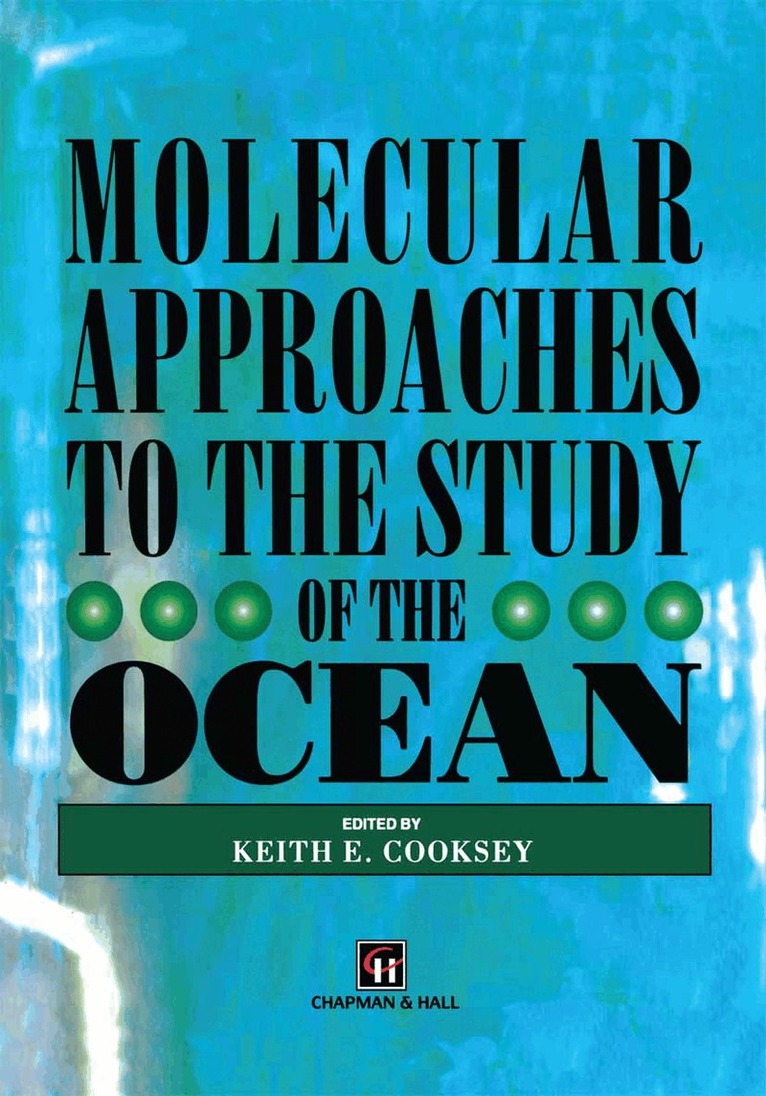
    Molecular Approaches to the Study of the Ocean

    AvKeith E. Cooksey,K.E. Cooksey

    Inbunden, Engelska, 1997

    2 164 kr

    Beställningsvara. Skickas inom 10-15 vardagar. Fri frakt över 249 kr.

    Beskrivning

    Marine biological science is now studied at the molecular level and although research scientists depend on information gained using molecular techniques, there is no book explaining the philosophy of this approach. Molecular Approaches to the Study of the Ocean introduces the reasons why molecular technology is such a powerful tool in the study of the oceans, describing the types of techniques that can be used, why they are useful and gives examples of their application. Molecular biological techniques allow phylogenetic relationships to be explored in a manner that no macroscopic method can; although the book deals with organisms near the base of the marine food web, the ideas can be used in studies of macroorganisms as well as those in freshwater environments.

    Produktinformation

    • Utgivningsdatum:1997-12-31
    • Mått:178 x 254 x 41 mm
    • Vikt:1 414 g
    • Format:Inbunden
    • Språk:Engelska
    • Antal sidor:549
    • Upplaga:1998
    • Förlag:Chapman and Hall
    • ISBN:9780412729607

    Utforska kategorier

    • Geovetenskap inom Naturvetenskap och teknik
    • Agronomi och lantbruk inom Naturvetenskap och teknik

    Recensioner i media

    'Most researchers in biological oceanography will find things of value in this well-produced book, and some of the chapters provide for a wider readership an excellent introduction to this critical area of environmental biology.' Nature 'This excellent book is effectively a series of mini-reviews covering the complete gamut of molecular techniques which have recently become available to the marine biologist or oceanographer. ... The book is beautifully presented and all the contributions are of the highest quality; the editor has done a fine job of maintaining consistency without suffocating the authors' individual styles.' Journal of Experimental Marine Biology and Ecology, 231 (1998)

    Innehållsförteckning

    • 1 Molecular phylogenetics: new perspective on the ecology, evolution and biodiversity of marine organisms.- 2 Molecular approaches to microbial biomass estimation in the sea.- 3 Molecular approaches to studies of the activities of marine organisms.- 4 Maxine virus ecology.- 5 Environmental control of gene expression in bacteria.- 6 Protein profile analysis for investigating genetic functions in microbial communities.- 7 Phylogenetic analysis of marine phytoplankton.- 8 Molecular markers of phytoplankton physiological status and their application at the level of individual cells.- 9 Phytoplankton activity through the measurement of ribulose bisphosphate carboxylase gene expression (RuBisCO).- 10 Phytoplankton growth studies by cell cycle analysis.- 11 Immunofluorescence approaches in the study of phytoplankton.- 12 Biochemical and molecular methods for the study of marine fungi.- 13 Nitrogen fixation in the marine environment: genetic potential and nitrogenase expression.- 14 Population genetics and phylogeny of planktonic copepods.- 15 Towards the molecular analysis of copepod production.- 16 Ecophysiology of lipids in pelagic crustacean Zooplankton communities.- 17 Molecular analysis of invertebrate development and growth: identification of developmentally regulated genes in model and commercially important species.- 18 Molecular studies of marine invertebrate biodiversity: status and prospects.- 19 Molluscan adhesive protein genes.- 20 Macroalgal phylogeny.- 21 Molecules, organdies and cells: fluorescence microscopy and red algal development.- 22 Sponge cell culture.- 23 Techniques for exploring symbiosis-specific gene expression in cnidarian/algal associations.- 24 Addressing the microbial ecology of marine biofilms.- 25 Incorporation of radioactive precursors into macromolecules as measures of bacterial growth: problems and pitfalls.- 26 Marine toxins: how they are studied and what they can tell us.- 27 Databases for use in molecular biology: concepts in their design, access and use.