• Fri frakt över 249 kr
  • •
  • Snabba leveranser
  • •
  • Billiga böcker
Kundservice

Du är på sajten för privatpersoner.

Företag, bibliotek eller offentlig verksamhet?

Du handlar på classic.bokus.com, där alla dina funktioner finns intakta.
Till classic.bokus.com
Bokus logotyp. Gå till startsidan.
  • Erbjudanden
  • Nyheter
  • Student
  • Topplistor
  • Barn & ungdom
  • Bokus Play
  • E-böcker
  • Pocketböcker
  • Spel & pussel

10% rabatt på allt med kod: NYSTART10 →

Sidfot

Mina sidor

    Hjälp

    • Kundservice
    • Vanliga frågor och svar
    • Frakt och leverans
    • Retur vid ångerrätt
    • Reklamera vara
    • Betalning
    • Köpvillkor
    • Allmänna villkor
    • Information om webbplatsens tillgänglighet

    Om Bokus

    • Om oss
    • Pressrum
    • För studenter
    • För företag
    • För bibliotek och offentlig verksamhet
    • För leverantörer
    • Hållbarhet

    Populärt

    • Aktuella erbjudanden
    • Presentkort
    • Studentlitteratur
    • Nya böcker
    • Topplistor
    • Signerade böcker
    • Engelska böcker

    Inspiration

    • Boktips
    • BookTok
    • Populära bokserier
    • Barnbokskaraktärer
    • Populära författare
    Logotyp för Bokus
    Följ oss på Facebook (extern länk)Följ oss på Instagram (extern länk)Följ oss på YouTube (extern länk)Följ oss på TikTok (extern länk)
    bokus @ CookiesAnpassa cookiesIntegritetspolicyKöpvillkor
    Till Citymail hemsida (extern länk)Till Budbee hemsida (extern länk)Till Postnord hemsida (extern länk)Till Schenker hemsida (extern länk)Till Early Bird hemsida (extern länk)Till Walleys hemsida (extern länk)
    1. Naturvetenskap och teknik
    2. Geovetenskap
    3. Miljövetenskap och miljöpolitik

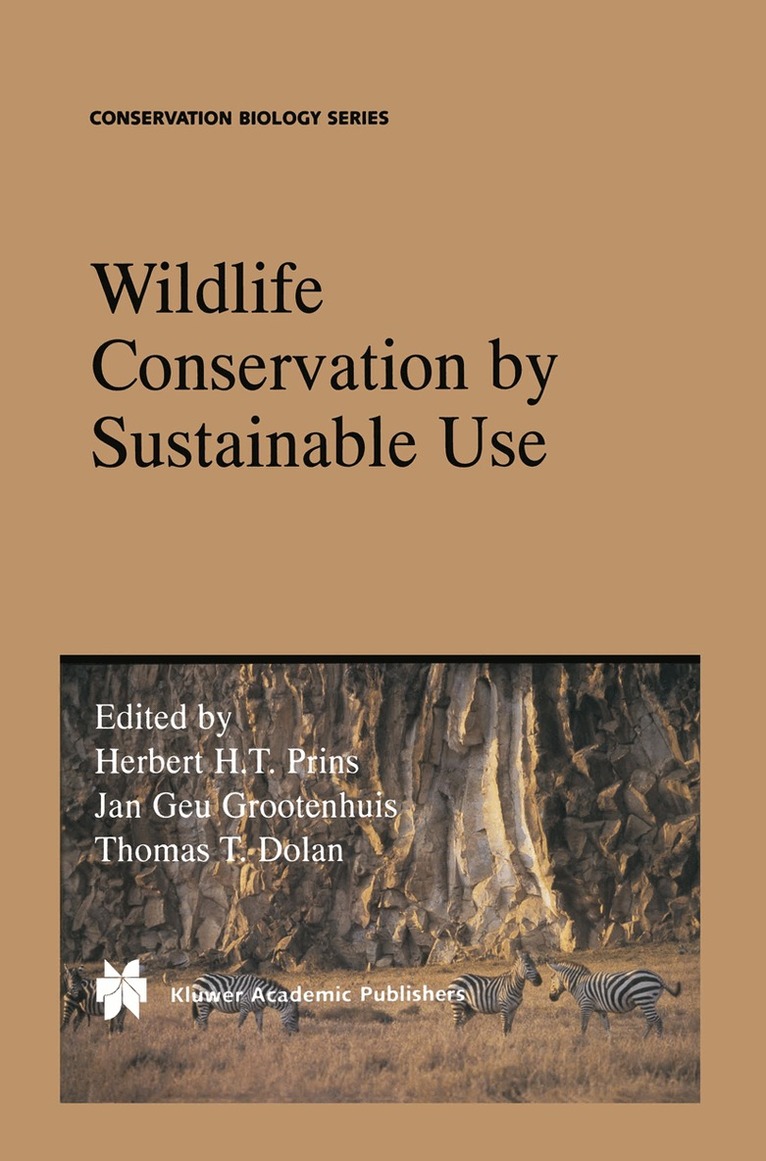
    Wildlife Conservation by Sustainable Use

    AvJ. G. Grootenhuis,T. T. Dolan

    Inbunden, Engelska, 2000

    Del 12 i serien Conservation Biology

    2 164 kr

    Beställningsvara. Skickas inom 10-15 vardagar. Fri frakt över 249 kr.

    Beskrivning

    One of the major challenges of sustainable development is the interdisciplinary nature of the issues involved. To this end, a team of conservation biologists, hunters, tourist operators, ranchers, wildlife and land managers, ecologists, veterinarians and economists was convened to discuss whether wildlife outside protected areas in Africa can be conserved in the face of agricultural expansion and human population growth. They reached the unequivocal - if controversial - conclusion that wildlife can be an economic asset, especially in the African savannas, if this wildlife can be sustainably utilized through safari hunting and tourism. Using the African savannas as an example, Wildlife Conservation by Sustainable Use shows that in many instances sustainable wildlife utilization comprises an even better form of land use than livestock keeping. Even when population pressure is high, as in agricultural areas or in humid zones, and wild animal species can pose a serious cost to agriculture, these costs are mainly caused by small species with a low potential for safari hunting. Although ranching has a very low rate of return and is hardly ever profitable, the biggest obstacle to the model of sustainable wildlife use outlined in Wildlife Conservation by Sustainable Use is from unfair competition from the agricultural sector, such as subsidies and lack of taxation, resulting in market distortion for wildlife utilization. This book thus gives valuable evidence for a different way of working, providing arguments for removing such distortions and thereby facilitating financially sound land use and making it a rationally sound choice to conserve wildlife outside protected areas. The expert team of authors, most of whom came together at a workshop to thrash out the ideas that were then developed into the various chapters, has written a superb account of recent research on this complex subject, resulting in a book that is a major contribution to our understanding of sustainable use of land. The important conclusion is that wildlife conservation can be possible for landholders and local communities if they have a financial interest in protecting wildlife on their lands.

    Produktinformation

    • Utgivningsdatum:2000-08-31
    • Mått:155 x 235 x 33 mm
    • Vikt:934 g
    • Format:Inbunden
    • Språk:Engelska
    • Serie:Conservation Biology
    • Antal sidor:496
    • Upplaga:2000
    • Förlag:Chapman and Hall
    • ISBN:9780412797309

    Utforska kategorier

    • Miljövetenskap och miljöpolitik inom Naturvetenskap och teknik

    Innehållsförteckning

    • 1 Introduction: The Value of Priceless Wildlife.- 2 The Machakos Wildlife Forum: The Story from a Woman on the Land.- 3 Ranching: An Economic Yardstick.- 4 The Lewa Wildlife Conservancy in Kenya: A Case Study.- 5 Competition Between Wildlife and Livestock in Africa.- 6 Wildlife, Livestock and Animal Disease Reservoirs.- 7 Wildlife Damage in Rural Areas with Emphasis on Malawi.- 8 Functional Relationships Between Parks and Agricultural Areas in East Africa: The Case of Nairobi National Park.- 9 Functional Relationships Between Protected and Agricultural Areas in South Africa and Nambia.- 10 Wildlife and Livestock Population Trends in the Kenya Rangeland.- 11 The Effects of a Century of Policy and Legal Change on Wildlife Conservation and Utilisation in Tanzania.- 12 “Ownership”of Wildlife.- 13 Wildlife Land Use and the Great Experiment.- 14 Financial Feasibility of Game Cropping in Machakos District, Kenya.- 15 Hunting and its Benefits: An Overview of Hunting in Africa with Special Reference to Tanzania.- 16 The Economics of Wildlife Tourism: Theory and Reality for Landholders in Africa.- 17 Making Wildlife Pay: Converting Wildlife’s Comparative Advantage into Real Incentives for Having Wildlife in African Savannas, Case Studies from Zimbabwe and Zambia.- 18 Traditional African Wildlife Utilization: Subsistence Hunting, Poaching, and Sustainable Use.- 19 Compelling Reasons for Game Ranching in Maputaland.- 20 Madikwe Game Reserve: A Partnership in Conservation.- 21 Application of the Southern African Experience to Wildlife Utilization and Conservation in Kenya and Tanzania.- 22 Wildlife Utilization: A Justified Option for Sustainable Land Use in African Savannas.