• Fri frakt över 249 kr
  • •
  • Snabba leveranser
  • •
  • Billiga böcker
Kundservice

Du är på sajten för privatpersoner.

Företag, bibliotek eller offentlig verksamhet?

Du handlar på classic.bokus.com, där alla dina funktioner finns intakta.
Till classic.bokus.com
Bokus logotyp. Gå till startsidan.
  • Erbjudanden
  • Nyheter
  • Student
  • Topplistor
  • Barn & ungdom
  • Bokus Play
  • E-böcker
  • Pocketböcker
  • Spel & pussel

10% rabatt på allt med kod: NYSTART10 →

Sidfot

Mina sidor

    Hjälp

    • Kundservice
    • Vanliga frågor och svar
    • Frakt och leverans
    • Retur vid ångerrätt
    • Reklamera vara
    • Betalning
    • Köpvillkor
    • Allmänna villkor
    • Information om webbplatsens tillgänglighet

    Om Bokus

    • Om oss
    • Pressrum
    • För studenter
    • För företag
    • För bibliotek och offentlig verksamhet
    • För leverantörer
    • Hållbarhet

    Populärt

    • Aktuella erbjudanden
    • Presentkort
    • Studentlitteratur
    • Nya böcker
    • Topplistor
    • Signerade böcker
    • Engelska böcker

    Inspiration

    • Boktips
    • BookTok
    • Populära bokserier
    • Barnbokskaraktärer
    • Populära författare
    Logotyp för Bokus
    Följ oss på Facebook (extern länk)Följ oss på Instagram (extern länk)Följ oss på YouTube (extern länk)Följ oss på TikTok (extern länk)
    bokus @ CookiesAnpassa cookiesIntegritetspolicyKöpvillkor
    Till Citymail hemsida (extern länk)Till Budbee hemsida (extern länk)Till Postnord hemsida (extern länk)Till Schenker hemsida (extern länk)Till Early Bird hemsida (extern länk)Till Walleys hemsida (extern länk)
    1. Historia och arkeologi
    2. Historia
    3. Amerikas historia

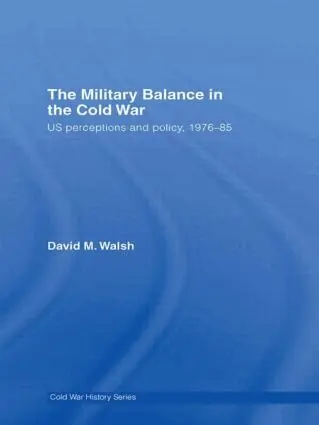
    Military Balance in the Cold War

    US Perceptions and Policy, 1976-85

    AvDavid Walsh

    Inbunden, Engelska, 2007

    Del i serien Cold War History

    2 493 kr

    Beställningsvara. Skickas inom 10-15 vardagar. Fri frakt över 249 kr.

    Fler format och utgåvor

    E-bok

    939 kr

    Häftad

    816 kr

    Beskrivning

    This book examines the impact of American perceptions of the military balance between the United States and the Soviet Union during the key period of 1976-1985. That decade witnessed the decline of the US-Soviet détente and the resurgence of superpower confrontation, often called the ‘Second Cold War’. Among the factors contributing to this shift was the American view of the military balance – whether the United States had been or was being overtaken by the Soviet Union in terms of military capability. Since then, the military balance has been viewed within the overall context of issues impacting superpower relations during this era. David Walsh examines the full range of issues - strategic and European-based forces, power-projection capabilities, and military spending - and their role in shaping perceptions, not just of the military balance but also in such key areas of international relations as arms control, trans-Atlantic diplomacy and Third World conflict. In doing so, he shows how the perceptions of the 1970s contributed to key policy decisions in the 1980s, which themselves played a significant role in bringing the Cold War to an end. The Military Balance in the Cold War will be of interest to advanced students of Cold War history, strategic studies, US foreign policy and international relations in general.

    Produktinformation

    • Utgivningsdatum:2007-07-20
    • Mått:156 x 234 x 20 mm
    • Vikt:720 g
    • Format:Inbunden
    • Språk:Engelska
    • Serie:Cold War History
    • Antal sidor:294
    • Förlag:Taylor & Francis Ltd
    • ISBN:9780415426190

    Utforska kategorier

    • Amerikas historia inom Historia och arkeologi

    Innehållsförteckning

    • Introduction Part 1: Strategic Forces 1. Counterforce: The Schlesinger Doctrine and PD 59, 1974-1980 2. "Protracted Nuclear War," 1981-1985 3. Strategic Defense: Of Shelters and "Star Wars" Part 2: The Balance in Europe 4. The Nuclear Balance 5. Conventional Forces Part 3: Power Projection 6. The Naval Balance 7. Power Projection: Forces for Rapid Deployment Part 4: Defense Spending 8. The Expenditure Debate. Conclusion