• Fri frakt över 249 kr
  • •
  • Snabba leveranser
  • •
  • Billiga böcker
Kundservice

Du är på sajten för privatpersoner.

Företag, bibliotek eller offentlig verksamhet?

Du handlar på classic.bokus.com, där alla dina funktioner finns intakta.
Till classic.bokus.com
Bokus logotyp. Gå till startsidan.
  • Erbjudanden
  • Nyheter
  • Student
  • Topplistor
  • Barn & ungdom
  • Bokus Play
  • E-böcker
  • Pocketböcker
  • Spel & pussel

Må bättre, för mindre! Upp till 50% rabatt på hälsoböcker

Sidfot

Mina sidor

    Hjälp

    • Kundservice
    • Vanliga frågor och svar
    • Frakt och leverans
    • Retur vid ångerrätt
    • Reklamera vara
    • Betalning
    • Köpvillkor
    • Allmänna villkor
    • Information om webbplatsens tillgänglighet

    Om Bokus

    • Om oss
    • Pressrum
    • För studenter
    • För företag
    • För bibliotek och offentlig verksamhet
    • För leverantörer
    • Hållbarhet

    Populärt

    • Aktuella erbjudanden
    • Presentkort
    • Studentlitteratur
    • Nya böcker
    • Topplistor
    • Signerade böcker
    • Engelska böcker

    Inspiration

    • Boktips
    • BookTok
    • Populära bokserier
    • Barnbokskaraktärer
    • Populära författare
    Logotyp för Bokus
    Följ oss på Facebook (extern länk)Följ oss på Instagram (extern länk)Följ oss på YouTube (extern länk)Följ oss på TikTok (extern länk)
    bokus @ CookiesAnpassa cookiesIntegritetspolicyKöpvillkor
    Till Citymail hemsida (extern länk)Till Budbee hemsida (extern länk)Till Postnord hemsida (extern länk)Till Schenker hemsida (extern länk)Till Early Bird hemsida (extern länk)Till Walleys hemsida (extern länk)
    1. Samhälle och politik
    2. Politik och statsskick
    3. Internationella relationer

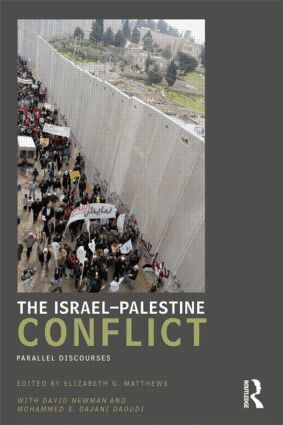
    Israel-Palestine Conflict

    Parallel Discourses

    AvElizabeth Matthews

    Häftad, Engelska, 2011

    Del i serien UCLA Center for Middle East Development CMED

    723 kr

    Beställningsvara. Skickas inom 10-15 vardagar. Fri frakt över 249 kr.

    Beskrivning

    The conflict between the Israelis and the Palestinians is considered intractable by many, and is frequently characterised by the violence between the two sides. In attempts at peace, the starting point for negotiations is a cessation of violence; beneath this, however, lies a plethora of other issues to be addressed. This unique text brings together Israeli and Palestinian viewpoints on a number of key issues and topics, making clear the points of agreement as well as the views that divide. The chapters deal first with three issues that require compromise and resolution for a peace treaty to be realized - water, refugees, and borders, territory and settlements – and then with three important concepts that can either impede or promote peace: democracy, human rights, and peace culture and education. Thus, the book provides an invaluable opportunity to understand, at least in part, the divergent and even convergent interests and understandings of Israelis and Palestinians on issues and concepts important to the peace process. As such, it will be a valuable resource for courses on conflict resolution, the Middle East peace process, and political science.

    Produktinformation

    • Utgivningsdatum:2011-03-16
    • Mått:156 x 234 x 16 mm
    • Vikt:530 g
    • Format:Häftad
    • Språk:Engelska
    • Serie:UCLA Center for Middle East Development CMED
    • Antal sidor:288
    • Förlag:Taylor & Francis Ltd
    • ISBN:9780415434799

    Utforska kategorier

    • Internationella relationer inom Samhälle och politik

    Mer om författaren

    Elizabeth G. Matthews is Assistant Professor in the Department of Political Science at California State University San Marcos, USA. She has written a number of books and articles on world politics and US foreign policy, and is co-editor of the Routledge UCLA Center for Middle East Development (CMED) series.David Newman is professor of Political Geography in the Department of Politics and Government at Ben Gurion University, and co-editor of the International Journal of Geopolitics. He is currently the Dean of the Faculty of Humanities and Social Sciences at Ben-Gurion University. His research focuses on Geopolitics, Borders and the territorial dimensions of ethnic and national conflict and he has written extensively on topics relating to territory and borders in Israel-Palestine.Mohammed S. Dajani Daoudi holds two doctorate degrees from the University of South Carolina at Columbia and the University of Texas at Austin. He is the founding director of the American Studies Center at al-Quds University, the Wasatia Movement – Palestine, and the Jerusalem Studies and Research Institute, and is the author of numerous books and academic articles in English and Arabic.

    Recensioner i media

    "Parallel Discourses is a good reader for an understanding of the Israel-Palestine conflict. The chapters on the key issues of the conflict are comprehensive and contain the perspectives of both the Israelis and the Palestinians."- Khinvraj Jangid, Jawaharlal Nehru University; Journal of International and Global Studies

    Innehållsförteckning

    • Introduction Part 1: Issues 1. Refugees i. Israel and the Palestinian Refugee Issue ii. Palestinian Refugees 2. Borders, Territory, and Settlements iii. From Bilateralism to Unilateralism: The Changing Territorial Discourses of Israeli–Palestine Conflict Resolution iv. A Palestinian Perspective on the Israeli-Palestinian Conflict on Settlements, Territory and Borders 3. Water v. Are the Conflicts Over the Shared Water Resources Between Israelis and Palestinians an Obstacle to Peace? vi. Palestine Water: Between Challenges and Realities Part 2: Concepts 4. Democratization and the Domestic Political Environment vii. The Effects of Conflict: National Security, UNSC Resolution 1325, and Women in Israel viii. Democratization in Palestine: From Civil Society Democracy to a Transitional Democracy 5. Human Rights ix. Merging the Human Rights Dimension into Peace-Making: Is It Good for the Jews? x. Fatah and Hamas Human Rights Violations in the Palestinian Occupied Territories from April 2006 to December 2007 6. Peace Culture and Education xi. Challenges for Constructing Peace Culture and Peace Education xii. Culture of Peace and Education: The Palestinian Context