• Fri frakt över 249 kr
  • •
  • Snabba leveranser
  • •
  • Billiga böcker
Kundservice

Du är på sajten för privatpersoner.

Företag, bibliotek eller offentlig verksamhet?

Du handlar på classic.bokus.com, där alla dina funktioner finns intakta.
Till classic.bokus.com
Bokus logotyp. Gå till startsidan.
  • Erbjudanden
  • Student
  • Topplistor
  • Barn & ungdom
  • Bokus Play
  • E-böcker
  • Ljudböcker
  • Pocketböcker
  • Spel och pussel

Pocketfynda! Hundratals böcker för 49 kr/st →

Sidfot

Mina sidor

    Hjälp

    • Kundservice
    • Vanliga frågor och svar
    • Frakt och leverans
    • Retur vid ångerrätt
    • Reklamera vara
    • Betalning
    • Köpvillkor
    • Allmänna villkor
    • Information om webbplatsens tillgänglighet

    Om Bokus

    • Om oss
    • Pressrum
    • För studenter
    • För företag
    • För bibliotek och offentlig verksamhet
    • För leverantörer
    • Hållbarhet

    Populärt

    • Aktuella erbjudanden
    • Presentkort
    • Studentlitteratur
    • Nya böcker
    • Topplistor
    • Signerade böcker
    • Engelska böcker

    Inspiration

    • Boktips
    • BookTok
    • Barnbokskaraktärer
    • Populära författare
    Logotyp för Bokus
    Följ oss på Facebook (extern länk)Följ oss på Instagram (extern länk)Följ oss på YouTube (extern länk)Följ oss på TikTok (extern länk)
    bokus @ CookiesAnpassa cookiesIntegritetspolicyKöpvillkor
    Till Citymail hemsida (extern länk)Till Budbee hemsida (extern länk)Till Postnord hemsida (extern länk)Till Schenker hemsida (extern länk)Till Early Bird hemsida (extern länk)Till Walleys hemsida (extern länk)
    1. Samhälle och politik
    2. Politik och statsskick

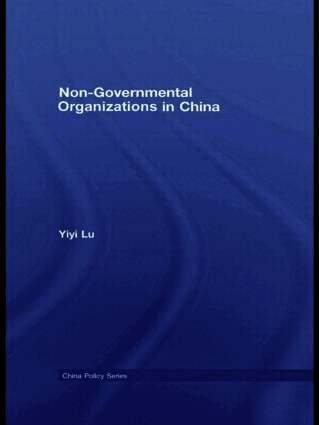
    Non-Governmental Organisations in China

    AvYiyi Lu

    Inbunden, Engelska, 2008

    Del i serien China Policy Series

    2 410 kr

    Beställningsvara. Skickas inom 10-15 vardagar. Fri frakt över 249 kr.

    Fler format och utgåvor

    Häftad

    719 kr

    E-bok

    858 kr

    E-bok

    855 kr

    Beskrivning

    As Chinese society becomes more open, and hopes rise that control by the Communist Party may become more relaxed, a great deal is expected from non-governmental organisations (NGOs) in the formation of civil society. This book, based on extensive original research including detailed interview research in over 40 Chinese NGOs, discusses the current position of NGOs within China. It argues that although all NGOs – both those originating as a result of government initiatives, and those which are popularly-organised – are dependent on the state, all enjoy a very large degree of autonomy. This autonomy arises in part because of the limited capacity of central government to control NGOs, and in part because of the fragmented and non-monolithic nature of the state, which enables individual bureaucratic patrons to protect particular NGOs, especially officially-organised ones, from the full impact of state control. The book also discusses the skill base of NGOs, showing that this is somewhat limited, and argues that, contrary to current hopes that NGOs and thereby civil society may flourish, the lack of state control is already leading to an "uncivil society" where rules do not exist or are ignored, and where organisations which are supposed to work for the public interest are being used to serve illegitimate private interests instead.

    Produktinformation

    • Utgivningsdatum:2008-10-17
    • Mått:156 x 234 x undefined mm
    • Vikt:500 g
    • Format:Inbunden
    • Språk:Engelska
    • Serie:China Policy Series
    • Antal sidor:184
    • Förlag:Taylor & Francis Ltd
    • ISBN:9780415458580

    Utforska kategorier

    • Politik och statsskick inom Samhälle och politik

    Mer om författaren

    Yiyi Lu is Research Fellow in the China Policy Institute, University of Nottingham, UK; and Associate Fellow at the Royal Institute of International Affairs. She is an expert on civil society in China.

    Innehållsförteckning

    • Acknowledgements. List of Abbreviations 1. Introduction 2. Research on Chinese NGOs: Comparing Different Analytical Frameworks 3. The Autonomy of Chinese NGOs 4. Chinese NGOs and the State: A Dependent Relationship 5. The Skills of Chinese NGOs 6. The Limitations of Chinese NGOs 7. Conclusion. References