• Fri frakt över 249 kr
  • •
  • Snabba leveranser
  • •
  • Billiga böcker
Kundservice

Du är på sajten för privatpersoner.

Företag, bibliotek eller offentlig verksamhet?

Du handlar på classic.bokus.com, där alla dina funktioner finns intakta.
Till classic.bokus.com
Bokus logotyp. Gå till startsidan.
  • Erbjudanden
  • Nyheter
  • Student
  • Topplistor
  • Barn & ungdom
  • Bokus Play
  • E-böcker
  • Pocketböcker
  • Spel & pussel

10% rabatt på allt med kod: NYSTART10 →

Sidfot

Mina sidor

    Hjälp

    • Kundservice
    • Vanliga frågor och svar
    • Frakt och leverans
    • Retur vid ångerrätt
    • Reklamera vara
    • Betalning
    • Köpvillkor
    • Allmänna villkor
    • Information om webbplatsens tillgänglighet

    Om Bokus

    • Om oss
    • Pressrum
    • För studenter
    • För företag
    • För bibliotek och offentlig verksamhet
    • För leverantörer
    • Hållbarhet

    Populärt

    • Aktuella erbjudanden
    • Presentkort
    • Studentlitteratur
    • Nya böcker
    • Topplistor
    • Signerade böcker
    • Engelska böcker

    Inspiration

    • Boktips
    • BookTok
    • Populära bokserier
    • Barnbokskaraktärer
    • Populära författare
    Logotyp för Bokus
    Följ oss på Facebook (extern länk)Följ oss på Instagram (extern länk)Följ oss på YouTube (extern länk)Följ oss på TikTok (extern länk)
    bokus @ CookiesAnpassa cookiesIntegritetspolicyKöpvillkor
    Till Citymail hemsida (extern länk)Till Budbee hemsida (extern länk)Till Postnord hemsida (extern länk)Till Schenker hemsida (extern länk)Till Early Bird hemsida (extern länk)Till Walleys hemsida (extern länk)
    1. Språk och ordböcker
    2. Språkvetenskap och lingvistik

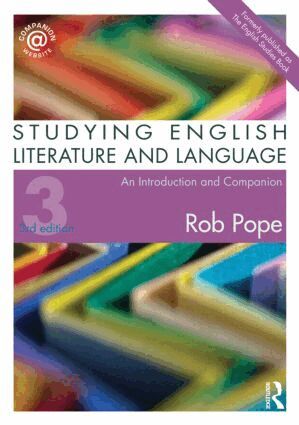
    Studying English Literature and Language

    An Introduction and Companion

    AvRob Pope

    Häftad, Engelska, 2012

    702 kr

    Beställningsvara. Skickas inom 10-15 vardagar. Fri frakt över 249 kr.

    Fler format och utgåvor

    Inbunden

    3 042 kr

    Beskrivning

    Studying English Literature and Language is unique in offering both an introduction and a companion for students taking English Literature and Language degrees. Combining the functions of study guide, critical dictionary and text anthology, this is a freshly recast version of the highly acclaimed The English Studies Book. This third edition features: fresh sections on the essential skills and study strategies needed to complete a degree in English—from close reading, research and referencing to full guidelines and tips on essay-writing, participating in seminars, presentations and revision an authoritative guide to the life skills, further study options and career pathways open to graduates of the subject updated introductions to the major theoretical positions and approaches taken by scholars in the field, from earlier twentieth century practical criticism to the latest global and ecological perspectives extensive entries on key terms such as ‘author, ‘genre’, ‘narrative’ and ‘translation’ widely current in debates across language, literature and culture coverage of both local and global varieties of the English language in a range of media and discourses, including news, advertising, text messaging, rap, pop and street art an expansive anthology representing genres and discourses from early elegy and novel to contemporary performance, flash fiction, including writers as diverse as Aphra Behn, Emily Dickinson, J.M. Coetzee, Angela Carter, Russell Hoban, Adrienne Rich and Arundhati Roy a comprehensive, regularly updated companion website supplying further information and activities, sample analyses and a wealth of stimulating and reliable links to further online resources. Studying English Literature and Language is a wide-ranging and invaluable reference for anyone interested in the study of English language, literature and culture.

    Produktinformation

    • Utgivningsdatum:2012-01-20
    • Mått:189 x 246 x 24 mm
    • Vikt:845 g
    • Format:Häftad
    • Språk:Engelska
    • Antal sidor:446
    • Upplaga:3
    • Förlag:Taylor & Francis Ltd
    • ISBN:9780415498760

    Utforska kategorier

    • Språkvetenskap och lingvistik inom Språk och ordböcker
    • Litteraturvetenskap inom Skönlitteratur

    Mer om författaren

    Rob Pope is Professor of English Studies at Oxford Brookes University and a National Teaching Fellow.

    Recensioner i media

    "This splendid book is at once primer and provocation….Rarely does a companion for English Studies manage to connect the investigation of language and literature so closely to a student’s imaginative and practical needs" Jerome McGann, University of Virginia, USA"Rob Pope's Studying English is an impressively wide-ranging textbook that effortlessly covers such topics as the historical, social, and cultural dimensions of the English language, the principles of close reading, the intricacies of literary theory, and much, much more, while along the way it makes its readers familiar with the taking of notes, with preparing a bibliography, even with the pitfalls of job interviews and writing applications. All of this is wonderfully supported by a choice of excerpts and texts that is equally generous and varied, ranging from the canonical to real life conversations and beer commercials.Studying English is critical, creative, and enjoyable - the conditions, as Pope himself notes, for genuine learning - but it is also, and perhaps even more importantly, as interactive as a textbook could possibly be.Rob Pope casts a very wide net and his - and our - reward is an amazing catch." Hans Bertens, The University of Utrecht, The Netherlands "Rob Pope provides a pathway between the claims and counterclaims that have been made about subject English. He shows that the differences between scholars within the field are a source of its vitality and its capacity to renew itself. This book provides an invaluable resource for students in undergraduate and teacher education programs. It is also a useful reminder to English teachers at secondary and tertiary levels of the richness, complexity and importance of their work." Brenton Doecke, Deakin University, Australia "I am delighted that there is a new edition of this wonderful, well-thought out and superbly useful book. It is as it was, clear, up-to-date and ideal for students and teachers of English" Robert Eaglestone, Royal Holloway, University of London, UK Praise for the Second Edition"This is without question the very best text available for the new "gateway" (introductory) courses to the English major."David Stacey, Humboldt State University, USA

    Innehållsförteckning

    • PROLOGUE: CHANGING ‘ENGLISH’ NOW Crossing borders, establishing boundaries Texts in contexts: literature in historySeeing through theoryEnglish Literature and Creative WritingEnglish Language TeachingTechnologising the subject: actual and virtual communities Forewords! Some propositions and provocationsPART ONE: INTRODUCTION TO ENGLISH STUDIESPreview1.1 Which ‘Englishes’?One English language, literature, culture – or many historicallygeographicallysociallyby mediumSummary: one and many1.2 ‘Doing English’ – ten essential actions |Getting your bearings Turning up, taking part: lectures and seminarsTaking and making notesClose reading – wide reading Library, web, ‘home’ – an ongoing cycle Taking responsibility: referencing and plagiarismWriting an essay to make a markDoing a presentation to prompt a responseRevision – preparing to take an examSeriously enjoy studying English! 1.3 Fields of study: a preliminary mappingLanguageLiteratureCulture, communication and media Summary: keeping on course and making your own wayPART TWO: CRITICAL & CREATIVE STRATEGIES FOR ANALYSIS & INTERPRETATIONPreview2.1 Initial analysis: how to approach a textOpening moves: Notice—Pattern—Contrast—FeelingCore questions: What, Who, When. Where, How, Why and What if? Worked and played example: William Blake’s ‘London’ 2.2 Full interpretation: informed reading, adventurous writingInterpretative framework and analytical checklist Poetry + Prose fiction + Play Script +Critical essay +2.3 Longer projects: lines of enquiry and sample study patternsFrom vague idea to viable projectWorking and playing from the AnthologyFurther strategies for critical-creative writing2.4 Overview of textual activities as learning strategies More kinds of critical-creative writingPART THREE: THEORETICAL POSITIONS, PRACTICAL APPROACHESPreview3.1 Theory in Practice – a working model to play with3.2 Words on the page – Practical Criticism and (old) New Criticism3.3 Devices and effects – Formalism into Functionalism3.4 Mind and person – Psychological approaches3.5 Class and community – Marxism, Cultural Materialism and New Historicism3.6 Gender and sexuality – Feminism, Masculinity and Queer theory3.7 Relativities – Poststructuralism and Postmodernism . . .3.8 Ethnicities – Postcolonialism and Multiculturalism3.9 The new Eclecticism? Ethics, Aesthetics, Ecology . . .PART FOUR: KEY TERMS, CORE TOPICS PART FIVE: ANTHOLOGYPreview 5.1 Poetries5.1.1 Early English verses Old English lament (anon.) ‘Wulf and Eadwacer’ Medieval lyric (anon.), ‘Maiden in the mor lay’Geoffrey Chaucer, The General Prologue Sir Thomas Wyatt, ‘They flee from me’5.1.2 Sonnets by various handsWilliam Shakespeare, ‘My mistress’ eyes’ (Sonnet 130)John Milton, ‘When I consider how my light is spent’ Patience Agbabi, ‘Problem Pages’ (responses to Shakespeare’s and Milton’s sonnets)Gerard Manley Hopkins, ‘The Windhover – To Christ our Lord’Rupert Brooke, ‘The Soldier’; with Winston Churchill Ursula Fanthorpe, ‘Knowing about Sonnets’ (response to Brooke) 5.1.3 Heroics and mock-heroicsJohn Milton, Paradise LostAlexander Pope, The Rape of the LockElizabeth Hands, ‘A Poem . . . by a Servant Maid’George Gordon, Lord Byron, The Vision of Judgement 5.1.4 Poetry that answers back Robyn Bolam, ‘Gruoch’ (Lady Macbeth) Tom Leonard, ‘This is thi six a clock news’Chan Wei Meng, ‘I spik Inglissh’Mario Petrucci, ‘The Complete Letter Guide’, ‘Mutations’, ‘Reflections’, ‘Trench’ 5.1.5 Performing poetry, singing cultureSeminole chants: ‘Song for the Dying’; 'Song for Bringing a Child into the World’ Patience Agbabi, ‘The Word’Queen, ‘Bohemian Rhapsody’πo, ‘7 daiz’The Flobots, ‘No Handlebars’Philip Gross, ‘Severn Song’5.2 Proses5.2.1 Short stories, fables and flash fiction (complete) Rudyard Kipling, The Story of Muhammad DinDon Barthelme, The Death of Edward Lear Margaret Atwood, Happy EndingsAngela Carter, The WerewolfAmy Tan, ‘Feathers from a thousand li away’ Dave Eggers, ‘What the Water Feels Like to the Fishes’5.2.2 Slave narratives by name Aphra Behn, Oroonoko, or The Royal SlaveDaniel Defoe, Robinson Crusoe (‘I call him Friday’) Geoff Holdsworth, ‘I call him Tuesday Afternoon’J.M. Coetzee, Foe5.2.3 Romance revisited Charlotte Brontë, Jane EyreJean Rhys, Wide Sargasso SeaOscar Wilde, The Picture of Dorian GrayWill Self, Dorian5.2.4 Science and Fantasy Fiction – genre and genderPhillip K. Dick, Do Androids Dream of Electric Sheep?Ursula LeGuin, The Left Hand of DarknessRussell Hoban, Riddley Walker Terry Pratchett and Neil Gaiman, Good Omens 5.2.5 War on – of – Terror Ian McEwan, ‘Only love and then oblivion’, The GuardianArundhati Roy, ‘The Algebra of Infinite Justice’, The GuardianNick Barton, Voices from the Battlefields of Afghanistan – from the airSimon Panter, Voices from the Battlefields of Afghanistan – on the ground5.2.6 Media messages and street textsNews: headlines, captions, intros, outros Personal and not-so-personal ads Cash-machine and check-out exchangesAnswer-phone message, call-centre scriptStreet: signs, graffiti, word-art5.3 Voices5.3.1 Dramatising ‘English’ in Education Student talk amongst friends (transcript) Willy Russell, Educating RitaLloyd Jones, Mr Pip Jeremy Jacobson, ‘The Post-Modern Lecture’5.3.2 Novel voices Jane Austen, Pride and PrejudiceAmos Tutuola, The Palm-Wine Drinkard Roddy Doyle, Paddy Clarke ha ha haJames Kelman, How late it was, how late 5.3.3 Voice—play, dream—drama Dylan Thomas, Under Milk WoodSamuel Beckett, Not IAthol Fugard, Boesman and LenaMartin McDonagh, The PillowmanAlice Oswald, Dart 5.3.4 ‘I’dentity in the balance – selves and othersJohn Clare, ‘I am – yet what I am . . .’ Emily Dickinson, ‘I’m Nobody’Adrienne Rich, ‘Dialogue’Alan Hollinghurst, The Swimming-Pool Library 5.4 Crossings 5.4.1 Daffodils?William Wordsworth, ‘I wandered lonely as a cloud’Dorothy Wordsworth, Grasmere JournalsLynn Peters, ‘Why Dorothy Wordsworth is Not as Famous as her Brother‘Heineken refreshes the poets other beers can’t reach5.4.2 Mapping JourneysHarry Beck, first Map of the London Underground (1931) Bill Bryson, Notes from a Small IslandCaryl Phillips, Crossing the RiverBilly Marshall-Stoneking, ‘Passage’Kathleen Jamie, ‘Pathologies – A startling tour of our bodies’5.4.3 Translations / TransformationsBrian Friel, TranslationsJo Shapcott and Rainer Maria Rilke, ‘Roses’ (English and French) W. G. Sebald, Austerlitz5.4.4 Versions of agingMay Sarton, As We Are Now‘Clarins is the Problem-solver’William Shakespeare, ‘Devouring Time’ (Sonnet 19)Dennis Scott, ‘Uncle Time’ 5.4.5 Epitaphs and (almost) last words Epitaphs by Pope, Gray, Burns, and othersCharles Dickens, Great Expectations Chinua Achebe, Things Fall Apart Toni Morrison, BelovedGrace Nicholls, ‘Tropical Death’ PART SIX: TAKING IT ALL FURTHER – ENGLISH AND THE REST OF YOUR LIFE Preview 6.1 Living, learning, earning What now? What next? What if . . .?6.2 English again, afresh, otherwiseEnglish and or as other subjects6.3 Further studyPostgraduate courses in and around English 6.4 Into workTransformable skills, transformative knowledges Career pathways and interesting jobs for ‘English’graduates Towards application and interview6.5 Play as re-creation Afterwords – a postlude APPENDICESa Grammatical and linguistic terms – a quick reference b An alphabet of speech sounds c Chronology of English by period and movementd Maps of English in Britain, the USA, and the worldBibliographyRelevant journals and useful addressesIndexAfterwords . . .