Inbunden, Engelska, 2012
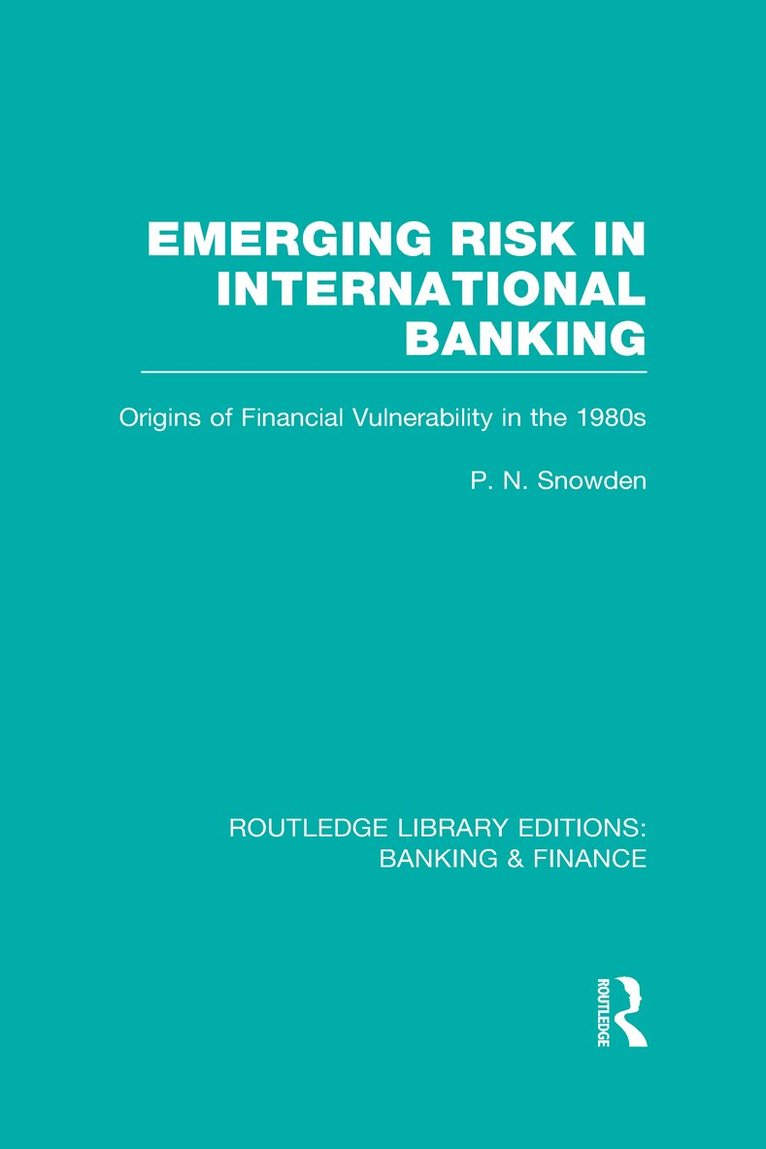
Emerging Risk in International Banking (RLE Banking & Finance)
Av P Snowden
2195 kr
Beställningsvara. Skickas inom 10-15 vardagar. Fri frakt över 249 kr.
Beskrivning
Global payments imbalances and the rise of emerging economies provide the background to this analysis of risk exposure and near-insolvency at the world’s major banks. Emerging Risk was published in 1985, three years after the first international banking crisis of the post-War era, but prior to resolution after 1989 of the underlying sovereign debt overhang. With episodes of international financial instability punctuating the following quarter century until the Lehman collapse of 2008, this re-issue will contribute to the historical perspective on modern diagnoses of policy weakness and financial sector excess that is clearly needed. Whereas OPEC price increases in the 1970s were a source of the earlier global imbalances, Chinese surpluses and those occasioned by her rapid growth among commodity and oil producing countries are today’s equivalents. Emerging Risk documents the earlier poor employment of surplus funds ‘recycled’ to Latin America, much as the failure of the USA and others to use Asian financing productively is now evident. The role of the main global banking institutions in each of these outcomes reveals common threads. As a reading of Emerging Risk will confirm, both the special consequences of free competition in a global banking market, and the perverse incentives inherent in the remuneration of loan officers, were clearly present in the mid-1980s. The interaction of regulation and the competitive response of banks to produce increased reliance on wholesale borrowing and lending, together with enhanced gearing, have clear echoes in modern debates over the consequences of the Basel provisions.
Produktinformation
- Utgivningsdatum: 2012-05-25
- Mått: 156 x 234 x 13 mm
- Vikt: 460 g
- Format: Inbunden
- Språk: Engelska
- Serie: Routledge Library Editions: Banking & Finance
- Antal sidor: 156
- Förlag: Taylor & Francis Ltd
- ISBN: 9780415529426
Utforska kategorier
Betyg & recensioner
0 recensioner
Inga recensioner tillgängliga.