• Fri frakt över 249 kr
  • •
  • Snabba leveranser
  • •
  • Billiga böcker
Kundservice

Du är på sajten för privatpersoner.

Företag, bibliotek eller offentlig verksamhet?

Du handlar på classic.bokus.com, där alla dina funktioner finns intakta.
Till classic.bokus.com
Bokus logotyp. Gå till startsidan.
  • Erbjudanden
  • Nyheter
  • Student
  • Topplistor
  • Barn & ungdom
  • Bokus Play
  • E-böcker
  • Pocketböcker
  • Spel & pussel

10% rabatt på allt med kod: NYSTART10 →

Sidfot

Mina sidor

    Hjälp

    • Kundservice
    • Vanliga frågor och svar
    • Frakt och leverans
    • Retur vid ångerrätt
    • Reklamera vara
    • Betalning
    • Köpvillkor
    • Allmänna villkor
    • Information om webbplatsens tillgänglighet

    Om Bokus

    • Om oss
    • Pressrum
    • För studenter
    • För företag
    • För bibliotek och offentlig verksamhet
    • För leverantörer
    • Hållbarhet

    Populärt

    • Aktuella erbjudanden
    • Presentkort
    • Studentlitteratur
    • Nya böcker
    • Topplistor
    • Signerade böcker
    • Engelska böcker

    Inspiration

    • Boktips
    • BookTok
    • Populära bokserier
    • Barnbokskaraktärer
    • Populära författare
    Logotyp för Bokus
    Följ oss på Facebook (extern länk)Följ oss på Instagram (extern länk)Följ oss på YouTube (extern länk)Följ oss på TikTok (extern länk)
    bokus @ CookiesAnpassa cookiesIntegritetspolicyKöpvillkor
    Till Citymail hemsida (extern länk)Till Budbee hemsida (extern länk)Till Postnord hemsida (extern länk)Till Schenker hemsida (extern länk)Till Early Bird hemsida (extern länk)Till Walleys hemsida (extern länk)
    1. Samhälle och politik
    2. Social välfärd och brottslighet
    3. Socialt arbete och välfärd

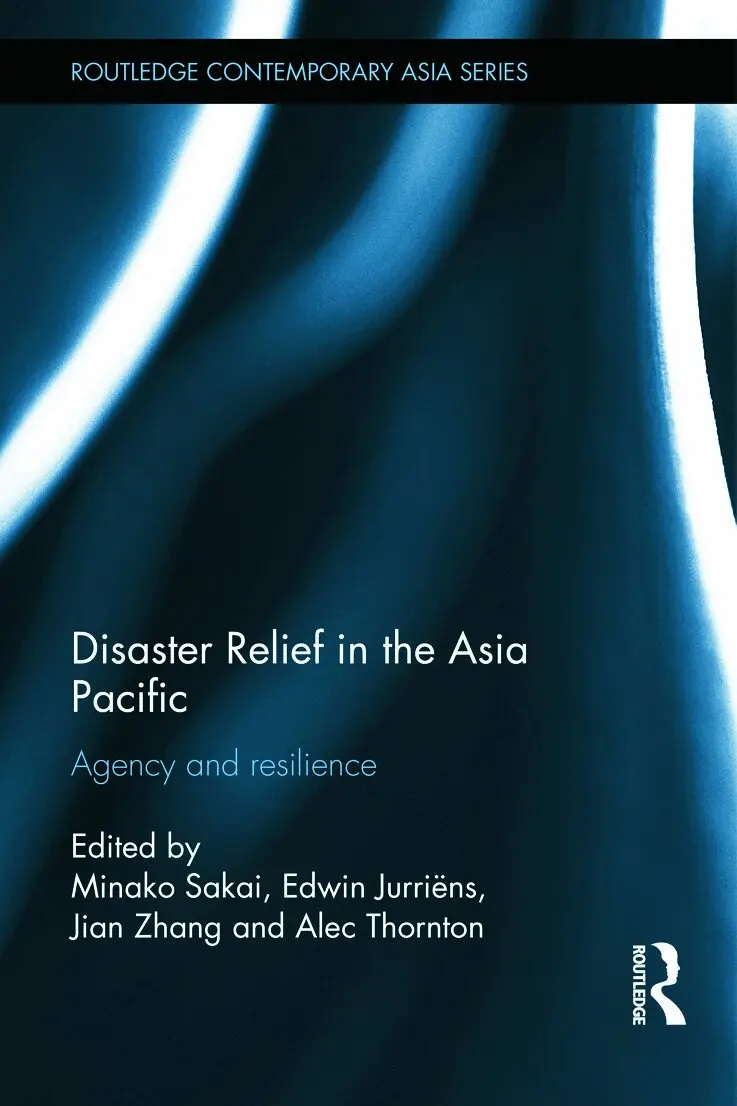
    Disaster Relief in the Asia Pacific

    Agency and Resilience

    AvMinako Sakai,Edwin Jurriëns

    Inbunden, Engelska, 2013

    Del i serien Routledge Contemporary Asia Series

    2 421 kr

    Beställningsvara. Skickas inom 10-15 vardagar. Fri frakt över 249 kr.

    Beskrivning

    A UN report recently found that the Asia Pacific is the world’s most disaster-prone region. Indeed, considering that the region accounts for more than half of the total number of disasters in the world, building capacity and resilience to mitigate the devastating impact of disasters is a pressing task for local actors.This book takes a regional, multidisciplinary and multi-actor approach to improve understandings of how various actors respond to natural and human-induced disasters in the Asia-Pacific region. It examines the ideas and activities of four different categories of agents: civil society; military and state institutions; local cultural knowledge and the media; and economic initiatives, and these themes are approached from various academic disciplines, ranging from anthropology and cultural studies to economics, human geography and political science. The contributors draw their findings from a variety of countries in the region, including China, Fiji, India, Indonesia, Japan, Myanmar and Samoa, and importantly, focus on the interconnection between vulnerability and resilience. In turn, the book highlights how the nature and magnitude of disasters are influenced by social conditions, and aims to contribute to policies that prioritize development opportunities to enhance resilience. Further, it explores the complicated and multifaceted role of agency in building resilience, and presents a comparative framework for analysis and key findings from the Asia-Pacific region. The focus of this book on recent and ongoing disasters makes it a topical and timely contribution to the growing field of disaster management, and as such it will appeal to students and scholars of environmental studies, development studies and Asian politics.

    Produktinformation

    • Utgivningsdatum:2013-12-17
    • Mått:156 x 234 x 19 mm
    • Vikt:630 g
    • Format:Inbunden
    • Språk:Engelska
    • Serie:Routledge Contemporary Asia Series
    • Antal sidor:238
    • Förlag:Taylor & Francis Ltd
    • ISBN:9780415711777

    Utforska kategorier

    • Socialt arbete och välfärd inom Samhälle och politik

    Mer om författaren

    Minako Sakai is Senior Lecturer in Southeast Asian Social Inquiry, School of Humanities and Social Sciences, University of New South Wales, Canberra, Australia.Edwin Jurriëns is Lecturer in Indonesian Studies at the Asia Institute, University of Melbourne and Visiting Fellow at the School of Humanities and Social Sciences, University of New South Wales, Canberra, Australia.Jian Zhang is Senior Lecturer in Political Science in the School of Humanities and Social Sciences, University of New South Wales, Canberra, Australia. Alec Thornton is Senior Lecturer in Geography, School of Physical, Environmental and Mathematical Sciences, University of New South Wales, Canberra, Australia.

    Innehållsförteckning

    • Introduction 1. Coping with Disaster: Agency and resilience in the Asia-Pacific context Part I: Civil society 2. Responding to Disasters in the Asia-Pacific Region: State and civil society relationships 3. Key Factors for Capacity-Building of Disaster Relief Operations: Indonesian examples 4. Fostering Civil Society Organizations for Disaster Relief in Japan: Challenges and prospects for sustainable future operations Part II: Military and state institutions 5. The Military and Disaster Relief in China: Trends, drivers and implications 6. Myanmar, Cyclone Nargis and Regional Intermediaries 7. Temporalities of Planning and Disaster: Slum demolition and the rebuilding of lives at the margins of Delhi Part III: Local cultural knowledge and the media 8. The Politics of the Mount Merapi Eruption in Central Java, Indonesia 9. Coping with Floods in Urban Fiji: Responses and resilience of the poor 10. From Early Warning System to Trauma Healing: Alternative media and disaster relief in Central Java Part IV: Economic initiatives 11. Agrarianism, Capitalism or Protectionism? Exploring economic restructuring and local responses amidst global change in Samoa 12. Responding to Natural versus Human-made Disasters: Lessons from Fiji Part V: Conclusion 13. Lessons from Disaster Relief in the Asia-Pacific