• Fri frakt över 249 kr
  • •
  • Snabba leveranser
  • •
  • Billiga böcker
Kundservice

Du är på sajten för privatpersoner.

Företag, bibliotek eller offentlig verksamhet?

Du handlar på classic.bokus.com, där alla dina funktioner finns intakta.
Till classic.bokus.com
Bokus logotyp. Gå till startsidan.
  • Erbjudanden
  • Nyheter
  • Student
  • Topplistor
  • Barn & ungdom
  • Bokus Play
  • E-böcker
  • Pocketböcker
  • Spel & pussel

10% rabatt på allt med kod NYSTART10 →

Sidfot

Mina sidor

    Hjälp

    • Kundservice
    • Vanliga frågor och svar
    • Frakt och leverans
    • Retur vid ångerrätt
    • Reklamera vara
    • Betalning
    • Köpvillkor
    • Allmänna villkor
    • Information om webbplatsens tillgänglighet

    Om Bokus

    • Om oss
    • Pressrum
    • För studenter
    • För företag
    • För bibliotek och offentlig verksamhet
    • För leverantörer
    • Hållbarhet

    Populärt

    • Aktuella erbjudanden
    • Presentkort
    • Studentlitteratur
    • Nya böcker
    • Topplistor
    • Signerade böcker
    • Engelska böcker

    Inspiration

    • Boktips
    • BookTok
    • Populära bokserier
    • Barnbokskaraktärer
    • Populära författare
    Logotyp för Bokus
    Följ oss på Facebook (extern länk)Följ oss på Instagram (extern länk)Följ oss på YouTube (extern länk)Följ oss på TikTok (extern länk)
    bokus @ CookiesAnpassa cookiesIntegritetspolicyKöpvillkor
    Till Citymail hemsida (extern länk)Till Budbee hemsida (extern länk)Till Postnord hemsida (extern länk)Till Schenker hemsida (extern länk)Till Early Bird hemsida (extern länk)Till Walleys hemsida (extern länk)
    1. Kultur
    2. Arkitektur

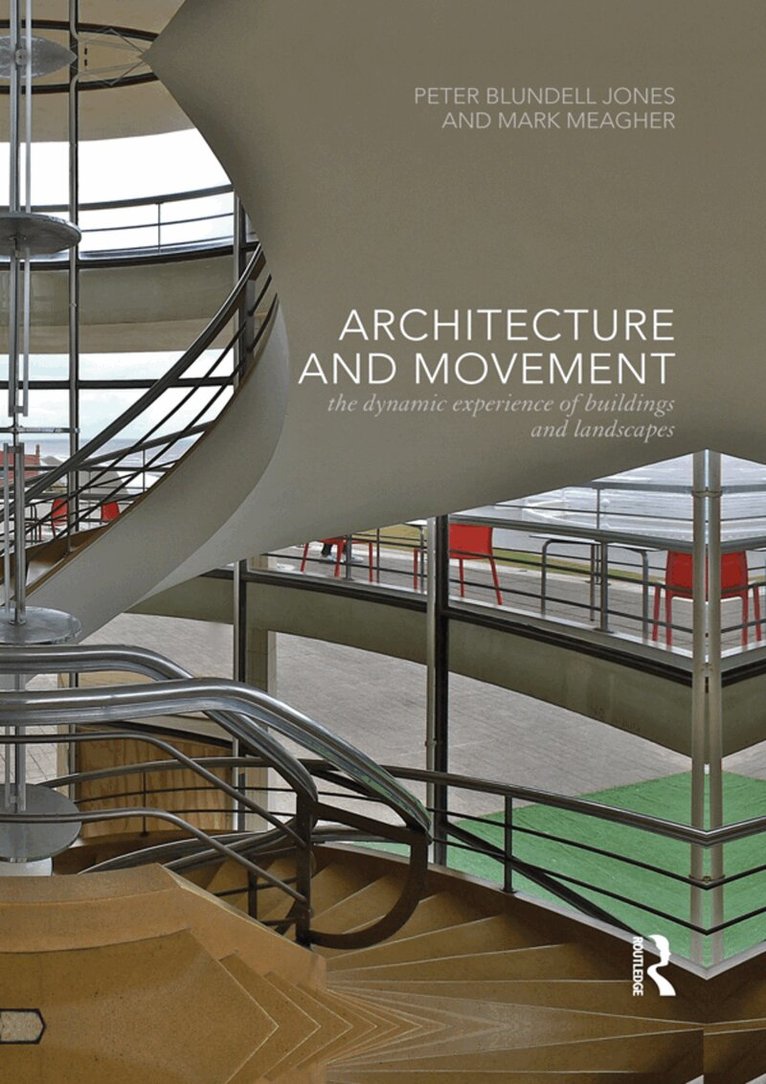
    Architecture and Movement

    the Dynamic Experience of Buildings and Landscapes

    AvPeter Blundell Jones,Mark Meagher

    Inbunden, Engelska, 2015

    3 044 kr

    Beställningsvara. Skickas inom 10-15 vardagar. Fri frakt över 249 kr.

    Beskrivning

    The experience of movement, of moving through buildings, cities, landscapes and in everyday life, is the only involvement most individuals have with the built environment on a daily basis. User experience is so often neglected in architectural study and practice. Architecture and Movement tackles this complex subject for the first time, providing the wide range of perspectives needed to tackle this multi-disciplinary topic.Organised in four parts it:documents the architect’s, planner’s, or designer’s approach, looking at how they have sought to deploy buildings as a promenade and how they have thought or written about itconcentrates on the individual’s experience, and particularly on the primacy of walking, which engages other senses besides the visualengages with society and social rituals, and how mutually we define the spaces through which we move, both by laying out routes and boundaries and by celebrating thresholdsanalyses how we deal with promenades which are not experienced directly but via other mediums such as computer models, drawings, film and televisionThe wide selection of contributors include academics and practitioners and discuss cases from across the US, UK, Europe and Asia. By mingling such disparate voices in a carefully curated selection of chapters, the book enlarges the understanding of architects, architectural students, designers and planners, alerting them to the many and complex issues involved in the experience of movement.

    Produktinformation

    • Utgivningsdatum:2015-01-07
    • Mått:174 x 246 x undefined mm
    • Vikt:793 g
    • Format:Inbunden
    • Språk:Engelska
    • Antal sidor:310
    • Förlag:Taylor & Francis Ltd
    • ISBN:9780415725347

    Utforska kategorier

    • Arkitektur inom Kultur
    • Landskapsarkitektur inom Kultur

    Mer om författaren

    Peter Blundell Jones is a British architect, historian, academic and critic. Educated at the Architectural Association School, London, he taught at the University of Cambridge and London South Bank University before becoming Professor of Architecture at the University of Sheffield. He is a prolific author on architectural history and theory and he has written monographs on the work of Erik Gunnar Asplund, Hans Scharoun, Hugo Häring, Günter Behnisch, Peter Hübner and the Graz School. He contributed to and co-edited Routledge’s Architecture and Participation.Mark Meagher is a Lecturer at the University of Sheffield School of Architecture. His research and teaching focus on applications of digital software and devices in design education, data visualization and fabrication. Prior to joining the University of Sheffield he was a member of the Media and Design Lab of the Ecole Polytechnique Fédérale de Lausanne (2006 – 2010) and the Center for Design Informatics at Harvard University (2002 - 2005).

    Recensioner i media

    'There is considerable literature on walking, but it barely if at all touches on architecture and landscape architecture. So Architecture and Movement is to be welcomed for enlarging our understanding of movement in all its aspects: from the proposals of designers and planners to those who actually utilize what they design, the personal reception of exploring places and the rituals of our civic life; above all how we communicate and theorize movement.' - John Dixon Hunt, Professor of the History and Theory of Landscape, Emeritus, Dept. of Landscape Architecture, University of Pennsylvania'By showing how architectural design can be motivated by human movement and observation, Architecture and Movement is a refreshing response to architecture's usual emphasis on static composition. Drawing from rich sources in architectural history, theory, and practice, the authors present diverse examples and concepts with which architects - including designers, observers, ritual participants, and representers - can dwell on this particular type of temporality in architecture.' - Stephen Parcell, Dalhousie University'Editors Jones and Meagher (both, Univ. of Sheffield, UK) have organized this excellent collection of 32 essays by 23 authors—mostly Sheffield University architecture faculty—into four sections that treat movement in architecture from the designer’s point of view, from that of the individual, as a socially shared entity, and as movement represented. Summing Up: Recommended. Upper-division undergraduates and above.' – CHOICE, J. Quinan, emeritus, independent scholar

    Innehållsförteckning

    • Introduction Part 1: Moving through Buildings and Landscapes: the Designer’s Perspective 1.0 Introduction to Part One 1.1 The Classical Authors 1.2 Viollet-le-duc on the Medieval Cloister 1.3 Charles Garnier Le Théâtre 1.4 Hermann Muthesius Wie baue ich mein Haus 1.5 Architectural Promenades through the Villa Savoye 1.6 Gunnar Asplund: ‘Pictures with marginal notes from the Gothenburg art and industry exhibition’ 1923 1.7 Frank Lloyd Wright’s Use of Movement 1.8 Hans Scharoun and Movement: the Kassel Project 1952 1.9 Move to the Light 1.10 Odysseus and Kalypso - at home Part 2: Movement as Experienced by the Individual 2.0 Introduction to Part Two 2.1 The Primacy of Bodily Experience 2.2 From Health to Pleasure: the Landscape of Walking 2.3 Architecture of Walking 2.4 Soundscape and Movement 2.5 From Foot to Vehicle 2.6 Moving Round the Ring-Road 2.7 The Geometry of Moving Bodies 2.8 Pedestrians and Traffic Part 3: Movement as Social and Shared 3.0 Introduction to Part Three 3.1 Space as a Product of Bodily Movement: Centre, Path and Threshold 3.2 Rievaulx and the Order of St Benedict 3.3 Lucien Kroll The Architecture of Complexity, The Door 3.4 The Japanese Tea Ceremony 3.5 The East Royal Tombs of the Qing Dynasty 3.6 The Automated Gardens of Lunéville: From the Self-Moving Landscape to the Circuit Walk 3.7 Lauriston School Part 4: The Representation of Movement 4.0 Introduction to Part Four 4.1 House Construction among the Dong 4.2 Movement and the Use of the Sequential Section by Enric Miralles and Mathur and da Cunha 4.3 From Models to Movement: Reflections on Some Recent Projects by Herzog & de Meuron 4.4 An Encounter With Patrick Keiller 4.5 Diasporic Experience and the Need for Topological Methods 4.6 Open Design: Thoughts on Software and the Representation of Movement 4.7 The Matter of Movement