• Fri frakt över 249 kr
  • •
  • Snabba leveranser
  • •
  • Billiga böcker
Kundservice

Du är på sajten för privatpersoner.

Företag, bibliotek eller offentlig verksamhet?

Du handlar på classic.bokus.com, där alla dina funktioner finns intakta.
Till classic.bokus.com
Bokus logotyp. Gå till startsidan.
  • Erbjudanden
  • Nyheter
  • Student
  • Topplistor
  • Barn & ungdom
  • Bokus Play
  • E-böcker
  • Pocketböcker
  • Spel & pussel

10% rabatt på allt med kod: NYSTART10 →

Sidfot

Mina sidor

    Hjälp

    • Kundservice
    • Vanliga frågor och svar
    • Frakt och leverans
    • Retur vid ångerrätt
    • Reklamera vara
    • Betalning
    • Köpvillkor
    • Allmänna villkor
    • Information om webbplatsens tillgänglighet

    Om Bokus

    • Om oss
    • Pressrum
    • För studenter
    • För företag
    • För bibliotek och offentlig verksamhet
    • För leverantörer
    • Hållbarhet

    Populärt

    • Aktuella erbjudanden
    • Presentkort
    • Studentlitteratur
    • Nya böcker
    • Topplistor
    • Signerade böcker
    • Engelska böcker

    Inspiration

    • Boktips
    • BookTok
    • Populära bokserier
    • Barnbokskaraktärer
    • Populära författare
    Logotyp för Bokus
    Följ oss på Facebook (extern länk)Följ oss på Instagram (extern länk)Följ oss på YouTube (extern länk)Följ oss på TikTok (extern länk)
    bokus @ CookiesAnpassa cookiesIntegritetspolicyKöpvillkor
    Till Citymail hemsida (extern länk)Till Budbee hemsida (extern länk)Till Postnord hemsida (extern länk)Till Schenker hemsida (extern länk)Till Early Bird hemsida (extern länk)Till Walleys hemsida (extern länk)
    1. Samhälle och politik
    2. Politik och statsskick
    3. Internationella relationer

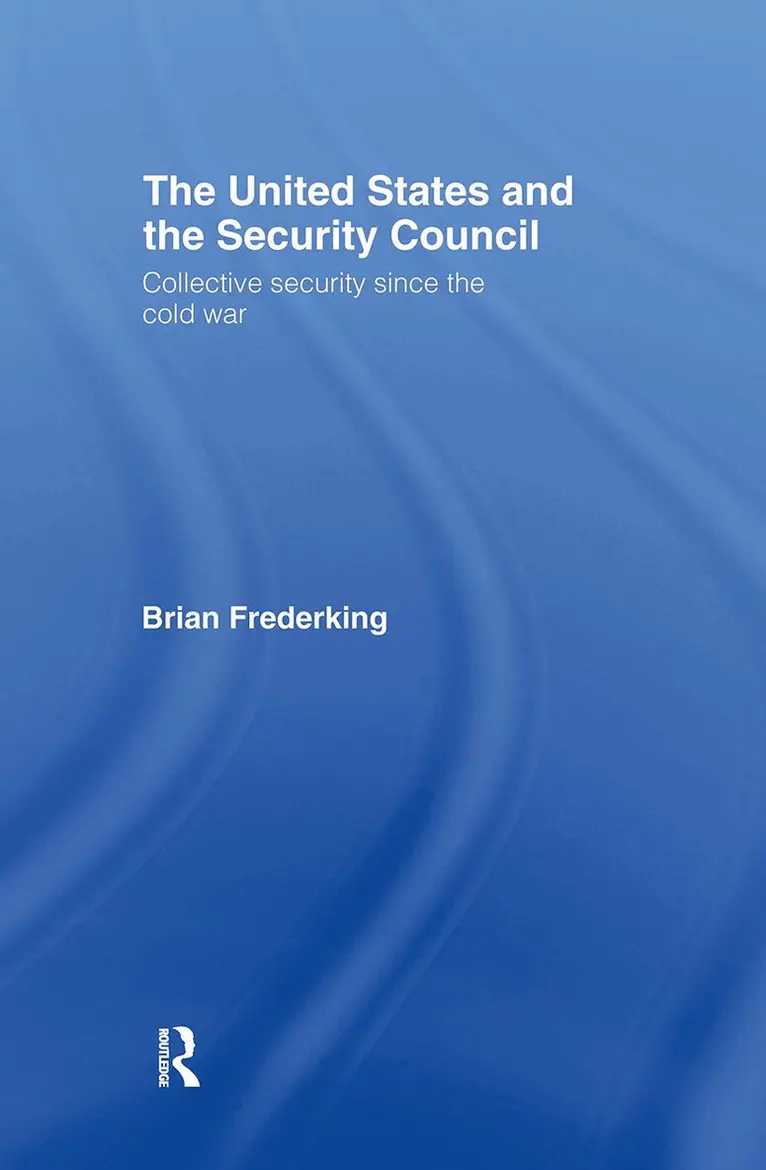
    United States and the Security Council

    Collective Security since the Cold War

    AvBrian Frederking

    Inbunden, Engelska, 2007

    2 227 kr

    Beställningsvara. Skickas inom 10-15 vardagar. Fri frakt över 249 kr.

    Fler format och utgåvor

    Häftad

    678 kr

    E-bok

    802 kr

    E-bok

    802 kr

    Beskrivning

    This book describes the rules governing international security decision-making and examines the different understandings of collective security in the post-Cold War world. The post-Cold War world has largely been a struggle over which rules govern global security. Discussions and decisions following the events of 9/11 have highlighted differences and disputes in the United Nations Security Council. Where Russia, China, and France prefer ‘procedural’ collective security, in which all enforcement attempts must be explicitly authorized by the Security Council, the US and Britain prefer ‘substantive’ collective security, in which particular countries can sometimes take it upon themselves to enforce the rules of the global community.Using a constructivist theory of global security to analyze a series of case studies on Iraq (1990-91); Somalia, Rwanda, and Haiti; Bosnia and Kosovo; Afghanistan and Iraq (2003), the author demonstrates how competing interpretations of collective security recur. Challenging the claim that 9/11 fundamentally changed world politics, Brian Frederking argues that the events exacerbated already existing tensions between the veto powers of the UN Security Council. The United States and the Security Council will be of interest to students and researchers of American foreign policy, security studies and international organizations.

    Produktinformation

    • Utgivningsdatum:2007-08-30
    • Mått:156 x 234 x 16 mm
    • Vikt:540 g
    • Format:Inbunden
    • Språk:Engelska
    • Antal sidor:208
    • Förlag:Taylor & Francis Ltd
    • ISBN:9780415770767

    Utforska kategorier

    • Internationella relationer inom Samhälle och politik
    • Folkrätt inom Juridik

    Mer om författaren

    Brian Frederking is an Associate Professor of Political Science at McKendree College, Lebanon, Illinois, USA.

    Recensioner i media

    "Brian Frederking's new book should appeal not only to advanced undergraduate and graduate students, but to anyone interested in international organization, U.S. foreign policy, or global politics in the age of terror. In this volume, Frederking expertly engages debates over power, rules and institutions to highlight a "security-hierarchy" paradox which plagues U.S. policy toward the U.N. Security Council. Highlighting tensions between unilateral temptations and multilateral imperatives, Frederking provides incisive case studies of evolving approaches to peacekeeping, international justice, sanctions, regional conflicts, terrorism. In the process, his demonstrates the contributions of an elegant theoretical synthesis to understanding the emergent global order."Wesley Widmaier, St. Joseph's University, USA."In today's world, the Security Council is a conspicuous site for the play of power politics--this is anarchy in a nutshell. Yet the Security Council does its business by making rules, and these rules matter. Brian Frederking deftly dissects and resolves this apparent paradox by showing how these rules constitute the hegemonial and hierarchical arrangements that give the post-cold era its distinctive structural properties. Frederking has got it right. Global security, states and power are all social constructions, talked into existence, linked by rules and expressed in forms of rule."Nicholas Onuf, Florida International University, USA.

    Innehållsförteckning

    • Introduction 1. The Rules of Global Security 2. Visions of Collective Security 3. Peacekeeping 4. Economic Sanctions 5. The Use of Force 6. Tribunals 7. Weapons Proliferation 8. Human Rights 9. Terrorism. Conclusions