• Fri frakt över 249 kr
  • •
  • Snabba leveranser
  • •
  • Billiga böcker
Kundservice

Du är på sajten för privatpersoner.

Företag, bibliotek eller offentlig verksamhet?

Du handlar på classic.bokus.com, där alla dina funktioner finns intakta.
Till classic.bokus.com
Bokus logotyp. Gå till startsidan.
  • Erbjudanden
  • Nyheter
  • Student
  • Topplistor
  • Barn & ungdom
  • Bokus Play
  • E-böcker
  • Pocketböcker
  • Spel & pussel

10% rabatt på allt med kod: NYSTART10 →

Sidfot

Mina sidor

    Hjälp

    • Kundservice
    • Vanliga frågor och svar
    • Frakt och leverans
    • Retur vid ångerrätt
    • Reklamera vara
    • Betalning
    • Köpvillkor
    • Allmänna villkor
    • Information om webbplatsens tillgänglighet

    Om Bokus

    • Om oss
    • Pressrum
    • För studenter
    • För företag
    • För bibliotek och offentlig verksamhet
    • För leverantörer
    • Hållbarhet

    Populärt

    • Aktuella erbjudanden
    • Presentkort
    • Studentlitteratur
    • Nya böcker
    • Topplistor
    • Signerade böcker
    • Engelska böcker

    Inspiration

    • Boktips
    • BookTok
    • Populära bokserier
    • Barnbokskaraktärer
    • Populära författare
    Logotyp för Bokus
    Följ oss på Facebook (extern länk)Följ oss på Instagram (extern länk)Följ oss på YouTube (extern länk)Följ oss på TikTok (extern länk)
    bokus @ CookiesAnpassa cookiesIntegritetspolicyKöpvillkor
    Till Citymail hemsida (extern länk)Till Budbee hemsida (extern länk)Till Postnord hemsida (extern länk)Till Schenker hemsida (extern länk)Till Early Bird hemsida (extern länk)Till Walleys hemsida (extern länk)
    1. Kultur
    2. Arkitektur

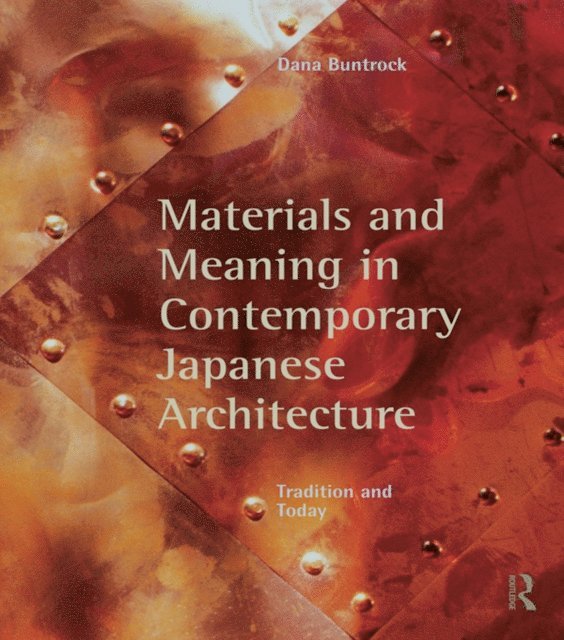
    Materials and Meaning in Contemporary Japanese Architecture

    Tradition and Today

    AvDana Buntrock

    Häftad, Engelska, 2010

    903 kr

    Beställningsvara. Skickas inom 10-15 vardagar. Fri frakt över 249 kr.

    Fler format och utgåvor

    E-bok

    1 071 kr

    E-bok

    1 071 kr

    Beskrivning

    In this beautiful and perceptive book, Dana Buntrock examines, for the first time, how tradition is incorporated into contemporary Japanese architecture. Looking at the work of five architects – Fumihiko Maki, Terunobu Fujimori, Ryoji Suzuki, Kengo Kuma, and Jun Aoki – Buntrock reveals the aims influencing many wonderful works barely known in the West; the sensual side of Japanese architecture borne out of approaches often less concerned with professionalism than with people and place.The buildings described in this book illustrate an architecture that embraces uniqueness, expressing unusual stories in the rough outlines of rammed earth and rust, and demonstrating new paths opening up for architectural practice today. For some, these examples will offer new insight into expressions of tradition in Japanese architecture; for others, this book offers inspiration for their own efforts to assert the unique heritage of other regions around the world. Compelling, insightful and groundbreaking, this book is essential for everyone studying Japanese architecture and anyone trying to invoke narrative and tradition in contemporary design.

    Produktinformation

    • Utgivningsdatum:2010-02-22
    • Mått:219 x 276 x 18 mm
    • Vikt:1 180 g
    • Format:Häftad
    • Språk:Engelska
    • Antal sidor:288
    • Förlag:Taylor & Francis Ltd
    • ISBN:9780415778916

    Utforska kategorier

    • Arkitektur inom Kultur

    Mer om författaren

    Dana Buntrock began her studies of Japanese architecture more than twenty years ago, her first visit a month-long trip that took her to tiny corners of the country to see avant-garde and out-of-the-way works. Her more recent research trips still range in remote pockets of the country, now renting cars, carrying a complex array of cameras and seeking out craftsmen who carry on age-old traditions. The architecture she sees is still often avant-garde, but today there are other approaches evident as well, ones more concerned with underscoring the uniqueness of these remote regions. Buntrock’s first book, Japanese Architecture as a Collaborative Process: Opportunities in a Flexible Construction Culture (E&FN Spon, 2001) looked at professional practice and what it said about a nation’s culture. Her second, Materials and Meaning in Contemporary Japanese Architecture (Routledge, 2010) is concerned with the art and craft of architecture, and how these are used to reflect the particularities of places.

    Recensioner i media

    "Dana Buntrock has written a valuable and long-needed overview of the historic, aesthetic, and spiritual meanings attached to Japanese building materials. By taking this approach, she reveals, for instance, Fumihiko Maki's feel for traditional vernacular materials like cedar, demonstrating that much of contemporary Japanese architecture judiciously juggles past and present. 'Natural materials are garrulous,' architect Hiroshi Naito tells the author. Buntrock offers insights into how the most ancient and 'talky' materials catalyze flexible thinking in the most modern of Japan's architects." -Norman Weinstein, Architectural Record

    Innehållsförteckning

    • Part 1: Black Blood Red to Palest Pink 1. Neolithic Daddy 2. Lamune Hot Springs 3. Kengo Kuma: From PoMo to Paulownia 4. Murai Museum: Subtle Setting for a Shabby Studio 5. Outlandish Amateur, Polished Professional: Comparing the Approaches of Terunobu Fujimori and Kengo Kuma Part 2: Radical Reds 6. Looking Back at Japan’s Radical Reds: Team Zoo Part 3: Reluctant Regionalists 7. Remaking the Landscape of Kotohira Shrine 8. Fumihiko Maki, Ancient Izumo and Oku 9. Jun Aoki’s Aomori Museum of Art 10. Reluctant Reds Conclusion: The Red School: From Deepest Red to Palest Shades of Pink