• Fri frakt över 249 kr
  • •
  • Snabba leveranser
  • •
  • Billiga böcker
Kundservice

Du är på sajten för privatpersoner.

Företag, bibliotek eller offentlig verksamhet?

Du handlar på classic.bokus.com, där alla dina funktioner finns intakta.
Till classic.bokus.com
Bokus logotyp. Gå till startsidan.
  • Erbjudanden
  • Nyheter
  • Student
  • Topplistor
  • Barn & ungdom
  • Bokus Play
  • E-böcker
  • Pocketböcker
  • Spel & pussel

10% studentrabatt med kod TERM26

Sidfot

Mina sidor

    Hjälp

    • Kundservice
    • Vanliga frågor och svar
    • Frakt och leverans
    • Retur vid ångerrätt
    • Reklamera vara
    • Betalning
    • Köpvillkor
    • Allmänna villkor
    • Information om webbplatsens tillgänglighet

    Om Bokus

    • Om oss
    • Pressrum
    • För studenter
    • För företag
    • För bibliotek och offentlig verksamhet
    • För leverantörer
    • Hållbarhet

    Populärt

    • Aktuella erbjudanden
    • Presentkort
    • Studentlitteratur
    • Nya böcker
    • Topplistor
    • Signerade böcker
    • Engelska böcker

    Inspiration

    • Boktips
    • BookTok
    • Populära bokserier
    • Barnbokskaraktärer
    • Populära författare
    Logotyp för Bokus
    Följ oss på Facebook (extern länk)Följ oss på Instagram (extern länk)Följ oss på YouTube (extern länk)Följ oss på TikTok (extern länk)
    bokus @ CookiesAnpassa cookiesIntegritetspolicyKöpvillkor
    Till Citymail hemsida (extern länk)Till Budbee hemsida (extern länk)Till Postnord hemsida (extern länk)Till Schenker hemsida (extern länk)Till Early Bird hemsida (extern länk)Till Walleys hemsida (extern länk)
    1. Ekonomi och Ledarskap
    2. Företagsekonomi
    3. Affärsetik

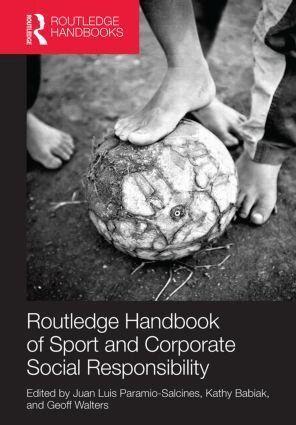
    Routledge Handbook of Sport and Corporate Social Responsibility

    AvJuan Luis Paramio Salcines,Kathy Babiak

    Inbunden, Engelska, 2013

    Del i serien Foundations of Sport Management

    3 567 kr

    Beställningsvara. Skickas inom 10-15 vardagar. Fri frakt över 249 kr.

    Beskrivning

    As the role of sport in society becomes ever more prominent and as sports organisations become increasingly influential members of the global community, so it has become more important than ever for sport to consider its wider social responsibilities. The Routledge Handbook of Sport and Corporate Social Responsibility is the first book to offer a comprehensive survey of theories and concepts of CSR as applied to sport, and the social, ethical and environmental aspects of sport business and management. It offers an overview of perspectives and approaches to CSR in sport, examines the unique features of the sport industry in relation to CSR, explores the tools, models, common pitfalls and examples of best practice on which managers can draw, and discusses how CSR and corporate citizenship can be integrated into the sport management curriculum.The book covers every key issue and functional area, including implementation, strategic benefits, communication and corporate image, stakeholder engagement, and the measurement and evaluation of CSR policies and practices, and includes detailed international case studies, from the NBA and the Olympic Games to Japanese soccer. The Routledge Handbook of Sport and Corporate Social Responsibility is important reading for any student, researcher, manager or policy maker with an interest in sport business, management, ethics or development.

    Produktinformation

    • Utgivningsdatum:2013-07-05
    • Mått:174 x 246 x 26 mm
    • Vikt:870 g
    • Format:Inbunden
    • Språk:Engelska
    • Serie:Foundations of Sport Management
    • Antal sidor:360
    • Förlag:Taylor & Francis Ltd
    • ISBN:9780415783057

    Utforska kategorier

    • Affärsetik inom Ekonomi och Ledarskap

    Mer om författaren

    Juan Luis Paramio-Salcines is a Senior Lecturer in Sport Management at Universidad Autonoma de Madrid, Spain. His principal scholarly interest includes sport facilities and event management, commercial development and accessibility provision of stadiums, the economic impact of sport events and Corporate Social Responsibility in Sport. His work has been published in Sport and Society, Soccer and Society, American Journal of Economics and Sociology, Urban Affairs and Sport Management Review.Kathy Babiak is an Associate Professor of Sport Management at the University of Michigan, and Co-Director of the Michigan Center for Sport Management and the Sport Health and Activity Research and Policy Center for Women and Girls. Her research focuses on the intersection between sport and society – particularly as it relates to social responsibility and the professional sport industry. Her work in this area has appeared in Journal of Business Ethics, Journal of Sport Management, Journal of CSR and the Environment among others.Geoff Walters is a Lecturer in Management at Birkbeck, University of London and director of the Birkbeck Sport Business Centre. His research interests include board-level governance and corporate responsibility, with a particular focus on the sport industry. He has published numerous articles in journals such as Business Ethics: A European Review, Journal of Management and Organization, the Journal of Corporate Citizenship, and Sport in Society among others.

    Recensioner i media

    "In summary the Routledge Handbook of Sport and Corporate Social Responsibility is seminal in investigating corporate social responsibility within elite sport. It provides the reader with a global viewpoint of topical issues and theory that is neatly counter balanced with critical and first person perspectives that are relevant to implementation by practitioners." – Jonathan Robertson, the International Journal of Business in Society

    Innehållsförteckning

    • Introduction: Corporate Social Responsibility within the Sport Industry: An overview of an emerging academic field Part I: Theoretical Perspectives on Corporate Social Responsibility in Sport 1. Perspectives on Social Responsibility in Sport 2. Corporate Social Responsibility in Sport: Who benefits? 3.CSR Through Sport from a Critical Perspective: Failing to address gross corporate misconduct? 4. Teaching ‘CSR In Sport’ in Sports Management Programs Worldwide Part II: Implementing Corporate Social Responsibility in Sport 5. Social Responsibility and Livestrong 6. Getting the Tactics Right: Implementing CSR in English Football 7. CSR and Environmental Responsibility: The Case of NCAA Athletic Departments 8. Environmental Corporate Social Responsibility Practices within the Asian Sport Event Industry: A case study of the Beijing Olympics 9. Incorporating Accessibility and Disability in The Manchester United Culture and Organization as Part of their CSR Policies 10. Connecting with People: Best practices in Northern Ireland 11. Inter Movistar Indoor FS: Much more than indoor football 12. Sport and Corporate Social Responsibility in Japan Part III: Stakeholder Engagement in Corporate Social Responsibility in Sport 13. Delivery of Large-Scale CSR Efforts through Corporate Community Involvement: Lessons from Major League Baseball’s 'Reviving Baseball in Inner Cities' program 14. Engaging Communities Through Sport: Sustainability as a means of enacting corporate social responsibility 15. Olympics, Social Responsibility and Stakeholders 16. A Foundation for Winning: Athletes, charity and social responsibility 17. Stakeholder Engagement in European Football Part IV: Communicating Corporate Social Responsibility in Sport 18. The Premier League: A commitment to social responsibility 19. ‘Street Violence Ruins Lives’: Communicating CSR initiatives 20. Italian Sport Federation: Communicating CSR through the social report Part V: Measuring Corporate Responsibility in Sport 21. Cause Related Marketing/Sponsorships and CSR 22. Assessing Social Impact of Sport-Industry Philanthropy and CSR 23. The Paradox of CSR Measurement: Current methods, issues, and future directions 24. Measuring and Evaluating Community Sports Projects: Notts County Football in the Community 25. Implementing ‘Monitoring and Evaluation’ Techniques within a Premier League Football in the Community Scheme: A case study involving Everton in the community Conclusion: Trends, challenges and the future for CSR in sport