• Fri frakt över 249 kr
  • •
  • Snabba leveranser
  • •
  • Billiga böcker
Kundservice

Du är på sajten för privatpersoner.

Företag, bibliotek eller offentlig verksamhet?

Du handlar på classic.bokus.com, där alla dina funktioner finns intakta.
Till classic.bokus.com
Bokus logotyp. Gå till startsidan.
  • Erbjudanden
  • Nyheter
  • Student
  • Topplistor
  • Barn & ungdom
  • Bokus Play
  • E-böcker
  • Pocketböcker
  • Spel & pussel

10% rabatt på allt med kod: NYSTART10 →

Sidfot

Mina sidor

    Hjälp

    • Kundservice
    • Vanliga frågor och svar
    • Frakt och leverans
    • Retur vid ångerrätt
    • Reklamera vara
    • Betalning
    • Köpvillkor
    • Allmänna villkor
    • Information om webbplatsens tillgänglighet

    Om Bokus

    • Om oss
    • Pressrum
    • För studenter
    • För företag
    • För bibliotek och offentlig verksamhet
    • För leverantörer
    • Hållbarhet

    Populärt

    • Aktuella erbjudanden
    • Presentkort
    • Studentlitteratur
    • Nya böcker
    • Topplistor
    • Signerade böcker
    • Engelska böcker

    Inspiration

    • Boktips
    • BookTok
    • Populära bokserier
    • Barnbokskaraktärer
    • Populära författare
    Logotyp för Bokus
    Följ oss på Facebook (extern länk)Följ oss på Instagram (extern länk)Följ oss på YouTube (extern länk)Följ oss på TikTok (extern länk)
    bokus @ CookiesAnpassa cookiesIntegritetspolicyKöpvillkor
    Till Citymail hemsida (extern länk)Till Budbee hemsida (extern länk)Till Postnord hemsida (extern länk)Till Schenker hemsida (extern länk)Till Early Bird hemsida (extern länk)Till Walleys hemsida (extern länk)
    1. Psykologi och pedagogik
    2. Psykologi

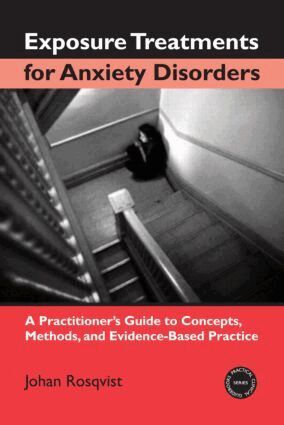
    Exposure Treatments for Anxiety Disorders

    A Practitioner's Guide to Concepts, Methods, and Evidence-Based Practice

    AvJohan Rosqvist

    Inbunden, Engelska, 2005

    Del i serien Practical Clinical Guidebooks

    2 493 kr

    Beställningsvara. Skickas inom 10-15 vardagar. Fri frakt över 249 kr.

    Fler format och utgåvor

    Häftad

    614 kr

    E-bok

    725 kr

    E-bok

    725 kr

    Beskrivning

    Exposure Treatments for Anxiety Disorders is a unique volume, as it draws together the latest research on the rapidly-expanding field of anxiety disorders and illuminates how to correctly apply the proven methodology of behavioral therapy techniques to the variety of situations that face today's mental health professional. That said, cognitive therapy has in the last 10 years gotten increased attention as an alternative to behavior therapy in the treatment of anxiety disorders. But while it is gaining acceptance among practitioners, cognitive therapy has yet to illustrate substantial benefits above those that behavior therapy can already provide. In light of the aforementioned, coupled with the pressure many practitioners feel from managed care paradigms and shrinking healthcare coverage, this book will be a welcome resource allowing for increased clarity of action, accountability, and ultimately, positive client outcome. Each chapter is designed to address pivotal aspects in the assessment, formulation and diagnosis, and treatment of anxiety disorders, to a sufficient depth that the generalist practitioner will be comfortable using this book as a guide when working with the anxiety disordered client.

    Produktinformation

    • Utgivningsdatum:2005-08-24
    • Mått:152 x 229 x 19 mm
    • Vikt:670 g
    • Format:Inbunden
    • Språk:Engelska
    • Serie:Practical Clinical Guidebooks
    • Antal sidor:274
    • Förlag:Taylor & Francis Ltd
    • ISBN:9780415948463

    Utforska kategorier

    • Psykologi inom Psykologi och pedagogik
    • Neurologi och klinisk neurofysiologi inom Medicin

    Mer om författaren

    Johan Rosqvist, Psy.D., is Assistant Professor of the Counseling Psychology Program at the School of Professional Psychology of Pacific University.

    Innehållsförteckning

    • Hersen, Foreword. Anxiety Phenomenon - Nature and Disorder. Description of Anxiety as a Normal Phenomenon and in Anxiety Disorders. Clinical Implications and Picture of Anxiety Disorders. Issues in Diagnosis of Anxiety. Epidemiology and Etiology of Anxiety Disorders. Course and Prognosis of Anxiety Disorders. Description of the Behavioral Treatment Strategy - Exposure. Exposure: A Definition and Explication. Escape and Avoidance: Maintaining Anxiety. Role of Exposure in Reducing Anxiety Responses. Habituation and Extinction: Ending Inaccurate Anxiety Responses. Processing Connectionist Neural Network (PDP-CNN) Models. Types of Exposure. In-vivo. In-imagination and Virtual Reality. Loop-tape, Disaster Scripts, Pictures, and Other Methods. Interoceptive versus Naturalistic. Therapist-assisted, and Partner-assisted versus Self-directed. Hierarchical versus Flooding. Single Session Treatment. Artificial Settings, Natural Environment and Ecological Relevance. Research Basis of the Phenomenon and its Treatment. Empirical Basis for Exposure with Anxiety Disorders. Empirically-supported, Empirically-validated, and Evidence-based Practice. Local Clinical Scientist, Educated Eclectic Empiricist, and Scientific (Evidence-based) Practice. Clinical Cases - Illustration of Assessment, Formulation and Treatment. Assessment Procedures for Anxiety Disorders. Broad-band Options. ADIS-IV. SCID. Disorder-specific, and Other, Narrow-band Procedures. Central Importance of Case Formulation and Conceptualization. Manuals, their Modular Use, and Manualized Treatment Strategies. Case Illustrations. Panic Disorder with Agoraphobia. Specific Phobia. Social Phobia. Obsessive-compulsive Disorder. Posttraumatic Stress Disorder. Generalized Anxiety Disorder. Health Anxiety. Trichotillomania. Compulsive Hoarding. Complicating Factors in Anxiety Treatment - Obstacles and Solutions. Medical and Substance Induced Anxiety. Axis II Presentations. Poor Insight, Delusional Beliefs, and Overvalued Ideation. Bipolar Disorder and Major Depressive Disorder. Motivational Interviewing and Motivation Enhancement Treatment. Generalizability, Transportation of Gains, and Ecological Relevance. Enhancing Collaboration: Utilization of Para-Professionals and Mentors. Legal Issues: PTSD, Litigation and Treatment Response. Managed Care Considerations: Friend or Foe? Implications for Solutions: Systematic Use of Single-case Research, Enhanced Case Formulation, Functional Analysis, and Failure Analysis in Training and Practice. Maintenance and Follow-up Strategies - Future and Continued Progress. When to Stop Treatment: Issues of Progress, Timing, and Acquired Skills. How to Stop Treatment: Generalization Training. Stop Regression Towards Mean: Relapse Prevention Training and Return of Fear. Reaffirmation of Progress and Reminder of Principles: Booster Sessions. Continued Involvement: Mentoring Program. Professional and Public Persona - Conclusions and Future Directions for Disseminating and Increasing Use of Exposure Treatments. Professional and Public Perceptions. Hedonism 101: Desire and Drive to Feel Good, Not Bad. Research-practice Gap. Future Directions and Recommendations. Appendix A: Manuals and Other Resources. Appendix B: Narrow-band Instruments. Appendix C: Clinical Significance, Reliable Change and Recovered Status Worksheet. References.