• Fri frakt över 249 kr
  • •
  • Snabba leveranser
  • •
  • Billiga böcker
Kundservice

Du är på sajten för privatpersoner.

Företag, bibliotek eller offentlig verksamhet?

Du handlar på classic.bokus.com, där alla dina funktioner finns intakta.
Till classic.bokus.com
Bokus logotyp. Gå till startsidan.
  • Erbjudanden
  • Nyheter
  • Student
  • Topplistor
  • Barn & ungdom
  • Bokus Play
  • E-böcker
  • Pocketböcker
  • Spel & pussel

10% rabatt på allt med kod: NYSTART10 →

Sidfot

Mina sidor

    Hjälp

    • Kundservice
    • Vanliga frågor och svar
    • Frakt och leverans
    • Retur vid ångerrätt
    • Reklamera vara
    • Betalning
    • Köpvillkor
    • Allmänna villkor
    • Information om webbplatsens tillgänglighet

    Om Bokus

    • Om oss
    • Pressrum
    • För studenter
    • För företag
    • För bibliotek och offentlig verksamhet
    • För leverantörer
    • Hållbarhet

    Populärt

    • Aktuella erbjudanden
    • Presentkort
    • Studentlitteratur
    • Nya böcker
    • Topplistor
    • Signerade böcker
    • Engelska böcker

    Inspiration

    • Boktips
    • BookTok
    • Populära bokserier
    • Barnbokskaraktärer
    • Populära författare
    Logotyp för Bokus
    Följ oss på Facebook (extern länk)Följ oss på Instagram (extern länk)Följ oss på YouTube (extern länk)Följ oss på TikTok (extern länk)
    bokus @ CookiesAnpassa cookiesIntegritetspolicyKöpvillkor
    Till Citymail hemsida (extern länk)Till Budbee hemsida (extern länk)Till Postnord hemsida (extern länk)Till Schenker hemsida (extern länk)Till Early Bird hemsida (extern länk)Till Walleys hemsida (extern länk)
    1. Medicin
    2. Andra medicinska specialiteter
    3. Rättsmedicin

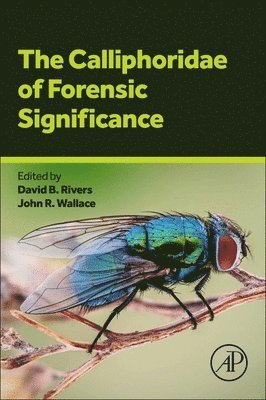
    The Calliphoridae of Forensic Significance

    AvDavid B. Rivers,John R. Wallace

    Häftad, Engelska, 2025

    1 812 kr

    Beställningsvara. Skickas inom 10-15 vardagar. Fri frakt över 249 kr.

    Beskrivning

    The Calliphoridae of Forensic Significance offers a focused and in-depth discussion on the biology, ecology, and behavior of blow flies relevant to medico-legal entomology in North America. Moving from introductory information to advanced applications, this book covers recent developments, current challenges, and research needs for the calliphorids most relevant to forensic entomology and how these topics can influence the use of these insects in the court of law. The book will be useful for students enrolled in forensic entomology, biological forensics, forensic anthropology, and related course work, as well as attorneys and law enforcement that utilize entomological evidence in casework.


    • Summarizes past, present, and future research involving Calliphoridae of forensic significance
    • Establishes linkages from basic research to applications in forensic entomology and carrion ecology
    • Provides in-depth coverage of the taxonomy, diversity, biology, ecology, behavior, genetics, evolution, and physical evidence pertaining to forensically significant calliphorids
    • Provides taxonomic and photographic keys of larvae and adults of forensic significance in North America to aid in identification

    Produktinformation

    • Utgivningsdatum:2025-11-07
    • Mått:216 x 276 x 15 mm
    • Vikt:450 g
    • Format:Häftad
    • Språk:Engelska
    • Antal sidor:290
    • Förlag:Elsevier Science
    • ISBN:9780443139611

    Utforska kategorier

    • Rättsmedicin inom Medicin
    • Fjärilar, insekter, spindlar inom Djur och Natur
    • Insekter inom Naturvetenskap och teknik

    Mer om författaren

    Dr. David B. Rivers is a Professor and Founding Chair in the Department of Forensic Science at Loyola University Maryland. Dr. Rivers is trained as an insect physiologist, cellular parasitologist, and forensic entomologist. He developed the forensic science undergraduate program and graduate programs in Forensic Pattern Evidence (MS) and Biological Forensics (MS) at Loyola. Dr. Rivers is a member of the Entomological Society of America, American Academy of Forensic Sciences, International Association of Identification, International Association of Bloodstain Pattern Analysts, Council of Forensic Science Educators, International Veterinary Forensic Science Association, Cold Case Foundation and Super Sleuths. He has published over 80 peer-reviewed articles, reviews, and book chapters and is also co-author of the critically acclaimed textbook The Science of Forensic Entomology. Dr. Rivers’ research examines basic and applied questions involving necrophagous flies and parasitic wasps as they relate to legal investigations. His current work has been focused on characterization of pattern evidence produced by necrophagous Diptera. Dr. John R. Wallace is a Professor Emeritus in the Department of Biology at Millersville University, Millersville, PA. Dr. Wallace is a trained medical entomologist who maintained 25 years of federal and state funding to study the population dynamics of mosquitoes and other biting insects related to arthropod-borne disease vector ecology as they relate to the control and prevention of disease in urban and rural environments in temperate and tropical regions of the world. Dr. Wallace is one of 19 active Board Certified Forensic Entomologists in North America and a Diplomate with the American Board of Forensic Entomologists as well as a Fellow in the American Academy of Forensic Science. He is a co-founder of the North American Forensic Entomology Association. He has published over 100 peer-reviewed articles, reviews, and book chapters and is co-editor of the textbook Wildlife Forensics: Methods and Applications. His other research interests extend into the field of forensic entomology, specifically how aquatic insects and plants can be utilized to estimate a post-mortem submersion interval.

    Innehållsförteckning

    • 1. Introduction2. Diversity and Taxonomy of Forensically Significant Calliphoridae3. Life histories4. Evolution5. Genetics6. Larval adaptations7. Adult adaptations8. Temperature influences9. Decomposition ecology10. Community Succession11. Case Studies12. Facultative myiasis13. Microbiome14. Pattern Evidence