• Fri frakt över 249 kr
  • •
  • Snabba leveranser
  • •
  • Billiga böcker
Kundservice

Du är på sajten för privatpersoner.

Företag, bibliotek eller offentlig verksamhet?

Du handlar på classic.bokus.com, där alla dina funktioner finns intakta.
Till classic.bokus.com
Bokus logotyp. Gå till startsidan.
  • Erbjudanden
  • Nyheter
  • Student
  • Topplistor
  • Barn & ungdom
  • Bokus Play
  • E-böcker
  • Pocketböcker
  • Spel & pussel

10% rabatt på allt med kod NYSTART10 →

Sidfot

Mina sidor

    Hjälp

    • Kundservice
    • Vanliga frågor och svar
    • Frakt och leverans
    • Retur vid ångerrätt
    • Reklamera vara
    • Betalning
    • Köpvillkor
    • Allmänna villkor
    • Information om webbplatsens tillgänglighet

    Om Bokus

    • Om oss
    • Pressrum
    • För studenter
    • För företag
    • För bibliotek och offentlig verksamhet
    • För leverantörer
    • Hållbarhet

    Populärt

    • Aktuella erbjudanden
    • Presentkort
    • Studentlitteratur
    • Nya böcker
    • Topplistor
    • Signerade böcker
    • Engelska böcker

    Inspiration

    • Boktips
    • BookTok
    • Populära bokserier
    • Barnbokskaraktärer
    • Populära författare
    Logotyp för Bokus
    Följ oss på Facebook (extern länk)Följ oss på Instagram (extern länk)Följ oss på YouTube (extern länk)Följ oss på TikTok (extern länk)
    bokus @ CookiesAnpassa cookiesIntegritetspolicyKöpvillkor
    Till Citymail hemsida (extern länk)Till Budbee hemsida (extern länk)Till Postnord hemsida (extern länk)Till Schenker hemsida (extern länk)Till Early Bird hemsida (extern länk)Till Walleys hemsida (extern länk)
    1. Naturvetenskap och teknik
    2. Teknik och industri
    3. Energiteknik

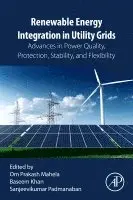
    Renewable Energy Integration in Utility Grids

    Advances in Power Quality, Protection, Stability, and Flexibility

    AvOm Prakash Mahela,Baseem Khan

    Häftad, Engelska, 2024

    1 573 kr

    Beställningsvara. Skickas inom 10-15 vardagar. Fri frakt över 249 kr.

    Beskrivning

    Renewable Energy Integration in Utility Grids: Advances in Power Quality, Protection, Stability, and Flexibility reviews current challenges and technologically driven solutions to mitigate the significant issues associated with increasing renewable resource penetration in utility grid networks. It provides a detailed framework to address significant challenges for high renewable energy integration into the utility grid networks, using intelligent techniques and advanced power electronics technology. Chapters address current advances in the grid integration of wind technology, solar PV systems, solar thermal plants, reactive power management, grid stability, variability, power quality, power system protection, generation-side flexibility, demand-side flexibility, smart monitoring and communication, and regulatory frameworks.

    • Provides a detailed overview of the core challenges faced by utility grids with high renewable energy penetration, together with potential solutions
    • Amalgamates highly interdisciplinary technical guidance for optimized design, flexible operation, control, and maintenance in renewable-dominated grids
    • Draws from the contributions of highly-respected global researchers and practitioners, featuring carefully selected case studies reflecting global practice and perspectives
    • Provides deep insights on many critical issues pertaining to grid-integrated renewable energy, including flexibility, quality, stability, and protection

    Produktinformation

    • Utgivningsdatum:2024-09-25
    • Mått:152 x 229 x 23 mm
    • Vikt:650 g
    • Format:Häftad
    • Språk:Engelska
    • Antal sidor:400
    • Förlag:Elsevier Science
    • ISBN:9780443190216

    Utforska kategorier

    • Energiteknik inom Naturvetenskap och teknik
    • Fysik inom Naturvetenskap och teknik

    Mer om författaren

    Dr. Om Prakash Mahela received the PhD degree from Indian Institute of Technology Jodhpur, India. He brings 19 years of experience in Electrical Engineering. He has written numerous papers and edited four research books. His research interest includes power quality, power system planning, grid integration of renewable energy sources, FACTS devices, transmission line protection, electric vehicles, and condition monitoring. He received a university rank certificate in 2002, Gold Medal in 2013, Best Research Paper Award in 2018, and C. V. Raman Gold Medal in 2019. He is a Senior Member of the IEEE. Dr. Baseem Khan received the B.Eng. degree in electrical engineering from Rajiv Gandhi Technological University, Bhopal, India, in 2008, and M.Tech. and Ph.D. in electrical engineering from Maulana Azad National Institute of Technology, Bhopal, in 2010 and 2014, respectively. He is currently a Faculty Member at Hawassa University, Ethiopia, and Senior Member of the IEEE. He has published more than 125 research articles in indexed journals, and has authored and edited several books with international publishers. Dr. Khan’s research interests include power system restructuring, power system planning, smart grid technologies, meta-heuristic optimization techniques, reliability analysis of renewable energy systems, power quality analysis, and renewable energy integration.

    Innehållsförteckning

    • Section 1: Introduction to High Penetration Level of Renewable Energy in Utility GridsChapter 1.1: Introduction to High Renewable Energy Penetration in Utility Grid: Advances in Technology, Challenges and SolutionsSection 2: Grid Integrated Wind TechnologyChapter 2.1: Grid-Connected Wind Technology: Integration Challenges and Grid ComplianceSection 3: Grid Integrated Solar Photovoltaic SystemsChapter 3.1: A Comprehensive study on Partial Shading Causes to identify the Solar Photovoltaic Power lossesSection 4: Grid Integrated Solar Thermal Power PlantsChapter 4.1: A Comprehensive Study of Grid Integrated Solar Thermal Plant TechnologySection 5: Reactive Power ManagementChapter 5.1: Transmission Loss Minimization in Utility Grid Using Reactive Power Management Considering Operations of Capacitor Banks and Transformer on Load Tap Changers: A Case StudyChapter 5.2: Reactive Power Management in Utility Grid with Renewable EnergySection 6: Impacts of Large Scale RE Penetration on the Stability of Utility GridChapter 6.1: Novel System Protection Scheme for Power Transformers in Utility Grid to Mitigate Renewable Power Evacuation Constraints and Improve Grid StabilitySection 7: Power QualityChapter 7.1: Algorithm for Determination of Single Stage and Multiple Power Quality Events Using Hybrid Use of Signal Processing MethodsSection 8: Power System ProtectionChapter 8.1: Wavelet-Alienation-Neural based Fault Analysis Algorithm for TCSC connected Transmission LinesSection 9: Variability of Renewable Energy Generation and Flexibility InitiativesChapter 9.1: Variability of Renewable Energy Generation and Flexibility Initiatives: Indian ScenarioSection 10: Energy Storage Systems and Control AlgorithmsChapter 10.1: Working and Applications of Programmable Logic Controller: A Comprehensive StudySection 11: Optimal Reconfiguration of Conventional GeneratorsChapter 11.1: Robust LQG based modern Load Frequency Control System having Imperfect Communication mediumSection 12: Optimal Reconfiguration of Utility NetworksChapter 12.1: Optimal Reconfiguration of Transmission Network to Meet Load Growth for Ten Year Projected Scenario of Practical Transmission GridChapter 12.2: Optimal Reconfiguration of Utility Networks to Meet Increased Load Demand and Integrate Renewable EnergySection 13: Smart Metering and Optimal PMU PlacementChapter 13.1: Phasor Measurement Units for Grid Security and Reliability-A Study in Perspective of Rajasthan Control Area in IndiaSection 14: Demand Side Flexibility ManagementChapter 14.1: Demand Side Flexibility Management: State of the ArtSection 15: Regulatory Framework and Grid CodesChapter 15.1: Structure of Power Sector and Regulatory Framework: Indian ScenarioSection 16: Assessment and Improvement of Grid Security and Reliability with High Renewable Energy PenetrationChapter 16.1: Voltage Actuated Islanding Detection Scheme to Ensure Grid Security and Reliability with High Renewable Energy PenetrationChapter 17: Conclusion (wrap up, open questions, future perspectives)