• Fri frakt över 249 kr
  • •
  • Snabba leveranser
  • •
  • Billiga böcker
Kundservice

Du är på sajten för privatpersoner.

Företag, bibliotek eller offentlig verksamhet?

Du handlar på classic.bokus.com, där alla dina funktioner finns intakta.
Till classic.bokus.com
Bokus logotyp. Gå till startsidan.
  • Erbjudanden
  • Student
  • Topplistor
  • Barn & ungdom
  • Bokus Play
  • E-böcker
  • Ljudböcker
  • Pocketböcker
  • Spel och pussel

Pocketfynda! Hundratals böcker för 49 kr/st →

Sidfot

Mina sidor

    Hjälp

    • Kundservice
    • Vanliga frågor och svar
    • Frakt och leverans
    • Retur vid ångerrätt
    • Reklamera vara
    • Betalning
    • Köpvillkor
    • Allmänna villkor
    • Information om webbplatsens tillgänglighet

    Om Bokus

    • Om oss
    • Pressrum
    • För studenter
    • För företag
    • För bibliotek och offentlig verksamhet
    • För leverantörer
    • Hållbarhet

    Populärt

    • Aktuella erbjudanden
    • Presentkort
    • Studentlitteratur
    • Nya böcker
    • Topplistor
    • Signerade böcker
    • Engelska böcker

    Inspiration

    • Boktips
    • BookTok
    • Barnbokskaraktärer
    • Populära författare
    Logotyp för Bokus
    Följ oss på Facebook (extern länk)Följ oss på Instagram (extern länk)Följ oss på YouTube (extern länk)Följ oss på TikTok (extern länk)
    bokus @ CookiesAnpassa cookiesIntegritetspolicyKöpvillkor
    Till Citymail hemsida (extern länk)Till Budbee hemsida (extern länk)Till Postnord hemsida (extern länk)Till Schenker hemsida (extern länk)Till Early Bird hemsida (extern länk)Till Walleys hemsida (extern länk)
    1. Data och IT
    2. Systemvetenskap och AI

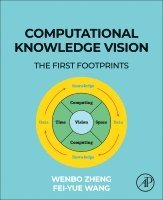
    Computational Knowledge Vision

    The First Footprints

    AvWenbo Zheng,Fei-Yue Wang

    Häftad, Engelska, 2024

    1 991 kr

    Beställningsvara. Skickas inom 10-15 vardagar. Fri frakt över 249 kr.

    Beskrivning

    Computational Knowledge Vision: The First Footprints presents a novel, advanced framework which combines structuralized knowledge and visual models. In advanced image and visual perception studies, a visual model's understanding and reasoning ability often determines whether it works well in complex scenarios. This book presents state-of-the-art mainstream vision models for visual perception. As computer vision is one of the key gateways to artificial intelligence and a significant component of modern intelligent systems, this book delves into computer vision systems that are highly specialized and very limited in their ability to do visual reasoning and causal inference.

    Questions naturally arise in this arena, including (1) How can human knowledge be incorporated with visual models? (2) How does human knowledge promote the performance of visual models? To address these problems, this book proposes a new framework for computer vision-computational knowledge vision.


    • Presents a concept and basic framework of Computational Knowledge Vision that extends the knowledge engineering methodology to the computer vision field
    • Discusses neural networks, meta-learning, graphs, and Transformer models
    • Illustrates a basic framework for Computational Knowledge Vision whose essential techniques include structuralized knowledge, knowledge projection, and conditional feedback

    Produktinformation

    • Utgivningsdatum:2024-08-22
    • Mått:152 x 229 x 15 mm
    • Vikt:460 g
    • Format:Häftad
    • Språk:Engelska
    • Antal sidor:276
    • Förlag:Elsevier Science
    • ISBN:9780443216190

    Utforska kategorier

    • Systemvetenskap och AI inom Data och IT

    Mer om författaren

    Wenbo Zheng received his bachelor degree in software engineering from Wuhan University of Technology, Wuhan, China, in 2017. He received his Ph.D. degree in computer science and technology from the Faculty of Electronic and Information Engineering, Xi'an Jiaotong University, Xi'an, China, in 2021. He is currently an Associate Professor at the School of Computer and Artificial Intelligence, Wuhan University of Technology. His research interests include computer vision and machine learning. Prof. Fei-Yue Wang is the State Specially Appointed Expert and the Founding Director of the State Key Laboratory for Management and Control of Complex Systems, Institute of Automation, Chinese Academy of Sciences, in China. He is also a research Professor at the DeSci Center of Parallel Intelligence, Obuda University, Budapest, Hungary. His research focuses on intelligent control, social computing, and knowledge automation, with a particular emphasis on energy and complex systems. He pioneered the concepts of Social Energy and the Parallel Energy initiative, aimed at integrating social intelligence into energy management and optimization. Additionally, his research explores methods and applications for parallel intelligence, social computing, and knowledge automation. He is a Fellow of INCOSE, IFAC, ASME, and AAAS. In 2007, he received the National Prize in Natural Sciences of China, numerous best papers awards from IEEE Transactions, and became an Outstanding Scientist of ACM for his work in intelligent control and social computing. In 2024, he received IEEE CRFID Emily Sopensky Meritorious Service Award, IEEE SMC Lotfi A. Zadeh Pioneer Award, and 2025 IEEE Transportation Technologies Award. In 2025, he received IEEE ITSS Lifetime Achievement Award. Additionally, in 2021, he was selected as the IFAC Pavel J. Nowacki Distinguished Lecturer.

    Innehållsförteckning

    • 1. Introduction Computational Knowledge Vision Frameworkn2. Reviewing the Past Enables us to Learnn3. Computational Knowledge Vision Computational Knowledge Vision Solutionn4. Low Vision: Computational Knowledge Vision for Edge Detection Modeln5. Middle Vision: Computational Knowledge Vision for Visual Translation Modeln6. Middle Vision: Computational Knowledge Vision for Jointly Face Recognitionn7. High Vision: Computational Knowledge Vision for Visual Reasoning Model Computational Knowledge Vision Applicationn8. Affective Computing: Computational Knowledge Vision for Depression Detection Modeln9. Medical Computing: Computational Knowledge Vision for COVID-19 Detection Modeln10. Medical Computing: Computational Knowledge Vision for Medical Visual Reasoning Model