• Fri frakt över 249 kr
  • •
  • Snabba leveranser
  • •
  • Billiga böcker
Kundservice

Du är på sajten för privatpersoner.

Företag, bibliotek eller offentlig verksamhet?

Du handlar på classic.bokus.com, där alla dina funktioner finns intakta.
Till classic.bokus.com
Bokus logotyp. Gå till startsidan.
  • Erbjudanden
  • Student
  • Topplistor
  • Barn & ungdom
  • Bokus Play
  • E-böcker
  • Ljudböcker
  • Pocketböcker
  • Spel & pussel

10% rabatt på allt med kod NYSTART10 →

Sidfot

Mina sidor

    Hjälp

    • Kundservice
    • Vanliga frågor och svar
    • Frakt och leverans
    • Retur vid ångerrätt
    • Reklamera vara
    • Betalning
    • Köpvillkor
    • Allmänna villkor
    • Information om webbplatsens tillgänglighet

    Om Bokus

    • Om oss
    • Pressrum
    • För studenter
    • För företag
    • För bibliotek och offentlig verksamhet
    • För leverantörer
    • Hållbarhet

    Populärt

    • Aktuella erbjudanden
    • Presentkort
    • Studentlitteratur
    • Nya böcker
    • Topplistor
    • Signerade böcker
    • Engelska böcker

    Inspiration

    • Boktips
    • BookTok
    • Populära bokserier
    • Barnbokskaraktärer
    • Populära författare
    Logotyp för Bokus
    Följ oss på Facebook (extern länk)Följ oss på Instagram (extern länk)Följ oss på YouTube (extern länk)Följ oss på TikTok (extern länk)
    bokus @ CookiesAnpassa cookiesIntegritetspolicyKöpvillkor
    Till Citymail hemsida (extern länk)Till Budbee hemsida (extern länk)Till Postnord hemsida (extern länk)Till Schenker hemsida (extern länk)Till Early Bird hemsida (extern länk)Till Walleys hemsida (extern länk)
    1. Data och IT
    2. Människa – datorinteraktion

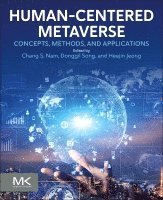
    Human-Centered Metaverse

    Concepts, Methods, and Applications

    AvChang S. Nam,Donggil Song

    Häftad, Engelska, 2024

    1 881 kr

    Beställningsvara. Skickas inom 10-15 vardagar. Fri frakt över 249 kr.

    Beskrivning

    Human-centered Metaverse: Concepts, Methods, and Applications is a valuable resource in the understanding of the metaverse and the factors that influence human-AI interaction. It provides an up-to-date repository of theory, fundamentals, techniques, and diverse applications, and comprehensively addresses recent and rapid changes in the field of human-centered metaverse. Interest in the human-centered metaverse has grown enormously, including from researchers and practitioners in the areas of extended reality (e.g., VR, AR, MR, etc.), learning technologies, human-computer interaction, education, psychology and sociology, and philosophy.


    • Offers a unique review of extensive research on human-centered metaverse technology
    • Provides an in-depth look at the different methods and techniques used to investigate human-human or human-AI interaction in virtual space
    • Features a repository of the open questions and challenges in human cognition (e.g., trust, emotion, motivation, etc.) in human-centered metaverse today
    • Explores theories, models, and empirical findings about ways in which human-centered metaverse changes or operates in social interaction in virtual space
    • Investigates human factors, human-system integrations, and human-computer interface concerns in the design, development and evaluation of human-centered metaverse applications

    Produktinformation

    • Utgivningsdatum:2024-11-07
    • Mått:191 x 235 x 15 mm
    • Vikt:570 g
    • Format:Häftad
    • Språk:Engelska
    • Antal sidor:276
    • Förlag:Elsevier Science
    • ISBN:9780443219962

    Utforska kategorier

    • Människa – datorinteraktion inom Data och IT

    Mer om författaren

    Chang S. Nam is currently a Professor of Industrial and Systems Engineering at North Carolina State University (NCSU), USA. He is also an associated faculty in the UNC/NCSU Joint Department of Biomedical Engineering, Department of Psychology, and Brain Research Imaging Center (BRIC) at UNC. He received a PhD at Virginia Tech. His research interests center around brain-computer interfaces, computational neuroscience, neuroergonomics, and human-AI/Robot/Automation interaction. He is the editor of “Brain-Computer Interfaces Handbook: Technological and Theoretical Advances” (with Drs. Nijholt and Lotte, CRC Press), “Neuroergonomics: Principles and Practices (Springer), “Mobile Brain-Body Imaging and the Neuroscience of Art, Innovation and Creativity (with Contreras-Vidal et al., Springer), “Trust in Human-Robot Interaction: Research and Applications” (with Lyons, Elsevier), and “Human-centered AI: Research and Applications” (with Jung & Lee, Elsevier). Currently, Nam serves as the Editor-in-Chief of the journal Brain-Computer Interfaces. Donggil Song is Associate Professor of Engineering Technology & Industrial Distribution, College of Engineering, Texas A&M University. His research lab (Einbrain Lab, www.einbrain.com) focuses on artificial intelligence (AI) engineering for human learning, human-centred AI, machine learning (ML)-based mixed-reality (MR) AI systems. His research interests are geared towards creating systems by utilising AI/ML and natural language processing while focusing on facilitating human learning. Currently, his primary research includes the applications of virtual human systems in MR environments. From a methodological standpoint, his research interest has been on the synergies and integrations between AI engineering and learning technologies research methods. He holds a Ph.D. in Instructional Systems Technology from Indiana University, an M.S. in Computer Science and Engineering, and a B.A. in Religious Studies from Seoul National University (SNU), and also completed a master’s program in Cognitive Science at SNU. Presently, he serves as the Managing Editor of The International Journal of Multiple Research Approaches. Heejin Jeong is an Assistant Professor of human systems engineering in The Polytechnic School. His primary research supports human decision-making in interactions with autonomous and intelligent systems. He seeks to apply multiple engineering methodologies (e.g., experimental, human performance modelling, and data analytics and visualisation) to addressing societal problems in human-system engineering domains including transportation, robotics, healthcare, and emerging technologies (e.g., augmented/virtual reality, artificial intelligence). His focuses include extended reality systems for occupational safety enhancement and healthcare rehabilitation training and human-robot collaboration in Industry 4.0 manufacturing systems. He received his PhD in Industrial and Operations Engineering from the University of Michigan.

    Innehållsförteckning

    • PART I: Metaverse Fundamentals1. Metaverse: Augmented reality, Lifelogging, Mirror worlds, Virtual worlds2. History of Human-centric Metaverse3. Standardization and specification of Metaverse4. Criticism and concernsPART II: Advancement in Metaverse Technology5. Platforms and contents in Metaverse6. Digital human in Metaverse7. Transitions between different platformsPART III: Applications of Human-centred Metaverse Section A: Education and Academic Fields8. Extended classrooms and schools9. Simulation-based learning10. Online conferencingSection B: Business, Entertainment, and Sports11. Hiring and recruitment12. Employee training and development13. Metaverse as new work environmentsSection C: Human Factors in Metaverse14. Measures and Assessments in Metaverse15. Remote collaboration in MetaversePART IV: Culture, Ethics, and Diversity in Metaverse16. Privacy and security issues in Metaverse17. Diversity and equity in Metaverse18. Ethical and philosophical consideration in the Metaverse societyPART V: Future of Work in Metaverse19. Future technology development for seamless Metaverse experiences20. Governance, laws, and compliances for people in Metaverse21. Human-AI cohabitation Author Index Subject Index