• Fri frakt över 249 kr
  • •
  • Snabba leveranser
  • •
  • Billiga böcker
Kundservice

Du är på sajten för privatpersoner.

Företag, bibliotek eller offentlig verksamhet?

Du handlar på classic.bokus.com, där alla dina funktioner finns intakta.
Till classic.bokus.com
Bokus logotyp. Gå till startsidan.
  • Erbjudanden
  • Nyheter
  • Student
  • Topplistor
  • Barn & ungdom
  • Bokus Play
  • E-böcker
  • Pocketböcker
  • Spel & pussel

10% rabatt på allt med kod: NYSTART10 →

Sidfot

Mina sidor

    Hjälp

    • Kundservice
    • Vanliga frågor och svar
    • Frakt och leverans
    • Retur vid ångerrätt
    • Reklamera vara
    • Betalning
    • Köpvillkor
    • Allmänna villkor
    • Information om webbplatsens tillgänglighet

    Om Bokus

    • Om oss
    • Pressrum
    • För studenter
    • För företag
    • För bibliotek och offentlig verksamhet
    • För leverantörer
    • Hållbarhet

    Populärt

    • Aktuella erbjudanden
    • Presentkort
    • Studentlitteratur
    • Nya böcker
    • Topplistor
    • Signerade böcker
    • Engelska böcker

    Inspiration

    • Boktips
    • BookTok
    • Populära bokserier
    • Barnbokskaraktärer
    • Populära författare
    Logotyp för Bokus
    Följ oss på Facebook (extern länk)Följ oss på Instagram (extern länk)Följ oss på YouTube (extern länk)Följ oss på TikTok (extern länk)
    bokus @ CookiesAnpassa cookiesIntegritetspolicyKöpvillkor
    Till Citymail hemsida (extern länk)Till Budbee hemsida (extern länk)Till Postnord hemsida (extern länk)Till Schenker hemsida (extern länk)Till Early Bird hemsida (extern länk)Till Walleys hemsida (extern länk)
    1. Naturvetenskap och teknik
    2. Matematik och naturvetenskap
    3. Kemi

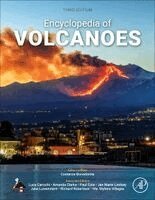
    The Encyclopedia of Volcanoes

    AvCostanza Bonadonna,Luca Caricchi

    Inbunden, Engelska, 2027

    2 312 kr

    Kommande

    Beskrivning

    The Encyclopedia of Volcanoes, Third Edition, an updated edition of the PROSE award winning title, summarizes our knowledge on volcanoes. The book provides a comprehensive source on the causes of volcanic eruptions with both destructive and beneficial effects. This new edition illustrates the best approaches to characterize key aspects of volcanology, demonstrates the importance of volcanology for a sustainable planet, and was developed by a multidisciplinary, multi-gender, and multi-cultural team of both editors and authors. This is a necessary reference for students, academics, and professionals in volcanology and Earth science to understand and characterize the effects and role played by volcanoes.


    • Provides a comprehensive reference work on all aspects of volcanology
    • Explores an integrated transition from the physical process of eruptions through hazards and risk and how volcanoes play a role in global sustainability
    • Presents hundreds of color photographs, maps, charts, and illustrations, making this an aesthetically appealing reference
    • Includes a glossary of 3,000 key terms with definitions of all key vocabulary items in the field
    • Incorporates significantly expanded material on the role of volcanoes in the global cycle, sustainability, and energy

    Produktinformation

    • Utgivningsdatum:2027-03-01
    • Mått:216 x 276 x undefined mm
    • Vikt:450 g
    • Format:Inbunden
    • Språk:Engelska
    • Antal sidor:1 190
    • Upplaga:3
    • Förlag:Elsevier Science
    • ISBN:9780443291807

    Utforska kategorier

    • Kemi inom Naturvetenskap och teknik
    • Geovetenskap inom Naturvetenskap och teknik
    • Geologi inom Naturvetenskap och teknik

    Mer om författaren

    Costanza Bonadonna is professor of physical volcanology hazard and risk at the University of Geneva, Switzerland; head of the CERG-C program on the assessment and management of geological and climate-related risks; vice-dean of the Faculty of Sciences; and President-elect of Volcanology, Geochemistry and Petrology, American Geophysical Union. Her main research interests include the physical characterization of volcanic processes, the probability assessment of volcanic hazards and the characterization of both vulnerability and risk. She is also active in the linkage between model development and risk assessment and mitigation in the effort of bridging the gap between scientists and non-scientists (e.g. emergency management planners, government officials). She is well known for her multidisciplinary scientific approaches and her involvement in the international effort for risk reduction. Luca Caricchi is Professor of volcanology and petrology at the Department of Earth Sciences of the University of Geneva, switzerland. He is the Swiss national IAVCEI representative and is a member of the Volcanic and Igneous Plumbing System commission of IAVCEI. He uses a combination of fieldwork, petrography, geochemistry, machine learning and statistics to quantify the rates of magma accumulation in volcanic plumbing systems and determine their modulating effect on the frequency, magnitude and intensity of volcanic eruptions. His research also focuses on magma-fluid interaction and the quantification of magmatic processes controlling the formation and distribution of ore deposits. Amanda Clarke is a professor in the School of Earth and Space Exploration at Arizona State University, USA. Her research focuses on the dynamics of volcanic eruptions, especially short-lived, highly-unsteady explosive eruptions, and dome-building systems. The Clarke group also explores pyroclastic deposits and lava flows on Earth, Mars, and the Moon, highly-explosive basaltic volcanism, cinder cone erosion and volcanic geomorphology, eruption triggering and interaction between geologic processes such as earthquake-triggered volcanic activity and the role of volcanic volatiles in atmospheric forcing. Her group uses a range of techniques to investigate volcanic processes, including numerical models, laboratory experiments, field and satellite observations of. She has conducted fieldwork in Indonesia, in the San Francisco Volcanic Field (AZ), at Mount St Helens (WA), in the Pinacate Volcanic Field Mexico, the Soufriere Hills volcano, Montserrat, and several other volcanic sites. Dr Paul Cole is Associate Professor of volcanology at the School of Geography, Earth and Environmental Sciences, University of Plymouth, UK. He holds BSc in Geology and a PhD in Volcanology, and has held post-doctoral research positions at the Universita di Napoli, Italy and University College London, UK. He has worked on active volcanoes extensively in Italy, the Azores, Central America and the Caribbean. Between 2009 and 2012 was Director of the Montserrat Volcano Observatory, working for the University of the West Indies. His research is very much focussed on field based aspects of volcanic products and their interpretation in terms of their associated processes and mechanisms. Professor Jan Lindsay is a volcanologist in the School of Environment at Waipapa Taumata Rau the University of Auckland, Aotearoa New Zealand. She has held positions at GNS Science in Taupō, the GeoResearch Centre (GFZ) in Potsdam, Germany, and the University of the West Indies in Trinidad. She is Vice President of the International Association of Volcanology and Chemistry of the Earth's Interior (IAVCEI) and is co-leader of the IAVCEI working Group on Volcanic Hazard Mapping. She is the current Editor-in-Chief of the Journal of Applied Volcanology. She is a Past President of the Geoscience Society of New Zealand and co-leads the long-running DEVORA project, Determining Volcanic Risk in Auckland. Over her career she has worked on projects in the broad area of volcanic geology, hazard and risk in Aotearoa New Zealand, Chile, Argentina, the Lesser Antilles, Hawai’i and Saudi Arabia. Her leading role in the IAVCEI will facilitate the collaboration with the volcanogy community. Jake Lowenstern is a geologist and geochemist for the US Geological Survey (USGS) who has served in a variety of roles over his career. His research has focused on magmatic volatiles, their behavior, and their role in forming and sustaining geothermal systems and ore deposits. For fifteen years he served as Scientist-in-Charge of the Yellowstone Volcano Observatory, responsible for both the monitoring and science programs of the observatory, and communications with the public about this notable volcanic system. Since 2018, he has directed the USAID/USGS Volcano Disaster Assistance Program, which assists volcano observatories around the world with instrumentation, monitoring, training, communications, and general volcano-disaster, risk reduction. Given his expertise both in economic geology and risk reduction strategies, his role in the editorial team is crucial to cover key aspects of the sustainable developments goals. Richard E. A. Robertson is a Geologist and Volcanologist who has worked in the Caribbean region for over 30 years. Born in St Vincent, Prof. Richard Robertson joined the staff at the Seismic Research Centre in 1993 after serving for six years as Head of the local volcano-monitoring unit in St. Vincent (the Soufriere Monitoring Unit). He did several tours of duty as Chief Scientist of the Montserrat Volcano Observatory during the period 1995-1999 and was its Director from October 1998 – March 1999. He led the Seismic Research Centre for 14 years during which time he was involved in all aspects of its operations - most closely with its public education, hazard assessment, ground deformation and geothermal monitoring programs. His research interests include all aspects of volcanic hazard and risk, the evolution of volcanism in the Eastern Caribbean, and public engagement in science. His role as a field researcher and academic working on natural hazards in the Caribbean enables him to contribute to a range of issues relevant to the SDGs, especially from the perspective of resource constrained regions of the world. Dr Mylene Villegas is Chief Science Research Specialist for the Geologic Disaster Awareness & Preparedness Division (GDAPD) at the Philippine Institute Of Volcanology And Seismology (Phivolcs). She has over 30 years of experience at Phivolcs and is a member of many international volcanology teams, including the International Association of Volcanology and Chemistry of the Earth's Interior (IAVCEI), Geological Society of the Philippines, Association of Development for Communication Educators and Practitioners (ADCEP) and the UP Geology Alumni Association (UPGAA). Her main focus is on Geologic Disaster Awareness and Preparedness for geochemistry and geology.

    Innehållsförteckning

    • PART 1: Introduction to the 3rd edition of the EncyclopediaPART 2: Tectonics and plumbing systems 1. Introduction2. Tectonics and Volcanoes3. Architecture of Volcanic Plumbing Systems (VPS)4. From unrest to eruptionsPART 3: Volcanic eruptions and associated products 1. Introduction2. Effusive eruptions3. Explosive eruptions4. Eruptions transitionsPART 4: Terrestrial and extra-terrestrial volcanic environments 1. Introduction2. Terrestrial environments – subaerial3. Terrestrial environments - under sea4. Extra-Terrestrial environmentsPART 5: Resources for sustainable development associated with volcanism 1. Introduction2. Intrusion-hosted deposits3. Hydrothermal systems4. Volcanic resources on the Earth’s surfacePART 6: Impact of volcanic processes 1. Introduction2. Primary processes3. Secondary processesPART 7: From volcanic hazard to risk assessment 1. Introduction2. Hazard assessment3. Exposure assessment4. Vulnerability assessment5. Resilience / Coping Capacity assessment6. Risk assessmentPART 8: Volcanic risk reduction 1. Introduction2. Pre-Event activities3. During-event activities4. Post-event activitiesPART 9: Community engagement and knowledge sharing at Volcanoes 1. Introduction2. Community engagement3. Knowledge sharingPART 10. Key open questions of volcanism faced by the scientific community 1. Introduction2. Chemistry of the Earth3. Volcanic provinces and processes4. Mitigation of volcanic disasters5. Volcano geophysics and remote sensing