• Fri frakt över 249 kr
  • •
  • Snabba leveranser
  • •
  • Billiga böcker
Kundservice

Du är på sajten för privatpersoner.

Företag, bibliotek eller offentlig verksamhet?

Du handlar på classic.bokus.com, där alla dina funktioner finns intakta.
Till classic.bokus.com
Bokus logotyp. Gå till startsidan.
  • Erbjudanden
  • Nyheter
  • Student
  • Topplistor
  • Barn & ungdom
  • Bokus Play
  • E-böcker
  • Pocketböcker
  • Spel & pussel

10% rabatt på allt med kod: NYSTART10 →

Sidfot

Mina sidor

    Hjälp

    • Kundservice
    • Vanliga frågor och svar
    • Frakt och leverans
    • Retur vid ångerrätt
    • Reklamera vara
    • Betalning
    • Köpvillkor
    • Allmänna villkor
    • Information om webbplatsens tillgänglighet

    Om Bokus

    • Om oss
    • Pressrum
    • För studenter
    • För företag
    • För bibliotek och offentlig verksamhet
    • För leverantörer
    • Hållbarhet

    Populärt

    • Aktuella erbjudanden
    • Presentkort
    • Studentlitteratur
    • Nya böcker
    • Topplistor
    • Signerade böcker
    • Engelska böcker

    Inspiration

    • Boktips
    • BookTok
    • Populära bokserier
    • Barnbokskaraktärer
    • Populära författare
    Logotyp för Bokus
    Följ oss på Facebook (extern länk)Följ oss på Instagram (extern länk)Följ oss på YouTube (extern länk)Följ oss på TikTok (extern länk)
    bokus @ CookiesAnpassa cookiesIntegritetspolicyKöpvillkor
    Till Citymail hemsida (extern länk)Till Budbee hemsida (extern länk)Till Postnord hemsida (extern länk)Till Schenker hemsida (extern länk)Till Early Bird hemsida (extern länk)Till Walleys hemsida (extern länk)
    1. Naturvetenskap och teknik
    2. Geovetenskap
    3. Miljövetenskap och miljöpolitik

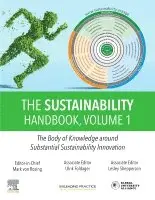
    The Sustainability Handbook, Volume 1

    The Body of Knowledge around Substantial Sustainability Innovation

    AvVon Rosing,Mar,Mark Von Rosing

    Inbunden, Engelska, 2024

    1 970 kr

    Beställningsvara. Skickas inom 10-15 vardagar. Fri frakt över 249 kr.

    Beskrivning

    The Sustainability Handbook, Volume 1: The Body of Knowledge around Substantial Sustainability Innovation provides a comprehensive and holistic understanding of sustainability, bridging the gap between academic theory and business practices. Global climate change poses enormous environmental challenges, and societies across the world must adapt and innovate to further the goals of sustainability. The private sector must find new ways of doing business to align practices with the Sustainable Development Goals (SDGs) adopted by the international community. Using a conceptually structured framework throughout, the book examines the latest academic research to summarize what environmental, social, and economic sustainability means in different contexts.

    Using numerous specific case studies and insights from industry leaders, the book shows how to strategically integrate sustainability into the organization, with extensive focus on policies, incentives, measures, operations, production, consumption, and lifecycle management. Volume 1 explores the concept of Substantial Sustainability Innovation within an enterprise and why it is important. It clarifies the difference between environmental, social and governance aspects of sustainability and how they relate to each other. With examples from local sourcing to C02 reduction, business ethics to sustainability portfolio management, green business process management to gender diversity, this volume explores how you can use sustainability to innovate and identifies which components to use to build an effective sustainable strategy.

    For researchers, students, and businesspeople at all levels and sectors, this handbook is an essential reference of the latest sustainability tools and methodologies required to adapt and innovate towards sustainability.


    • Provides step-by-step guidance on key procedures and methodologies
    • Presents chapters that begin with a graphical representation of how the topic fits within the larger framework
    • Includes extensive coverage of sustainability-related case studies and lessons learned

    Produktinformation

    • Utgivningsdatum:2024-12-05
    • Mått:216 x 276 x 45 mm
    • Vikt:2 460 g
    • Format:Inbunden
    • Språk:Engelska
    • Antal sidor:824
    • Förlag:Elsevier Science
    • ISBN:9780443337543

    Utforska kategorier

    • Miljövetenskap och miljöpolitik inom Naturvetenskap och teknik
    • Miljöteknik inom Naturvetenskap och teknik

    Mer om författaren

    Mark von Rosing is a best-selling author, a sought-after speaker, researcher and board-room advisor. He is a pioneer in the field of climate control and Sustainability. Through his research, publications and effort with standard bodies (ISO, IEEE, OMG, CEN, NIST, LEADing Practice, NATO, UN, W3C) he has been involved of developing 200+ Enterprise Standards and 52 different Industry Standards. Beyond, he left his mark in the field of process modelling having published the best-selling book series The Complete Business Process Handbook, published by Elsevier. Companies such as SAP AG have involved him in developing and leading their Sustainability approaches as well as the Sustainability architecture approaches.

    Innehållsförteckning

    • Part 1 -Substantial sustainability innovation1. Why is sustainability so important?2. PART I—Introduction to substantial sustainability innovation3. Substantial sustainability innovation trends and drivers4. Environment, social and governance5. Sustainability and innovationPart II Sustainable portfolio management6. Why you need sustainable portfolio management in the age of substantial innovation7. The sustainability portfolio conceptPart III Environment8. PART III—Introduction9. CO2 reduction (scopes 1-2-3) and how to go about it10. Use case of carbon footprint reduction—Use case from European aviation industry11. CO2 compensation12. CO2 reduction in supply chain13. Sustainable sourcing practices14. Green IT15. Green power: Renewable energy types and sources16. Innovation in the power industry17. The what, why, and how around design-to-circularity18. Service prototyping— Sustainability impact of a service innovation approach19. Increasing recyclates20. Limiting business travel21. The need for sustainable financing: A research between the two emergencies; climate and pandemic22. What we can learn from a COVID-19-related lockdown period23. PART III. Conclusion to the environmental aspects of sustainabilityPart IV Social24. PART IV—Sustainability social introduction25. Diversity of perspectives26. Gender diversity27. Board diversity and sustainable corporate performance: A research use case study from Turkey28. Senior expert program29. Job rotation30. Employee volunteering: The what, why, and how31. The Paris Agreement and human rights: Is sustainable development the “new human right”?32. Human rights in supply chain33. Eliminating child and forced labor34. Sustainable workplace and workspace—A research use case35. A developing country’s perspective on race to sustainability: Sustainability for countries with weak economic performance—Case study: Egypt’s challenge and opportunities to 205036. Conclusion to the social aspects of sustainabilityPart V Economic and governance37. PART V—Introduction to the economic and governance aspects of sustainability38. Understanding business sustainability: The what, why, and how of sustainable business practices39. Business ethics 2.0: The how, what, why and practical suggestions40. Sustainability board with veto rights41. Sustainability policy, guidelines and procedures42. Why you need a coherent whistleblowing system43. Mandatory ESG reporting44. External ESG auditing: The what, why, who, and how45. ESG supplier selection46. Supply chain sustainability47. Greening the workplace: How sustainable practices drive employee engagement48. The what, why, and how around responsible lobbying49. Conclusion to the economic and governance aspects of sustainabilityPart VI Substantial sustainability innovation50. PART VI—Substantial sustainability innovation introduction51. Developing a substantial innovation sustainability strategy52. Roadmap53. Continuous improvement54. PART VI—Conclusion