• Fri frakt över 249 kr
  • •
  • Snabba leveranser
  • •
  • Billiga böcker
Kundservice

Du är på sajten för privatpersoner.

Företag, bibliotek eller offentlig verksamhet?

Du handlar på classic.bokus.com, där alla dina funktioner finns intakta.
Till classic.bokus.com
Bokus logotyp. Gå till startsidan.
  • Erbjudanden
  • Nyheter
  • Student
  • Topplistor
  • Barn & ungdom
  • Bokus Play
  • E-böcker
  • Pocketböcker
  • Spel & pussel

10% rabatt på allt med kod: NYSTART10 →

Sidfot

Mina sidor

    Hjälp

    • Kundservice
    • Vanliga frågor och svar
    • Frakt och leverans
    • Retur vid ångerrätt
    • Reklamera vara
    • Betalning
    • Köpvillkor
    • Allmänna villkor
    • Information om webbplatsens tillgänglighet

    Om Bokus

    • Om oss
    • Pressrum
    • För studenter
    • För företag
    • För bibliotek och offentlig verksamhet
    • För leverantörer
    • Hållbarhet

    Populärt

    • Aktuella erbjudanden
    • Presentkort
    • Studentlitteratur
    • Nya böcker
    • Topplistor
    • Signerade böcker
    • Engelska böcker

    Inspiration

    • Boktips
    • BookTok
    • Populära bokserier
    • Barnbokskaraktärer
    • Populära författare
    Logotyp för Bokus
    Följ oss på Facebook (extern länk)Följ oss på Instagram (extern länk)Följ oss på YouTube (extern länk)Följ oss på TikTok (extern länk)
    bokus @ CookiesAnpassa cookiesIntegritetspolicyKöpvillkor
    Till Citymail hemsida (extern länk)Till Budbee hemsida (extern länk)Till Postnord hemsida (extern länk)Till Schenker hemsida (extern länk)Till Early Bird hemsida (extern länk)Till Walleys hemsida (extern länk)
    1. Naturvetenskap och teknik
    2. Teknik och industri
    3. Tillverkningsteknik

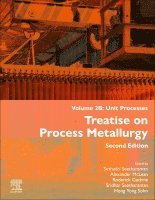
    Treatise on Process Metallurgy, Volume 2B

    Unit Processes

    AvSeetharaman,Seshadr,Seshadri Seetharaman

    Inbunden, Engelska, 2025

    3 486 kr

    Beställningsvara. Skickas inom 10-15 vardagar. Fri frakt över 249 kr.

    Beskrivning

    Treatise on Process Metallurgy, Volume 2B: Unit Processes, presents various unit processes with an emphasis on mineral processing, hydrometallurgy, and electrochemical materials and energy processes. The book highlights the roles of these processes in beneficiation, rare-earth extraction, utilization of lean resources, coal extraction, and biofuels, reflecting the shift toward green and electrochemical processes. Basic knowledge of thermodynamics and kinetics is provided for better understanding of metallurgical processes. The first section of the book covers mineral processing, providing insight on comminution, separation processes, dewatering, and tailings disposal. The second section focuses on hydrometallurgy, discussing leaching, separation-purification, metal recovery, and battery materials, and the book concludes with a section studying electrochemical material and energy, featuring coverage of molten oxide electrolysis, molten carbonate fuel cells, various sensors, and ionic liquids. Each section also includes various case studies, demonstrating the use of the concepts in real-world settings.

    • Covers mineral processing, electrochemical materials, and hydrometallurgy and their roles in beneficiation, rare-earth extraction, utilization of lean resources, coal extraction, and biofuels
    • Provides basic knowledge on thermodynamics and kinetics needed for understanding the principles of metallurgical processes
    • Includes a section on electrochemical materials and energy processes, covering molten salts electrolysis, fuel cells, and nuclear molten salt reactors
    • Features insight into the entire process chain, unit processes that are generally overlooked, and unit processes that combine hydro-, electro-, and pyro-processes in an optimal way

    Produktinformation

    • Utgivningsdatum:2025-07-28
    • Mått:216 x 276 x 46 mm
    • Vikt:1 000 g
    • Format:Inbunden
    • Språk:Engelska
    • Antal sidor:812
    • Upplaga:2
    • Förlag:Elsevier Science
    • ISBN:9780443402944

    Utforska kategorier

    • Tillverkningsteknik inom Naturvetenskap och teknik

    Mer om författaren

    Seshadri Seetharaman is Professor Emeritus at the Royal Institute of Technology in Stockholm. Professor Seetharaman has more than 320 publications in peer-reviewed journals, 130 conference presentations and 10 patents. He is the editor for the books, "Fundamentals of Metallurgy" and "Treatise on Process Metallurgy". He received the President’s award for teaching merits in 1994. He was nominated as the best teacher in Materials Science eight times and was chosen as the best teacher of the Royal Inst. of Technol. In 2004. He has been visiting professor at Kyushu Inst. Technol., Kyoto university, Japan and TU-Bergakademie, Freiberg, Germany. He was awarded the Brimacomb prize for the year 2010 Hon. Doctor at Aalto University, Finland in 2011 and Hon. Professor at the Ukrainian Metallurgical Academy, 2011. Prof. Seetharaman is an Hon. Member of the Iron and Steel Institute of Japan, 2011, He has been honoured as the Distinguished Alumni of the Indian Institute of Science, Bangalore, India in the year 2013. He is currently a visiting professor at TATA Steel, Jamshedpur, India Alexander McLean works in the Department of Materials Science and Engineering at University of Toronto, Toronto, Ontario, Canada. Roderick Guthrie works in the Department of Mining and Materials Engineering at McGill Metals Processing Centre, Quebec, Canada. Sridhar Seetharaman is the Fulton Professor of Industrial Decarbonization at Arizona State University. He received his undergraduate degree from the Royal Institute of Technology and his PHD from MIT. He is a Distinguished Member and Fellow of the Association for Iron and Steel Technology. Hong Yong Sohn holds the rank of Distinguished Professor at the University of Utah, having joined the Department of Metallurgical Engineering in 1974. He received his B.S. degree in Chemical Engineering from Seoul National University in Korea and his Ph.D. degree in Chemical Engineering in 1970 from the University of California at Berkeley. He worked as a Research Engineer at Du Pont’s Engineering Technology Laboratory. Dr. Sohn has authored or co-authored 7 monographs, 19 edited books, 28 book chapters, 11 patents, some 600 papers, and 39 technical reports. He has served as a Director of TMS-AIME (The Minerals, Metals and Materials Society), was a U.S. DOE Fossil Energy Lecturer, 1978–81, and is an Advisor to LS-MnM (formerly LS-Nikko Copper Inc.) of Korea and also Korea Institute of Geoscience and Mineral Resources (KIGAM). He is an Honorary Professor of Metallurgy at the Kunming University of Science and Technology at the Anhui University of Technology, China.Professor Sohn’s work has been recognized through various awards, which include the 2014 Educator Award from TMS; the Distinguished Scholarly and Creative Research Award, 2012 from the University of Utah; Billiton Gold Medal, 2012 from The Institute of Materials, Minerals and Mining in the U.K.; the TMS 2009 Fellow Award “in recognition of outstanding contribution to the practice of metallurgical/materials science and technology” from The Minerals, Metals and Materials Society (TMS); the TMS Champion H. Mathewson Gold Medal Award (1993 “for the most notable contribution to Metallurgical Science in the 3–year period”); the TMS Extraction and Processing Science Award (1990, 1994, 1999 and 2007, respectively, for analysis of flash furnace shaft; modeling of in situ solution mining operations; synthesis of ultrafine particles of intermetallic compounds; and analysis of the influence of chemical equilibrium on fluid-solid reaction rates and the falsification of activation energy); the Fulbright Distinguished Lecturer (1983); and the Camille and Henry Dreyfus Foundation Teacher-Scholar Award (1977). In 2006, TMS honored Dr. Sohn by holding the “Sohn International Symposium on Advanced Processing of Metals and Materials”.Professor Sohn’s research interests have covered a wide range of subjects, such as Development of a Novel Flash Ironmaking; Plasma-Assisted Chemical Synthesis of Inorganic and Ceramic Nanomaterials; Metallurgical Process Engineering including Computational Fluid Dynamics Modeling; Nonferrous metal; Fluid–Solid Reaction Engineering; Synthesis and Processing of Ceramic and Intermetallic Compounds; Hydrogen Storage Materials; Solvent Extraction. A major common theme through these research efforts has been the development and application of reaction kinetics theories, especially the engineering analysis of the reactions between solids and fluids. He coauthored a seminal monograph in the field, “Gas-Solid Reactions”, which had been a standard reference on the subject for more than 40 years: Professor Sohn recently updated and expanded the book as “Fluid-Solid Reactions” incorporating the massive amount of work he has continued on the topic since the publication of “Gas-Solid Reactions” and expanding the coverage to include reactions between a solid and a liquid. A major accomplishment by Professor Sohn in this field is the formulation of a rate law called “Sohn’s Law of Additive Reaction Times” that governs the reactions between solids and fluids that are affected by mass transfer processes.Among the numerous plenary and keynote lectures Professor Sohn has given, he delivered a talk on “Novel Ironmaking Technology with Low Energy Requirement and CO2 Emission” to the U.S. Congress on April 21, 2008. He has also served as a technical consultant to many industrial companies, government units, and research institutes, in addition to serving on a number of editorial/advisory boards of international journals.

    Innehållsförteckning

    • Section 11.1 Mineral Processing, Importance, Introduction1. 2 Ore Body Knowledge1.3 Beneficiation, Physical separation processes1.4.1 Comminution1.4.2 Separation Processes1.4.2.1 Classification1.4.2.2 Gravity (Density)1.4.2.3 Dense Media Separation1.4.2.4 Floatation1.4.2.5 Magnetic Separation1.4.2.6 Electrostatic Separation1.4.2.7 Ore sorting1.5. Emerging Trends in Mining and Mineral Processing1.6. Dewatering1.7. Tailings Disposal1.8. Case studies1.8.1 Iron ore1.8.2 Non-ferrous1.8.3 Metallurgical Coal1.8.4 Mineral Sands1.8.5 Industrial Minerals-Graphite1.8.6 DiamondSection 22. 1 Importance of Hydrometallurgy, Introduction2.2 Extraction2.2.1 Introduction2.2.2. Leaching Chemistries: Sulfate, Chloride, etc, thermo, complexation, etc., unconventional lixiviants and catalysts:2.2.3. Leaching Kinetics and mechanisms.2.2.4. Heap Leaching2.2.5. Tank Leaching2.2.6 Bio leaching2.2.7. Autoclave Leaching2.3. Separation-Purification2.3.1. Introduction2.3.2. SX2.3.3. IX2.3.4. Precipitation2. 4. Metal Recovery2.4.1. Introduction2.4.2. Electrowinning and Electrorefining2.4.2. Chemical Reduction2.5. Case studies2.5.1. Gold2.5.2. Copper2.5.3. Nickel and Cobalt2.6 Frontiers2.6.1. Battery materials2.6.2. Rare earths2.6.3. Environmental issuesSection 3: Electrochemical material and energy3. 1. Introduction3.2. Molten Oxide Electrolysis3.3. OS Process3.4. FFC-Cambridge Process3.5. Solid Oxide Membrane Process3.6. Refining of Nuclear Materials in Salt Melts3.7. Preparation of Nanocarbons in Molten Salts3.8. Thermal Batteries3.9. Sodium Nickel Chloride (ZEBRA) Battery3.10. Molten Metal Batteries3.11. Molten Carbonate Fuel Cells3.12. AMTEC3.13. Nuclear Molten Salt Reactor3.14. Oxygen Sensors for Iron and Copper Melts3.15. Hydrogen Sensors for Molten Aluminum and its Alloys3.16. Oxygen, Hydrogen and Carbon Sensors for Molten Sodium3.17. Ionic Liquids in Process Metallurgy