• Fri frakt över 249 kr
  • •
  • Snabba leveranser
  • •
  • Billiga böcker
Kundservice

Du är på sajten för privatpersoner.

Företag, bibliotek eller offentlig verksamhet?

Du handlar på classic.bokus.com, där alla dina funktioner finns intakta.
Till classic.bokus.com
Bokus logotyp. Gå till startsidan.
  • Erbjudanden
  • Nyheter
  • Student
  • Topplistor
  • Barn & ungdom
  • Bokus Play
  • E-böcker
  • Pocketböcker
  • Spel & pussel

10% rabatt på allt med kod: NYSTART10 →

Sidfot

Mina sidor

    Hjälp

    • Kundservice
    • Vanliga frågor och svar
    • Frakt och leverans
    • Retur vid ångerrätt
    • Reklamera vara
    • Betalning
    • Köpvillkor
    • Allmänna villkor
    • Information om webbplatsens tillgänglighet

    Om Bokus

    • Om oss
    • Pressrum
    • För studenter
    • För företag
    • För bibliotek och offentlig verksamhet
    • För leverantörer
    • Hållbarhet

    Populärt

    • Aktuella erbjudanden
    • Presentkort
    • Studentlitteratur
    • Nya böcker
    • Topplistor
    • Signerade böcker
    • Engelska böcker

    Inspiration

    • Boktips
    • BookTok
    • Populära bokserier
    • Barnbokskaraktärer
    • Populära författare
    Logotyp för Bokus
    Följ oss på Facebook (extern länk)Följ oss på Instagram (extern länk)Följ oss på YouTube (extern länk)Följ oss på TikTok (extern länk)
    bokus @ CookiesAnpassa cookiesIntegritetspolicyKöpvillkor
    Till Citymail hemsida (extern länk)Till Budbee hemsida (extern länk)Till Postnord hemsida (extern länk)Till Schenker hemsida (extern länk)Till Early Bird hemsida (extern länk)Till Walleys hemsida (extern länk)
    1. Djur och Natur
    2. Djurböcker
    3. Vilda djur
    4. Fjärilar, insekter, spindlar

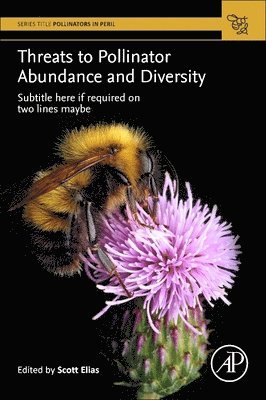
    Threats to Pollinator Abundance and Diversity

    AvScott A. Elias

    Häftad, Engelska, 2026

    Del i serien Pollinators in Peril

    1 722 kr

    Kommande

    Beskrivning

    Threats to Pollinator Abundance and Diversity, the first release in the Pollinators in Peril series, covers the latest research on insect pollinators, the threats to their survival, declining populations, and what conservation actions should be taken. The book demonstrates that most threats to pollinators are either directly or indirectly human-caused, such as chemicals, land alteration, and habitat loss due to agricultural practices, as well as climate change and its many ripple effects. Covering everything from honeybee pathogens to butterfly range changes, this book covers concepts that are both crucial for researchers in entomology, upper-level students, governmental and non-governmental organizations, and adjacent fields.

    Pollinating insects are among the most crucial species groups on earth. Without them, much of the earth’s vegetation would not survive and the elaborate ecosystems they sustain would collapse. Today, pollinator declines have reached critical levels in most regions of the world.

    • Compiles the most up-to-date knowledge on threats to insect pollinators
    • Covers a range of insect pollinator groups, including managed honeybees, native bees, butterflies, and hoverflies
    • Contextualizes the causes of insect population declines within the bigger picture of climate change

    Produktinformation

    • Utgivningsdatum:2026-10-01
    • Mått:191 x 235 x undefined mm
    • Vikt:450 g
    • Format:Häftad
    • Språk:Engelska
    • Serie:Pollinators in Peril
    • Antal sidor:385
    • Förlag:Elsevier Science
    • ISBN:9780443403583

    Utforska kategorier

    • Fjärilar, insekter, spindlar inom Djur och Natur
    • Insekter inom Naturvetenskap och teknik

    Mer om författaren

    Scott A. Elias became a research associate of the Institute of Arctic and Alpine Research in 1982. In 2000, he took a lectureship in Physical Geography at Royal Holloway, University of London, and became a Professor of Quaternary Science in 2007. He has served as editor-in-chief of three editions of the Encyclopedia of Quaternary Science, and co-editor-in-chief of the Encyclopedia of Geology and the Cryosphere Comprehensive.

    Innehållsförteckning

    • 1. Pollination: An essential ecosystem service2. The co-evolution of flowering plants and pollinators3. Native bee species: Solitary, inconspicuous, and poorly studied4. The importance of hoverflies (Syrphidae) in wild and domesticated plant pollination5. Diurnal and seasonal cycles of insect pollinator groups6. The plant-pollinator disconnects of global warming7. Threats to honeybee colonies I: Viral diseases, fungal infections, Vairimorpha8. Threats to honeybee colonies II: Parasites: Acarapis woodi, Varroa destructor9. Threats to honeybee colonies III: Long-distance hive transportation, Colony Collapse Disorder10. Causes of bumble bee declines: Pesticides11. Causes of bumblebee declines: Mismatching with floral resources12. Causes of butterfly declines: Life cycle emergence changes13. Causes of butterfly declines: Pesticides14. Causes of butterfly declines: Range changes with global warming15. Causes of bumble bee declines: Range changes with global warming16. Pathogen spread between bee species through contaminated flowers17. Heat-stress physiology of cold-adapted bumble bees18. Effect of pesticide on bumble bee reproduction19. Bumble bee responses to climate change20. Asian bumble bee response to climate change21. Phyllogenetic perspective on bumblebee declines22. Effects of habitat fragmentation on bee populations23. Insect pollinators facing imminent extinction: Causes and needed rescue efforts24. Co-exposure or coinfection of insect pollinator diseases and parasites25. Pollinator population declines and the erosion of genetic diversity