• Fri frakt över 249 kr
  • •
  • Snabba leveranser
  • •
  • Billiga böcker
Kundservice

Du är på sajten för privatpersoner.

Företag, bibliotek eller offentlig verksamhet?

Du handlar på classic.bokus.com, där alla dina funktioner finns intakta.
Till classic.bokus.com
Bokus logotyp. Gå till startsidan.
  • Erbjudanden
  • Nyheter
  • Student
  • Topplistor
  • Barn & ungdom
  • Bokus Play
  • E-böcker
  • Pocketböcker
  • Spel & pussel

10% rabatt på allt med kod: NYSTART10 →

Sidfot

Mina sidor

    Hjälp

    • Kundservice
    • Vanliga frågor och svar
    • Frakt och leverans
    • Retur vid ångerrätt
    • Reklamera vara
    • Betalning
    • Köpvillkor
    • Allmänna villkor
    • Information om webbplatsens tillgänglighet

    Om Bokus

    • Om oss
    • Pressrum
    • För studenter
    • För företag
    • För bibliotek och offentlig verksamhet
    • För leverantörer
    • Hållbarhet

    Populärt

    • Aktuella erbjudanden
    • Presentkort
    • Studentlitteratur
    • Nya böcker
    • Topplistor
    • Signerade böcker
    • Engelska böcker

    Inspiration

    • Boktips
    • BookTok
    • Populära bokserier
    • Barnbokskaraktärer
    • Populära författare
    Logotyp för Bokus
    Följ oss på Facebook (extern länk)Följ oss på Instagram (extern länk)Följ oss på YouTube (extern länk)Följ oss på TikTok (extern länk)
    bokus @ CookiesAnpassa cookiesIntegritetspolicyKöpvillkor
    Till Citymail hemsida (extern länk)Till Budbee hemsida (extern länk)Till Postnord hemsida (extern länk)Till Schenker hemsida (extern länk)Till Early Bird hemsida (extern länk)Till Walleys hemsida (extern länk)
    1. Naturvetenskap och teknik
    2. Teknik och industri
    3. Energiteknik

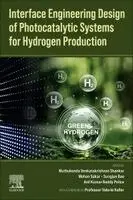
    Interface Engineering Design of Photocatalytic Systems for Hydrogen Production

    AvMuthukonda Venkatakrishnan Shankar,Mohan Sakar

    Häftad, Engelska, 2027

    1 976 kr

    Kommande

    Beskrivning

    Interface Engineering Design of Photocatalytic Systems for Hydrogen Production addresses the critical challenge of developing efficient, stable photocatalysts for sustainable hydrogen generation. It explores the fundamental principles of interface science, including heterojunctions, surface modifications, defect engineering, and quantum dot sensitization, essential for advancing photocatalytic technology. The book systematically covers synthesis methods such as hydrothermal, chemical vapor deposition, and electrochemical techniques, alongside advanced characterization tools like SEM, TEM, XPS, and spectroscopic techniques. A dedicated section highlights the integration of machine learning algorithms-decision trees, neural networks, and data mining-to accelerate the discovery and optimization of photocatalytic materials. The content is structured to serve researchers, engineers, and students involved in materials science, nanotechnology, and renewable energy, providing both theoretical insights and practical methodologies. The comprehensive coverage aims to bridge existing knowledge gaps, offering actionable strategies for interface design, improving solar-to-hydrogen efficiency, and scaling up hydrogen production systems. This resource empowers professionals to innovate in sustainable energy solutions, supporting the transition to a cleaner energy future.

    • Provides comprehensive strategies for interface engineering in photocatalytic systems
    • Connects interface structure to photocatalytic performance for rational design
    • Offers practical guidance on synthesis, characterization, and machine learning integration
    • Synthesizes latest research with advanced characterization techniques
    • Facilitates accelerated development of efficient hydrogen production technologies

    Produktinformation

    • Utgivningsdatum:2027-03-01
    • Mått:152 x 229 x undefined mm
    • Format:Häftad
    • Språk:Engelska
    • Antal sidor:450
    • Förlag:Elsevier Science
    • ISBN:9780443490330

    Utforska kategorier

    • Energiteknik inom Naturvetenskap och teknik

    Mer om författaren

    Dr. M.V. Shankar is a Professor of Materials Science and Nanotechnology at Yogi Vemana University, India, leading the Nanocatalysis and Solar Fuels Lab. Renowned for his work in photocatalysis for green hydrogen production, he has over 11,000 citations. He has received nine fellowships, five awards—including the Andhra Pradesh Scientist Award (2020) and recognition as a top 2% influential scientist—and is a Fellow of the Royal Society of Chemistry. Shankar collaborates internationally, including with Konkuk University, South Korea, from 2024-2026. He has authored two books, published 127 SCI articles, holds six patents, and contributed 26 book chapters. His research focuses on solar photocatalysis and interface engineering for sustainable hydrogen production from water and industrial wastes. His work aims to scale up photocatalyst synthesis and photoreactor technology for practical applications. Dr. M. Sakar obtained his M.Sc., M.Tech in 2010 and PhD in 2015 from the University of Madras, India. Later, he moved to Prof. Trong-On Do's lab at Department of Chemical Engineering, Laval University for his postdoctoral research. Then, he joined as an Assistant Professor in the Centre for Nano and Material Sciences, Jain University, India in 2017. Dr. Sakar's research includes the photocatalysts-designs for various applications of photocatalysis such as pollutant degradations, H2 production, CO2 reduction, N2 fixation and biodiesel productions. Currently, he has published 40 papers in international journals, 3 book chapters, 60 papers in conferences, out of which he has won 8 best paper awards. Dr. Sakar is the recipient of DST-INSPIRE research grants in 2017 by the Department of Science and Technology (DST), Govt. of India. Currently, he serves as an Associate Editor for BMC Research Notes and Guest Editor for Catalysts journals. Dr. Sungjun Bae is an Associate Professor in the Department of Civil and Environmental Engineering at Konkuk University, South Korea, since 2016. He earned his Bachelor’s from Sungkyunkwan University and his Master’s and PhD from KAIST, all in Civil and Environmental Engineering. His postdoctoral research included work at ENSCR in France and KIT in Germany, supported by an Alexander von Humboldt Fellowship. His research focuses on synthesizing novel materials such as adsorbents, catalysts, and reactants for wastewater treatment, resource recovery, and hydrogen production. He investigates catalytic and redox processes for organic pollutant removal, energy generation, and the fate of toxic chemicals. Bae has published 104 SCI articles, holds 22 patents, and contributed to two book chapters. He has served as an editor for the Journal of Hazardous Materials and Cleaner Water, advancing sustainable water and energy solutions through innovative systems and materials. Dr. Anil Kumar Reddy Police received his PhD from the Osmania University, Hyderabad, India. Currently he is a full-time researcher at Konkuk University, Republic of Korea. Dr. Anil’s research focuses on materials chemistry for energy and environmental applications including photocatalytic remediation, water splitting, and supercapacitors/batteries. His publications include around 39 research articles, 2 Korean patents, and 1 book chapter with a total of 2535 citations. Dr. Anil received funding from the National Research Foundation of Korea to develop photocatalytic materials derived from solid waste for hydrogen production from wastewater. His work primarily focuses on creating photocatalysts from materials such as red mud, steel slag, bauxite residue, and biowaste-derived biochar, while harnessing renewable solar energy to generate hydrogen from wastewater. Dr. Anil is also a recognized reviewer for prominent journals like Chemical Engineering Journal, Journal of Hazardous Materials, and International Journal of Hydrogen Energy. Additionally, he serves as an editor for Scientific Reports, PLOS ONE, and Frontiers in Environmental Chemistry. Dr. Anil is one of the top 1% most highly cited authors publishing on topics in materials science over the past 10 years according to OpenAlex and has been recognized among the top 2% of world scientists by Stanford University and Elsevier for the year 2021.

    Innehållsförteckning

    • Part I: Fundamentals and Principles1. Introduction to Photocatalytic Hydrogen Production2. Interface Science and Engineering3. Thermodynamics and Kinetics of Photocatalytic Reactions4. Synthesis Methods for Intact Interface EngineeringPart II: Interface Engineering Strategies5. Heterojunction Engineering for Enhanced Charge Separation6. Surface Modification Strategies7. Interface Defect Engineering8. Photo-corrosion Inhibition with Core-Shell Morphology9. Quantum Dots and Sensitization10. 2D Nanomaterials for Interface EngineeringPart III: Advanced Characterization Techniques and Machine Learning11. Advanced Characterization Techniques for Interfaces12. Electrochemical and Spectroscopy Techniques13. Machine Learning-Assisted Design of Photocatalysts14. Future Directions and Challenges in Interface Engineering