• Fri frakt över 249 kr
  • •
  • Snabba leveranser
  • •
  • Billiga böcker
Kundservice

Du är på sajten för privatpersoner.

Företag, bibliotek eller offentlig verksamhet?

Du handlar på classic.bokus.com, där alla dina funktioner finns intakta.
Till classic.bokus.com
Bokus logotyp. Gå till startsidan.
  • Erbjudanden
  • Student
  • Topplistor
  • Barn & ungdom
  • Bokus Play
  • E-böcker
  • Ljudböcker
  • Pocketböcker
  • Spel och pussel

Pocketfynda! Hundratals böcker för 49 kr/st →

Sidfot

Mina sidor

    Hjälp

    • Kundservice
    • Vanliga frågor och svar
    • Frakt och leverans
    • Retur vid ångerrätt
    • Reklamera vara
    • Betalning
    • Köpvillkor
    • Allmänna villkor
    • Information om webbplatsens tillgänglighet

    Om Bokus

    • Om oss
    • Pressrum
    • För studenter
    • För företag
    • För bibliotek och offentlig verksamhet
    • För leverantörer
    • Hållbarhet

    Populärt

    • Aktuella erbjudanden
    • Presentkort
    • Studentlitteratur
    • Nya böcker
    • Topplistor
    • Signerade böcker
    • Engelska böcker

    Inspiration

    • Boktips
    • BookTok
    • Barnbokskaraktärer
    • Populära författare
    Logotyp för Bokus
    Följ oss på Facebook (extern länk)Följ oss på Instagram (extern länk)Följ oss på YouTube (extern länk)Följ oss på TikTok (extern länk)
    bokus @ CookiesAnpassa cookiesIntegritetspolicyKöpvillkor
    Till Citymail hemsida (extern länk)Till Budbee hemsida (extern länk)Till Postnord hemsida (extern länk)Till Schenker hemsida (extern länk)Till Early Bird hemsida (extern länk)Till Walleys hemsida (extern länk)
    1. Medicin
    2. Andra medicinska specialiteter
    3. Neurologi och klinisk neurofysiologi

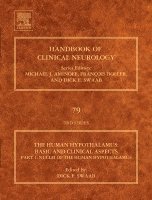
    Human Hypothalamus: Basic and Clinical Aspects, Part I

    AvDick F. Swaab

    Inbunden, Engelska, 2003

    Del 79 i serien Handbook of Clinical Neurology

    1 996 kr

    Beställningsvara. Skickas inom 10-15 vardagar. Fri frakt över 249 kr.

    Beskrivning

    As the human hypothalamus has traditionally been considered part of the neuroendocrine system, it has been of little interest to neurologists. This volume creates renewed interest in the subject, highlighting groundbreaking research that links this complex part of the human brain to a variety of neurological and psychological disorders.

    Clinicians, researchers, and practitioners from a variety of medical fields will find this to be a comprehensive presentation of new research that applies to a variety of disorders, including their origin, diagnosis, and treatment. From groundbreaking discussions that link the human hypothalamus to attention deficits in the dementias, to its role in disorders such as narcolepsy and certain epilepsies, users will find this volume to be an invaluable resource for research and patient care.

    Specific information on topics including depression, eating disorders, aggression, and mental retardation are included, giving those in the field of neurology, psychiatry, endocrinology, and pediatrics a comprehensive understanding on how the human hypothalamus is related to patient disorders in these fields.


    * A comprehensive accounting of groundbreaking new research regarding the human hypothalamus
    * New insights on the hypothalamus and its role in disorders, including dementias, epilepsies, and associated psychiatric diseases
    * A greater understanding of how the human hypothalamus impacts research and treatment protocols in a variety of fields, including neurology, endocrinology, and psychology

    Produktinformation

    • Utgivningsdatum:2003-12-15
    • Mått:195 x 260 x 35 mm
    • Vikt:1 380 g
    • Format:Inbunden
    • Språk:Engelska
    • Serie:Handbook of Clinical Neurology
    • Antal sidor:508
    • Upplaga:3003
    • Förlag:Elsevier Science
    • ISBN:9780444513571

    Utforska kategorier

    • Neurologi och klinisk neurofysiologi inom Medicin

    Mer om författaren

    Dick Swaab (1944) earned his medical and doctoral degrees at the University of Amsterdam, where he became involved in brain research during his third year of medical school. He was Director of the Netherlands Institute for Brain Research from 1978 to 2005. Since 1979 he is Professor of Neurobiology at the Medical Faculty, University of Amsterdam.In 1985, Dr. Swaab founded the Netherlands Brain Bank (NBB) to serve as a source of clinically and neuropathologically well-documented research tissue. Since its founding, the Brain Bank has provided samples from more than 4,000 autopsies to 500 research groups in 25 countries. He was director of the NBB until 2005.He is Leader Research team Neuropsychiatric Disorders, Neth. Inst for Neuroscience, an institute of the Royal Netherlands Academy of Arts and Sciences (KNAW). Swaab is also appointed for 2011-2017 Chao Kuang Piu Chair of Zhejiang University, Hangzhou, P.R. China.His major research interests focus on, sexual differentiation of the human brain in relation to gender identity and sexual orientation, aging of the brain, Alzheimer’s disease, the neurobiological basis of depression, suicide and eating disorders. He has published over 540 papers in SCI journals, authored more than 200 chapters in books, and edited more than 60 books. Swaab mentored 84 PhD students from which 16 are now full professor. He is “Companion in the Order of the Dutch Lion”, bestowed by her Royal Majesty Queen Beatrix of the Netherlands. In 2008 Swaab obtained the Academy medal for his role in national and international neuroscience. Dick Swaab is author of the 2 volume monograph The Human Hypothalamus that appeared in the Handbook of Clinical Neurology series, Elsevier, Amsterdam (1000 pp) and the Dutch best seller We are our Brains (450.000 copies sold), that is translated in 14 languages. A children's version of the book (You are your brains) has also appeared in Dutch in 2013 and Russian (2014). Swaab's H-factor is 76.

    Innehållsförteckning

    • Part I. Nuclei of the human hypothalamus: cytoarchitecture, chemoarchitecture, functional neuroanatomy, topographic neuropathology. 1. Introduction. 1.1 Anatomical borders of the hypothalamus. 1.2 Strategic research and structure-function relationships. 1.3 The autopsy and brain banking. 1.4 Confounding factors. 1.5 Parameters of neuronal metabolic activity in postmortem tissue. 1.6 Fetal hypothalamic development and adult markers of the human hypothalamic nuclei. 2. Nucleus basalis of Meynert (NBM) and diagonal band of Broca (DBB). 2.1 Anatomy. 2.2 Chemoarchitecture. 2.3 Alzheimer's disease. 2.4 Neuronal loss vs. atrophy. 2.5 Neurotrophin receptors in the NBM. 2.6 Other disorders affecting the NBM and DBB. 3. Islands of Calleja, insulae terminalis. 4. Suprachiasmatic nucleus (SCN) and pineal gland. 4.1 Circadian, seasonal, monthly and circaseptan rhythms in the SCN. 4.2 SCN development, birth and circadian rhythms. 4.3 Circadian and circannual rhythms in aging and Alzheimer's disease. 4.4 The SCN in relation to sex, reproduction and sexual orientation. 4.5 Melatonin and its receptors. 5. Sexually dimorphic nucleus of the preoptic area (SDN-POA) = intermediate nucleus = interstitial nucleus of the anterior hypothalamus (INAH-1) = preoptic nucleus. 5.1 Nomenclature and homology to the rat SDN-POA. 5.2 Development, sexual differentiation, aging and Alzheimer's disease. 6. Other sexual dimorphisms. 6.1. Interstitial nucleus of the anterior hypothalamus (INAH)-2 and -3. 6.2 Anterior commissure, the interthalamic adhesion, corpora mamillaria and the third ventricle. 6.3 Sex hormone receptor distribution. 7. Bed nucleus of the stria terminalis (BST) and the septum. 7.1 The BST. 7.2 Reversed sex differences in the BST in transsexuals. 7.3 The septum verum. 8. Supraoptic and paraventricular nucleus (SON, PVN). 8.1 The fetal SON, PVN in birth and development. 8.2 Colocalization of tyrosine-hydroxylase (TH) with oxytocin and vasopressin. 8.3 The SON and PVN in aging and Alzheimer's disease. 8.4 (a) Vasopressin secretion in various disorders: (b) Vasopressin administration in various disorders. 8.5 Corticotropin-releasing hormone (CRH) neurons in the PVN. 8.6 Thyrotropin-releasing hormone (TRH) neurons in the PVN. 8.7 Other neuroactive compounds in the SON, PVN and periventricular nucleus. 9. Ventromedial nucleus (VMN; nucleus of Cajal). 10. Dorsomedial nucleus (DMN). 11. Infundibular nucleus (arcuate nucleus), subventricular nucleus and median eminence. 12. Lateral tuberal nucleus (NTL). 12.1 Chemoarchitecture and function. 12.2 The NTL in neurodegenerative diseases. 13. Tuberomamillary complex. 13.1 Anatomy. 13.2 Neurodegenerative diseases and schizophrenia. 13.3 Posterior hypothalamic area. 14. Lateral hypothalamic area (LHA) and intermediate hypothalamic area (IHA). 15. Subthalamic nucleus and zona incerta. 15.1 Subthalamic nucleus. 15.2 Zona incerta. 16. Corpora mamillaria. References.