• Fri frakt över 249 kr
  • •
  • Snabba leveranser
  • •
  • Billiga böcker
Kundservice

Du är på sajten för privatpersoner.

Företag, bibliotek eller offentlig verksamhet?

Du handlar på classic.bokus.com, där alla dina funktioner finns intakta.
Till classic.bokus.com
Bokus logotyp. Gå till startsidan.
  • Erbjudanden
  • Nyheter
  • Student
  • Topplistor
  • Barn & ungdom
  • Bokus Play
  • E-böcker
  • Pocketböcker
  • Spel & pussel

10% studentrabatt med kod TERM26

Sidfot

Mina sidor

    Hjälp

    • Kundservice
    • Vanliga frågor och svar
    • Frakt och leverans
    • Retur vid ångerrätt
    • Reklamera vara
    • Betalning
    • Köpvillkor
    • Allmänna villkor
    • Information om webbplatsens tillgänglighet

    Om Bokus

    • Om oss
    • Pressrum
    • För studenter
    • För företag
    • För bibliotek och offentlig verksamhet
    • För leverantörer
    • Hållbarhet

    Populärt

    • Aktuella erbjudanden
    • Presentkort
    • Studentlitteratur
    • Nya böcker
    • Topplistor
    • Signerade böcker
    • Engelska böcker

    Inspiration

    • Boktips
    • BookTok
    • Populära bokserier
    • Barnbokskaraktärer
    • Populära författare
    Logotyp för Bokus
    Följ oss på Facebook (extern länk)Följ oss på Instagram (extern länk)Följ oss på YouTube (extern länk)Följ oss på TikTok (extern länk)
    bokus @ CookiesAnpassa cookiesIntegritetspolicyKöpvillkor
    Till Citymail hemsida (extern länk)Till Budbee hemsida (extern länk)Till Postnord hemsida (extern länk)Till Schenker hemsida (extern länk)Till Early Bird hemsida (extern länk)Till Walleys hemsida (extern länk)
    1. Naturvetenskap och teknik
    2. Matematik och naturvetenskap
    3. Fysik

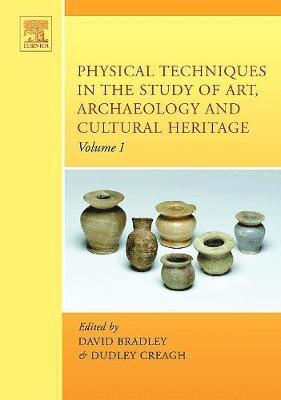
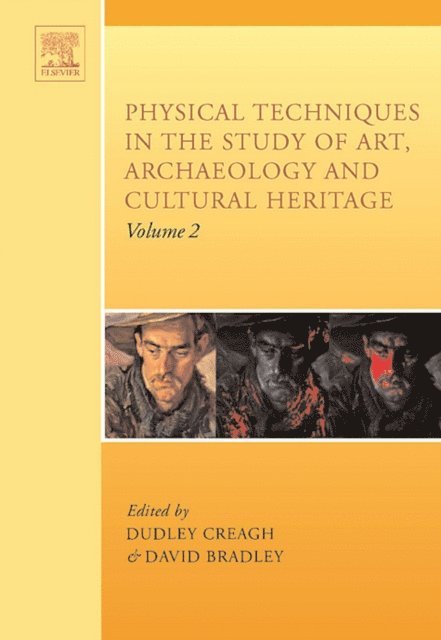
    Physical Techniques in the Study of Art, Archaeology and Cultural Heritage

    Inbunden, Engelska, 2007

    Del 2 i serien Physical Techniques in the Study of Art, Archaeology and Cultural Heritage

    1 088 kr

    Beställningsvara. Skickas inom 10-15 vardagar. Fri frakt över 249 kr.

    Beskrivning

    In Chapter 1 Dudley Creagh writes on "synchrotron radiation and its use in art, archaeometry, and cultural heritage studies". Loic Bertrand has written in Chapter 2 on synchrotron imaging for archaeology and art history, conservation, and palaeontology. Dr. Bertrand is Archaeology and cultural heritage officer at the new French synchrotron, Synchrotron Soleil (Orme les Mesuriers, Gif-sur-Yvette, France). He is charged with the task of raising the awareness of cultural heritage scientists to the use of synchrotron radiation for their research. Chapter 3 has been written by Ivan Cole and his associates Dr David Paterson and Deborah Lau. This is concerned with the holistic modelling of gas and aerosol deposition and the degradation of cultural objects. Dr. Cole is Deputy Chief of the Novel Materials and Processes Division of the Commonwealth Scientific and Industrial Research Organization (Melbourne, Australia). He has over twenty years experience in involvement in projects concerned with the preservation of cultural heritage. Ivan is an internationally recognized leader in the field of the life cycle of materials and the development of protective coatings for metals. In Chapter 4, Giovanna Di Pietro describes two different types of experiments she has undertaken in the study of the mechanisms underlying the degradation of photographic media. In the first Dr. Di Pietro describes the degradation of old back-and-white plate. In the second she outlines her attempts to understand the mechanisms by which comparatively modern motion picture film degrades. A significant part of this project involved trying to ascertain exactly what dyes were used by Kodak in their motion picture film from about 1980 onwards. An entirely new technique for the remote investigation of the pigments in paintings is presented by Maria Kubik in Chapter 5. This technique will significantly enhance the ability of conservators to study the palette of pigments used by artists, check for repairs by others, and detect fraudulent paintings.

    � Demonstrates the amazing efforts being made in using physical techniques for the study of art, archaeology and cultural heritage
    � Provides succinct accounts of how cultural heritage is being preserved.
    � Looks at how science is being used to enrich our knowledge of the creative arts

    Produktinformation

    • Utgivningsdatum:2007-07-06
    • Mått:165 x 240 x 17 mm
    • Vikt:660 g
    • Format:Inbunden
    • Språk:Engelska
    • Serie:Physical Techniques in the Study of Art, Archaeology and Cultural Heritage
    • Antal sidor:282
    • Förlag:Elsevier Science
    • ISBN:9780444528568

    Utforska kategorier

    • Fysik inom Naturvetenskap och teknik

    Mer om författaren

    Professor Dudley Creagh, Professor and Director of Cultural Heritage Research, is an expert in the design and development of new analytical equipment, especially equipment using synchrotron radiation, for the study of materials, especially cultural heritage artefacts. He had led research on such topics as valuable medals (e.g., Victoria Cross), the protection of objects against corrosion, Australian aboriginal bark paintings, and the degradation ofiron-gall inks on parchments, movie film, and painted surfaces. David Bradley is a Reader at the University of Surrey, Secretary of the International Radiation Physics Society and edits the journal Applied Radiation and Isotopes. His research interests concern photon scattering, radioanalytical techniques for determination of trace element concentrations and the development of synchrotron techniques for the characterisation of media.

    Innehållsförteckning

    • PrefaceChapter 1. Synchrotron Radiation and its Use in Art, Archaeometry, and Cultural Heritage Studies (D. Creagh)Chapter 2. Synchrotron Imaging for Archaeology, Art History, Conservation and Paleontology (L. Bertrand)Chapter 3. Holistic Modeling of Gas and Aerosol Deposition and the Degradation of Cultural Objects (I.S. Cole, D.A. Paterson and D. Lau)Chapter 4. Examples of Investigations into the Degradation of Photographic Materials making use of Advanced Analytical Techniques (G. Di Pietro)Chapter 5. Hyperspectral Imaging: a New Technique for the Non-Invasive Study of Artworks (M. Kubik)