• Fri frakt över 249 kr
  • •
  • Snabba leveranser
  • •
  • Billiga böcker
Kundservice

Du är på sajten för privatpersoner.

Företag, bibliotek eller offentlig verksamhet?

Du handlar på classic.bokus.com, där alla dina funktioner finns intakta.
Till classic.bokus.com
Bokus logotyp. Gå till startsidan.
  • Erbjudanden
  • Nyheter
  • Student
  • Topplistor
  • Barn & ungdom
  • Bokus Play
  • E-böcker
  • Pocketböcker
  • Spel & pussel

10% rabatt på allt med kod NYSTART10 →

Sidfot

Mina sidor

    Hjälp

    • Kundservice
    • Vanliga frågor och svar
    • Frakt och leverans
    • Retur vid ångerrätt
    • Reklamera vara
    • Betalning
    • Köpvillkor
    • Allmänna villkor
    • Information om webbplatsens tillgänglighet

    Om Bokus

    • Om oss
    • Pressrum
    • För studenter
    • För företag
    • För bibliotek och offentlig verksamhet
    • För leverantörer
    • Hållbarhet

    Populärt

    • Aktuella erbjudanden
    • Presentkort
    • Studentlitteratur
    • Nya böcker
    • Topplistor
    • Signerade böcker
    • Engelska böcker

    Inspiration

    • Boktips
    • BookTok
    • Populära bokserier
    • Barnbokskaraktärer
    • Populära författare
    Logotyp för Bokus
    Följ oss på Facebook (extern länk)Följ oss på Instagram (extern länk)Följ oss på YouTube (extern länk)Följ oss på TikTok (extern länk)
    bokus @ CookiesAnpassa cookiesIntegritetspolicyKöpvillkor
    Till Citymail hemsida (extern länk)Till Budbee hemsida (extern länk)Till Postnord hemsida (extern länk)Till Schenker hemsida (extern länk)Till Early Bird hemsida (extern länk)Till Walleys hemsida (extern länk)
    1. Medicin
    2. Andra medicinska specialiteter
    3. Neurologi och klinisk neurofysiologi

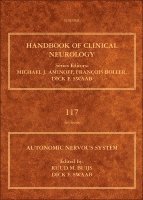
    Autonomic Nervous System

    AvRuud M. Buijs,Dick F. Swaab

    Inbunden, Engelska, 2013

    Del 117 i serien Handbook of Clinical Neurology

    2 439 kr

    Beställningsvara. Skickas inom 10-15 vardagar. Fri frakt över 249 kr.

    Beskrivning

    Autonomic Nervous System provides an introduction to the latest science and detailed chapters on advances in the clinical diagnosis and treatment of autonomic system disorders.

    The autonomic nervous system controls all involuntary actions within the human nervous system. Core body functions regulated by the autonomic system include breathing, heartbeat, blood pressure, body temperature, perspiration, and bowel, bladder and sexual function. Our understanding of the neurotransmitters associated with the autonomic nervous system has expanded over the past 15 years associated with current research efforts and are now impacting the diagnosis and treatment of autonomic nervous system disorders by clinical neurologists.
    �
    This volume is a valuable companion for neuroscience and clinical neurology researchers and practitioners.


    • A volume in the Handbook of Clinical Neurology series, which has an unparalleled reputation as the world's most comprehensive source of information in neurology
    • International list of contributors, including the leading workers in the field
    • Describes the advances that have occurred in clinical neurology and the neurosciences and their impact on the understanding of neurological disorders and on patient care

    Produktinformation

    • Utgivningsdatum:2013-11-19
    • Mått:195 x 260 x 27 mm
    • Vikt:1 410 g
    • Format:Inbunden
    • Språk:Engelska
    • Serie:Handbook of Clinical Neurology
    • Antal sidor:464
    • Förlag:Elsevier Science
    • ISBN:9780444534910

    Utforska kategorier

    • Neurologi och klinisk neurofysiologi inom Medicin

    Mer om författaren

    Dr. Ruud M. Buijs is head of the Physiology department of the I.I.Biomedicas at the UNAM university and leader of the group Hypothalamic Integration Mechanisms. In that group, the scientists study how the brain and body interact with each other, and hereby the attention is focussed on autonomic and hormonal regulation of body functions under the influence of the biological clock of the brain. Dick Swaab (1944) earned his medical and doctoral degrees at the University of Amsterdam, where he became involved in brain research during his third year of medical school. He was Director of the Netherlands Institute for Brain Research from 1978 to 2005. Since 1979 he is Professor of Neurobiology at the Medical Faculty, University of Amsterdam.In 1985, Dr. Swaab founded the Netherlands Brain Bank (NBB) to serve as a source of clinically and neuropathologically well-documented research tissue. Since its founding, the Brain Bank has provided samples from more than 4,000 autopsies to 500 research groups in 25 countries. He was director of the NBB until 2005.He is Leader Research team Neuropsychiatric Disorders, Neth. Inst for Neuroscience, an institute of the Royal Netherlands Academy of Arts and Sciences (KNAW). Swaab is also appointed for 2011-2017 Chao Kuang Piu Chair of Zhejiang University, Hangzhou, P.R. China.His major research interests focus on, sexual differentiation of the human brain in relation to gender identity and sexual orientation, aging of the brain, Alzheimer’s disease, the neurobiological basis of depression, suicide and eating disorders. He has published over 540 papers in SCI journals, authored more than 200 chapters in books, and edited more than 60 books. Swaab mentored 84 PhD students from which 16 are now full professor. He is “Companion in the Order of the Dutch Lion”, bestowed by her Royal Majesty Queen Beatrix of the Netherlands. In 2008 Swaab obtained the Academy medal for his role in national and international neuroscience. Dick Swaab is author of the 2 volume monograph The Human Hypothalamus that appeared in the Handbook of Clinical Neurology series, Elsevier, Amsterdam (1000 pp) and the Dutch best seller We are our Brains (450.000 copies sold), that is translated in 14 languages. A children's version of the book (You are your brains) has also appeared in Dutch in 2013 and Russian (2014). Swaab's H-factor is 76.

    Recensioner i media

    "This volume departs from other books on the autonomous nervous system by emphasizing how it is fully integrated with the rest of the brain and that it is multi-systemic, with integration occurring at many different levels of the central nervous system. The treatment, therefore, could interest biologists and medical researchers as well as neurologists." --ProtoView.com, January 2014

    Innehållsförteckning

    • 1. The autonomic nervous system; what do we miss?  2. Differential Responses of Components of the Autonomic Nervous System  3. Cotransmission in the autonomic nervous system  4. Sensitization of endocrine organs to anterior pituitary hormones by the autonomic nervous system  5. Central Control of Autonomic Function and Involvement in Neurodegenerative Disorders  6. Interaction between cognition, emotion and the autonomic nervous system  7. Interoception and ANS Reflexes Thermoregulation  8. Regulation of blood pressure by the arterial baroreflex and autonomic nervous system  9. Cooling, pain and other feelings from the body in relation to the autonomic nervous system  10. The Neurological Organization of Micturition  11. The clinical importance of the anti-inflammatory vago-vagal reflex  12. The Role of the Autonomic Nervous System in Cardiac Arrhythmias  13. Exercise and the Autonomic Nervous System  14. Autonomic control of bone formation: its clinical relevance  15. The circadian system and the balance of the autonomic nervous system  16. Autonomic Nervous System Control of the Cerebral Circulation  17. Autonomic Regulation of Kidney Function  18. Autonomic Neural Control of the Airways  19. Multiple system atrophy  20. Pure Autonomic Failure  21. Autonomic Dysfunction in Parkinson Disease  22. Diabetic Autonomic Neuropathy  23. Hypoglycemia-Associated Autonomic Failure in Diabetes  24. Sensory-autonomic interactions in health and disease  25. Autoimmune Autonomic Failure  26. The central sympathetic nervous system in hypertension  27. Pathology of emesis: its autonomic basis  28. Sympathetic Microneurography  29. Sympathetic Neuroimaging  30. Skin biopsies in the assessment of the autonomic nervous system  31. Heart Rate Variability  32. Chronic Activation of the Baroreflex and the Promise for Hypertension Therapy