• Fri frakt över 249 kr
  • •
  • Snabba leveranser
  • •
  • Billiga böcker
Kundservice

Du är på sajten för privatpersoner.

Företag, bibliotek eller offentlig verksamhet?

Du handlar på classic.bokus.com, där alla dina funktioner finns intakta.
Till classic.bokus.com
Bokus logotyp. Gå till startsidan.
  • Erbjudanden
  • Nyheter
  • Student
  • Topplistor
  • Barn & ungdom
  • Bokus Play
  • E-böcker
  • Pocketböcker
  • Spel & pussel

10% rabatt på allt med kod NYSTART10 →

Sidfot

Mina sidor

    Hjälp

    • Kundservice
    • Vanliga frågor och svar
    • Frakt och leverans
    • Retur vid ångerrätt
    • Reklamera vara
    • Betalning
    • Köpvillkor
    • Allmänna villkor
    • Information om webbplatsens tillgänglighet

    Om Bokus

    • Om oss
    • Pressrum
    • För studenter
    • För företag
    • För bibliotek och offentlig verksamhet
    • För leverantörer
    • Hållbarhet

    Populärt

    • Aktuella erbjudanden
    • Presentkort
    • Studentlitteratur
    • Nya böcker
    • Topplistor
    • Signerade böcker
    • Engelska böcker

    Inspiration

    • Boktips
    • BookTok
    • Populära bokserier
    • Barnbokskaraktärer
    • Populära författare
    Logotyp för Bokus
    Följ oss på Facebook (extern länk)Följ oss på Instagram (extern länk)Följ oss på YouTube (extern länk)Följ oss på TikTok (extern länk)
    bokus @ CookiesAnpassa cookiesIntegritetspolicyKöpvillkor
    Till Citymail hemsida (extern länk)Till Budbee hemsida (extern länk)Till Postnord hemsida (extern länk)Till Schenker hemsida (extern länk)Till Early Bird hemsida (extern länk)Till Walleys hemsida (extern länk)
    1. Naturvetenskap och teknik
    2. Geovetenskap
    3. Geovetenskap

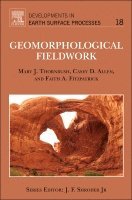
    Geomorphological Fieldwork

    Inbunden, Engelska, 2014

    Del 18 i serien Developments in Earth Surface Processes

    1 511 kr

    Beställningsvara. Skickas inom 10-15 vardagar. Fri frakt över 249 kr.

    Beskrivning

    Geomorphological Fieldwork addresses a topic that always remains popular within the geosciences and environmental science. More specifically, the volume conveys a growing legacy of field-based learning for young geomorphologists that can be used as a student book for field-based university courses and postgraduate research requiring fieldwork or field schools. The editors have much experience of field-based learning within geomorphology and extend this to physical geography. The topics covered are relevant to basic geomorphology as well as applied approaches in environmental and cultural geomorphology. The book integrates a physical-human approach to geography, but focuses on physical geography and geomorphology from an integrated field-based geoscience perspective.


    • Addresses fluvial and karst landscapes in depth
    • Focuses on field-based learning as well as educational geomorphology
    • Conveys experiential knowledge in international contexts

    Produktinformation

    • Utgivningsdatum:2014-12-02
    • Mått:152 x 229 x 17 mm
    • Vikt:560 g
    • Format:Inbunden
    • Språk:Engelska
    • Serie:Developments in Earth Surface Processes
    • Antal sidor:286
    • Förlag:Elsevier Science
    • ISBN:9780444634023

    Utforska kategorier

    • Geovetenskap inom Naturvetenskap och teknik

    Mer om författaren

    Dr. Mary J. Thornbush, University of Guelph, Canada, is a trained geomorphologist and environmental researcher specializing in climate change mitigation-adaptation and environmental sustainability. Her research on soils focuses on measuring soil organic carbon; monitoring, reporting, and verification (MRV) protocols; weathering of calcareous rock and soil aggregates; soil and sediment erosion; and sustainable land management (SLM). Her interdisciplinary approach bridges policy-relevant climate change mitigation-adaptation frameworks involving carbon sequestration and soil health. Though well-regarded in the fields of geomorphology, rock/cultural stone decay, and humanistic geography, Dr. Casey D. Allen’s passion rests in helping people explore and discover landscapes as Traditional and Romantic Geographers. A first-generation college student and award-winning teacher-scholar with broad interests, he has been as a professional academic advisor, created and supervised several successful academic and support programs, was selected as a Fulbright Scholar, National Science Foundation Fellow, and Early Career Scholar in Geographic Education, and held various faculty and administrative positions at several universities – including earning tenure at the University of Colorado before serving as Lecturer of Earth/Environmental Science for the Faculty of Science and Technology at The University of the West Indies Cave Hill campus in Barbados. Along with his penchant for travel, Dr. Allen also retains interests and expertise in soils and biological soil crusts, landscape/geoarchaeology, rock art, botany, and regional studies. Follow him on Twitter (@caseallen) and see his website (caseallen.com) for more. Dr. Faith Fitzpatrick is a Research Hydrologist at the U.S. Geological Survey, based out of the Wisconsin Water Science Center in Middleton, Wisconsin, USA. She has been working on field-based fluvial geomorphology studies for over 30 years and has spent much of her career studying river behavior in the Great Lakes region. Her interests involve human and climate change impacts on river evolution and sediment regimes, alluvial chronologies, linking sources and sinks of stream sediment and nutrients, stream restoration and habitat, and tracking sediment-related contaminants. More recently she’s been working on fluvial dynamics in Great Lakes rivermouths. Stream issues that she’s been involved with range from urbanization, agricultural runoff, and deforestation. She teaches fluvial geomorphology and sedimentary records courses and field training at government training courses as well as the University of Wisconsin-Madison. One of her growing areas of interest is the role of fluvial processes in the behavior and fate of submerged oil and oiled sediment in riverine freshwater environments. From 2011-14 she served as Scientific Support Coordinator for the U.S. EPA’s emergency response to the 2010 pipeline release of diluted bitumen into the Kalamazoo River, Michigan, USA.

    Innehållsförteckning

    • 1. Introduction, Mary J. Thornbush, Casey D. Allen, and Faith A. Fitzpatrick2. Why Fieldwork? Casey D. Allen3. Getting into the Field, Mary J. Thornbush, Casey D. Allen, and Faith A. Fitzpatrick3.1 Preparing for Fieldwork, Michael J. Day3.2 Field Safety: Principles, Practice, Culture, Sam Alpay and Roger C. Paulen4. Teaching Geomorphology in the Field, Mary J. Thornbush, Casey D. Allen, and Faith A. Fitzpatrick4.1 Students’ Learning Styles, Miguel Gomez-Heras and Stephen McCabe4.2 Fieldwork Going Digital, Ian Fuller and Derek France4.3 Field-based Learning in Undergraduate Geomorphology Courses, Mary J. Thornbush 5. Field Methodologies, Mary J. Thornbush, Casey D. Allen and Faith A. Fitzpatrick 5.1 Fieldwork Protocols for Soil Geomorphology, Wolfgang Fister, Philip Greenwood, and Nikolaus J. Kuhn5.2 Methods in Fluvial Geomorphology, Faith A. Fitzpatrick 5.3 Reading the Landscape in Field-based Geomorphology, Gary Brierley and Kirstie Fryirs6. Conclusion, Mary J. Thornbush, Casey D. Allen, and Faith A. Fitzpatrick